






“The engineer you think you know is obsolete, it's time for a new prototype”
Afeka College of Engineering president Prof. Ami Moyal is on a mission to reshape the engineers of the 21st century
09:4405.08.20
“The stereotype of the lone engineer crunching away at math problems in front of his computer in the corner? That model is dead. Today’s engineers have to be able to stand in front of an audience and deliver a tight and effective, three-minute presentation on what their algorithm can do and why it will benefit clients. If they are incapable of doing that well, they can cause damage to their company,” said Prof. Ami Moyal, President of Tel Aviv’s Afeka College of Engineering. In an interview with CTech, Moyal, himself a tech industry veteran lays out his vision of what the prototypical engineers of tomorrow will look like and the way his institution is helping them prepare for the demands of the 21st century.
Moyal himself is not your typical college president. Brimming with passion and energy, he is not one for making smalltalk with donors or hosting cocktail parties for delegations. He joined Afeka six years ago with a mission and has rolled up his sleeves and entered the fray to ensure it is carried out.
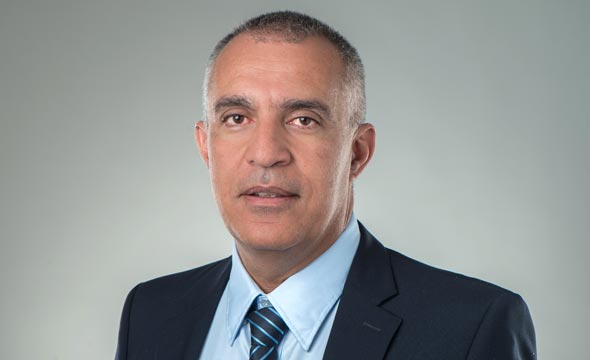
Prof. Ami Moyal, President of Tel Aviv’s Afeka College of Engineering. Photo: PRצילום: אפקה יח"צ
Moyal is not alone. At a recent conference organized by the college, the local CEOs of some of the biggest multinationals operating in Israel, like Intel, Cisco and IBM, spoke about the engineer of the future. In addition to saying they were in need of many more of them, they all stressed the importance of engineers being multidisciplinary.
“Knowledge is very important. An engineer needs the scientific foundation in order to function properly, but that’s a given. What today’s engineers need is a wide range of skills and abilities, such as being able to work with and lead a team, communicate effectively with other departments, the ability to think critically, and solve problems and knowledge of other languages,” Moyal said.
No less important for Moyal is that engineers have a well-rounded education in subjects that aren’t physics or maths. “They have to know where they come from and how their work will impact the world. Engineers are asked to do a wide range of things. They have to be able to judge their actions, also from an ethical and social perspective, not just whether it works,” he said.

Students at the Tel Aviv Afeka College of Engineering. PRצילום: יח"צ
Though women make up roughly a quarter of the college’s students, Moyal said their percentage increases every year.
“There are also differences between various specializations. In the electronic or mechanical engineering departments, they make up 10% of the classes, but in medical engineering, they are more than 50%.”
Since arriving at Afeka, Moyal has been on a mission to adjust the profile of the college graduate to better suit the requirements of modern industry, with an emphasis on innovation. He concedes that it has not always been easy, but said he was able to rally the faculty, the staff and the students to the mission and after a year of planning and reorganizing, the curriculum and program structure had changed completely, with the focus shifting from certification to education.
The new program together with the demand for more engineers has led to a 50% increase in applications, with scores of applicants on the waiting list.
Then Covid-19 happened.
“Suddenly, we were forced to completely change the way we operated,” recalled Moyal. “We began preparing for it in the second semester, setting up a task force and holding daily meetings.”
After the country went into total lockdown and everyone was sent home, the college went “full virtual.” “We set up a one-to-one model of the campus online. Every lecture hall, laboratory, meeting room, and library had a Zoom address. We kept to the same course schedule. All 350 faculty members were given training. We built a monitoring system to keep track of attendance. We kept to our exam schedule, with a mix of frontal and remote options,” Moyal fired off the actions.
The summer semester has been conducted fully remotely as well and now the faculty and staff are preparing for the possibility that classes will continue to be disrupted indefinitely.
“In the meantime, we are adjusting the curriculum to the new reality and preparing for both contingencies and for a mix of remote and in-person teaching,” Moyal said. “The goal is for each student and faculty member to be present on campus at least one day a week so they don’t lose touch with the experience.”
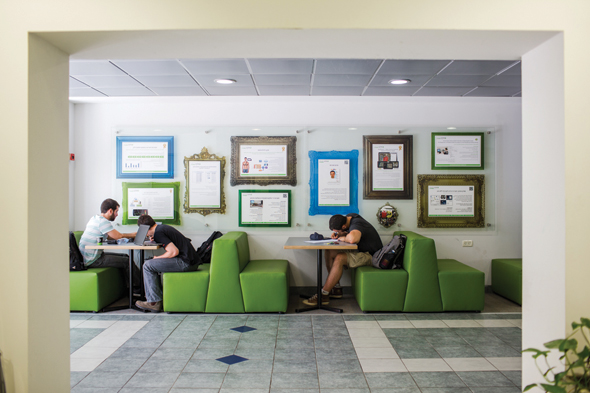
The Afeka College of Engineering in Tel Avi. Photo: PRצילום: יח"צ
There is little doubt that the ability to communicate and work remotely is going to be another in-demand skill for anyone entering the workforce nowadays.
One Covid-19 project that recently put Afeka on many people’s radars is a unique experiment taking place in the Afeka Center for Language Processing, a research, development and instruction laboratory dedicated to the field of speech and language processing. The study, led by the Israeli Ministry of Defense in collaboration with the Rabin Medical Center at Sheba Hospital, and various tech companies, as well as Fondazione Policlinico Gemelli, a hospital in Rome, aims to detect pre-diagnostic carriers of the virus using voice and speech processing. Moyal, whose area of expertise going back to his own days as a student is speech processing, said the target of the project is to develop an innovative algorithm that will be a breakthrough in the identification of potential carriers. The center is collecting as many samples as it can get from all over the world and has reasons to believe Covid-19 symptoms can be differentiated from other respiratory ailments, and from healthy individuals, by using AI-based voice analysis. Moyal said he would be satisfied if even only 70% of the results were accurate.
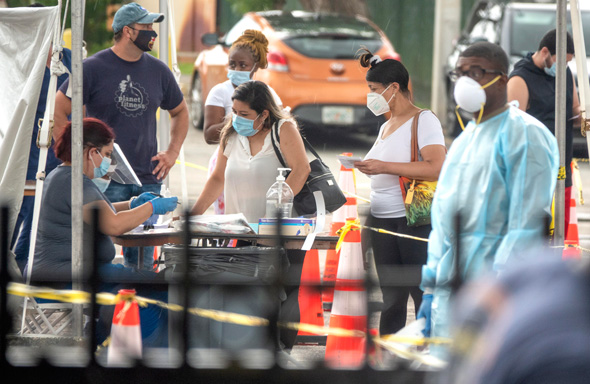
Covid-19 testing. Photo: IPAצילום: אי פי איי
Moyal says their own figures based on graduate surveys bear out the assumptions. “97% of our graduates are employed and 80% of them work in the field of engineering or related jobs.”
