











“As a UAV startup it’s difficult to get funds”
Despite a challenging investment climate, Attis Aviation is preparing to debut its flagship ROC system, as it looks to answer the need for multi-domain capabilities in modern unmanned aviation.
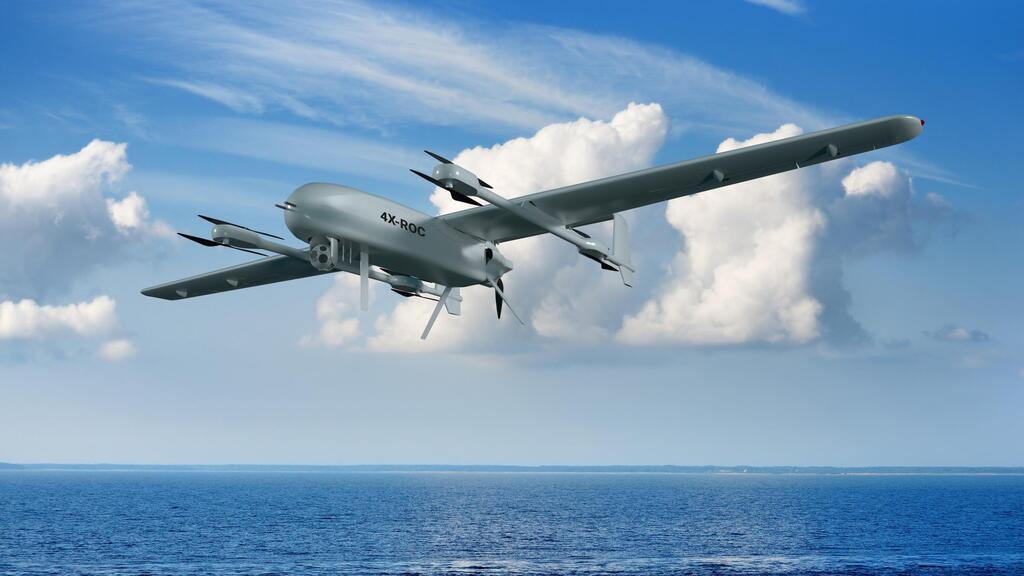
“As a UAV startup, a small company... it's really difficult to get funds,” says Mark Koltun, speaking to CTech. Koltun is Co-Founder and CEO of Attis Aviation, an Israeli comprehensive UAS solutions company that will soon publicly unveil its flagship ROC VTOL UAS system, named after the mythological Roc: a bird from Middle Eastern and Persian folklore said to be large enough to lift elephants.
Since its founding in 2021, Koltun says the company has raised roughly $1 million in total funding and is now seeking Seed investment to accelerate production and commercialization of the ROC system. The system is set to debut at UVID’s upcoming Defense Tech Conference alongside a “ROC from a Box” rapid field deployment and operation concept.
“One of the reasons for that is because there are no specific funds for UAVs,” Koltun continues. “If you look today and try to [find] VCs that are investing only in UAVs, you cannot find any... You can find cyber, you can find AI... but if you look in the UAVs, which is one of the biggest industries today, you cannot find a specific fund for that.”

Name: Attis Aviation
Field: Aerospace, UAV, Defense & HLS
Founders: Yoram Soffer, Zahi Ben Ari, Omer Dahan and Mark Koltun
Year of establishment: 2021
Fundraising: ~$1 million
Investors: Undisclosed
Number of employees: 9
Location: Caesarea, Israel
In recent years, the drone industry has rapidly matured. Propelled by modern warfare, from the Russia-Ukraine war to Israel’s more recent war against Hamas and conflict with Iran, its capabilities have been cast into unprecedented focus. From defense powerhouses to specialized platforms, from AI-driven intelligence to counter-drone systems, the unmanned aerial landscape represents one of the most dynamic areas of defense technology.
In this series, CTech speaks with the companies driving Israel’s unmanned aerial vehicles and systems sector to map the industry, and the challenges and opportunities ahead.

With its debut, Attis Aviation’s ROC VTOL UAS is one of the newer entrants in Israel’s evolving unmanned aerial market, where startups are helping to pioneer the next generation of heavy-lift and tactical drone design across defense, homeland security, and civil use.
“We started to develop the ROC in the beginning of 2025,” says Koltun. Before then, he recalls, the startup “did some initial validations for the product, some kind of concept. But real development started in [February] 2025… We recruited the specific engineers and mechanical engineers who started to develop the platform.”
In just eight months, Koltun says, the company has its debut flagship system “here in the hangar, ready for flight.”
Headquartered in Caesarea, Attis Aviation currently employs a team of nine, including founders Koltun, Yoram Soffer, Zahi Ben Ari, and Omer Dahan, with Soffer serving as Chairman and CFO, Ben Ari as COO, Dahan as CFOO, and Nir Raveh as CTO.
The company is something of a blueprint for a burgeoning generation of drone startups in Israel: agile teams led by veterans of the country’s aerospace industry. Koltun, an aerospace engineer with over 20 years of experience in the field, began his career at Israel’s Ministry of Defense (MOD) before holding positions at AGT, Plasan, and defense giant Elbit, working across aircraft systems, ground robotics, and into unmanned aviation.
“I believe today, one of the things that is leading the market is the multi-domain capability: ground, air and maritime,” says Koltun. “And for example, our system, we are developing it in this sense.”
To meet the multi-domain demands of defense, security, and civil operations, the ROC needed to “be tactical, easily deployable [and] capable of taking multi-payloads,” explains Koltun. “To do multi-mission and multi-purpose… to do both sensor missions and logistics.”
He says this instinct guided the design of the ROC as a “true multi-role UAS.” “This is something that we are bringing to the table: a tactical system that can be deployed in the field very quickly, in less than half an hour,” says Koltun.
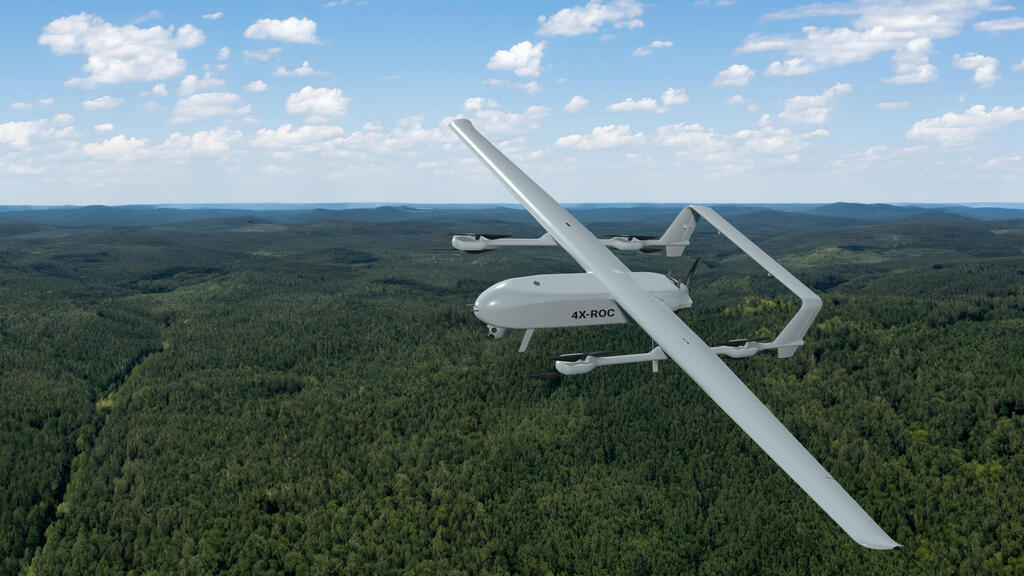
The vertical-takeoff, fixed-wing platform is equipped with four payload stations and an internal payload bay, and, true to its namesake, is capable of carrying up to 40 kilograms and remaining in flight for more than 20 hours. The combination of vertical takeoff and long-endurance flight, he notes, is a technical feat that few UAV systems have achieved. “That is very unique,” says Koltun. “If you compare it to other systems around the globe, not only in Israel.”
In practice, Koltun explains, the ROC’s broader applications include border patrol, asset protection, and perimeter security, as well as ISR operations and homeland security uses such as firefighting support. “Our system is planned to be operated also for HLS missions like firefighting support,” he adds, “as well as search and rescue missions of different kinds across land and sea.”
The plan wasn’t always to include defense and homeland security as priority markets, however. Looking back, Koltun says that, like much of Israel’s defense industry, Attis Aviation’s path was significantly affected by the devastating events of October 7. He recalls how Hamas’ attacks on Israel and the subsequent conflict with Iran pushed the company from focusing purely on the civil sector. “We looked only into the civil market,” he says. “But after... we decided that the right way for us is to start with the defense industry and HLS, but focusing first on the defense.”
Up until then, he continues, “we were preparing for the investment roadshow... and everything obviously canceled,” adding that “two of six people who worked in the company went to reserves.”
That pivot, Koltun says, occurred adjacent to a broader reassessment in how defense-tech is perceived, both within Israel’s own ecosystem and globally, by investors who once avoided the sector but now regard it as critical infrastructure.
Still, Koltun argues that locally, the unmanned aerial sector remains underfunded compared to its contribution to Israel’s exports, particularly when measured against other tech industries. “Israel is one of the leaders in the UAV domain,” he says. “But the investment of the Israeli government in this field is not comparable to what this industry brings to Israel.”
For Koltun, Israel’s advantage in this space, and what continues to drive it as a growth engine for the country, lies in its people, which he deems “the biggest asset in Israel.” “Although we don't have the big, big funds,” he says, “we have very high level manpower.” He adds that this is especially true when it comes to “very good out of box thinking.” He continues, “And you have a good, very good test lab on the military side... The feedback they provide you is very important and very valued, also outside of Israel.”
And for Attis, despite the fight for funding, it has already secured its first Israeli contract and is in advanced talks with potential customers in Europe, Asia, and the U.S. “We have one contract signed in Israel,” says Koltun. “And we are in advanced negotiations, both in Israel and abroad,” he adds, listing the Ministry of Defense and several large and mid-sized companies among its customers, as well as firefighting projects in the HLS market.
As for what comes next for the ROC, Koltun says the focus is now on bringing the system from prototype to full deployment, to deliver a “serial product for the customers,” he says. And just as he predicts “Israel is going to continue to lead” in the unmanned sector, he contends that Attis is “going to contribute to it as a company, as one of the players, hopefully significant players.”
“This is what I believe,” Koltun affirms. “Otherwise, I would go into a different industry.”



