










M&A spotlight shifts to Lasso, Aim, and Pillar after SentinelOne’s $250M Prompt deal
After Prompt’s quick exit, other early-stage Israeli GenAI security players are fielding buyout offers from global giants.
SentinelOne announced on Tuesday that it is acquiring Israeli startup Prompt Security in a cash-and-stock deal valued at $250 million. SentinelOne, an Israeli-founded cybersecurity company traded on the NYSE at a $6 billion valuation, is, like many of its competitors, racing to evolve its endpoint protection (EDR) capabilities into an AI-driven security solution.
Although the sum isn’t massive by industry standards, Prompt is just a two-year-old startup that has raised only $23 million to date. The company completed two funding rounds: $5 million in January 2024 and another $18 million in November 2024. The acquisition marks a fast and substantial return for investors, including Israeli VC firm Hetz Ventures, U.S.-based Jump Capital, and American cybersecurity companies Okta and F5, both publicly traded.

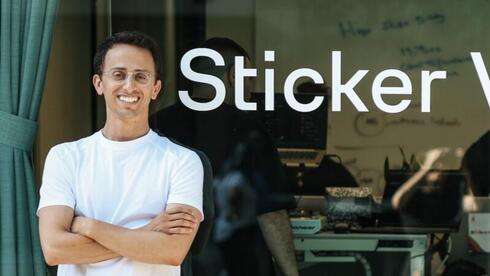
Prompt was founded by Check Point veterans Itamar Golan (CEO) and Lior Drihem (CTO). The company employs just 50 people, mostly developers, who will receive SentinelOne stock as part of a retention package.
Prompt Security’s platform monitors all interactions between enterprise systems and generative AI tools, from employee-used browsers and coding assistants to in-house GenAI integrations. It inspects every prompt and response to detect sensitive data exposure, block harmful content, and defend against GenAI-specific attacks.
The acquisition was announced during the Black Hat cybersecurity conference in Las Vegas, underscoring the growing pressure on cybersecurity vendors to provide tools that protect against AI-driven threats. The deal follows Palo Alto Networks’ $25 billion acquisition of CyberArk and a $100 million funding round for another two-year-old Israeli startup, Noma.
According to Israeli cybersecurity insiders, this is only the beginning. Similar M&A waves have occurred in other cybersecurity sectors, where startups with comparable profiles were acquired in quick, smaller-scale deals.
A sizable crop of Israeli GenAI security startups emerged in 2023, all with similar characteristics: small teams (several dozen employees), minimal revenue (under $10 million), and modest funding (one or two rounds). Among the most talked-about acquisition targets today are Lasso Security, Aim Security, and Pillar Security. Calcalist has learned that these startups have also received acquisition offers recently, from players like Check Point, as well as global companies such as Zscaler and F5.
The timing of the deals is no coincidence. The Black Hat conference has become a proving ground for AI capabilities in cybersecurity. Every company in attendance is expected to show how it's adapting to the AI era. The consensus emerging is that cybersecurity will be among the first industries fundamentally disrupted by AI.
AI is transforming the threat landscape. Hackers are learning to launch attacks using “toxic prompts,” and organizational use of tools like ChatGPT risks unintentional data leakage. On the defensive side, AI accelerates the development of security solutions. In April, Palo Alto fired the opening shot in a consolidation wave with its $700 million acquisition of Protect AI. In May, U.S.-based Tenable acquired Israeli startup Apex for $100 million, adding heat to the space. Cisco quietly made its own move last year, buying Israeli company Robust for $500 million.
While many funds would welcome quick exits, some founders are reluctant to sell so early in their startup’s lifecycle. Prompt’s founders themselves denied acquisition rumors before SentinelOne made the news official.
With so many startups emerging at once, most investors recognize that not all of them can become the next Wiz. In the AI era, everything happens at breakneck speed, and today’s hot startup can be crushed by tech giants tomorrow. Palo Alto’s acquisition of CyberArk, meanwhile, takes both companies out of the buyer pool. In this game of musical chairs, some seats are already taken, and the music could stop at any moment.



