











Pool-cleaning robot maker Maytronics is looking to resurface following a deep dive in value
Maytronics posted a sharp decline in its second-quarter results, sending the stock down 13% and dragging its market value to 448 million shekels. Just four years ago, it was valued at 9.1 billion shekels. The CEO has announced his resignation.
It's hard to think of a story of value destruction so rapid and monumental in the Israeli capital market as the one Maytronics has undergone in the past half-decade. At the end of 2021, the pool cleaning machine and robot manufacturer from Kibbutz Yizrael was still trading at a valuation of 9.1 billion shekels ($2.46 billion), and today, it is traded on the Tel Aviv Stock Exchange at a value of only 448 million shekels ($131 million).
The value of the controlling shareholders' holding (56%), the kibbutz members, is estimated at 250 million shekels ($67 million) compared to a value of 4.9 billion shekels ($1.32 billion) at its peak. The value of each kibbutz member's holding in the company's shares dropped to less than 500,000 shekels - compared to about 9.8 million shekels in the peak year.
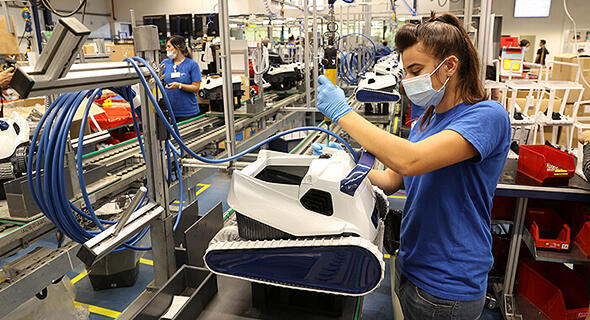
Yesterday, Maytronics' stock fell by 13%. This followed the publication of the second quarter financial report, which is traditionally considered Maytronics' strong quarter, due to pool cleaning robot procurement in the US. Maytronics reported a net profit of 12 million shekels, a 72% decline compared to the profit in the corresponding quarter last year. Simultaneously, the operating profit margin was cut in half, to 6.1% compared to 12.1% in the corresponding quarter. The company's revenues in the second quarter totaled 515 million shekels, a 15% decline compared to revenues in the corresponding quarter estimated at 607 million shekels.
According to the company, the decline in revenues and failure to meet forecasts stem primarily from difficulties in establishing and operating logistics centers in North America. In recent years, given the increased competition in the US, Maytronics has been trying to change its marketing approach and distribute products directly rather than through third parties. However, Maytronics' management, led by CEO Sharon Goldenberg, discovered that this is not so simple. The company failed to fulfill orders for robots and devices in the US through its new logistics center there, and sales were damaged. The company estimates the scope of revenues it lost at $14 million, meaning about 50 million shekels.
Sales in the US dropped by 18% in the second quarter compared to the corresponding quarter. The failure to supply pool cleaning robots during the second quarter caused the company's order backlog to rise to 102 million shekels, compared to a backlog of 76 million shekels in the corresponding quarter. The company hopes it will be able to fulfill the orders it struggled to complete in the second quarter during the third quarter.
Goldenberg announced yesterday his retirement from the position after three years. During his tenure as CEO, the company lost about 6.5 billion shekels ($1.9 billion) in its value. Goldenberg is the second senior executive to leave Maytronics in 2025, as in February Ron Cohen, who served as chairman, left and was replaced by Dov Ofer.
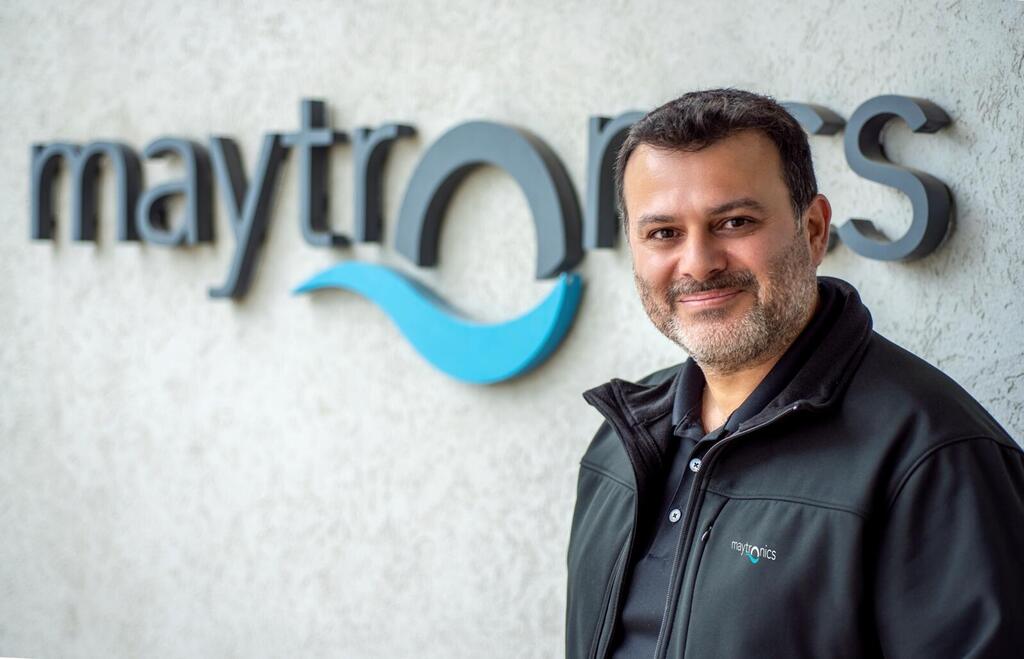
"Several critical mistakes have been made at Maytronics in recent years," said a former senior executive at the company. According to him, "Sharon Goldenberg decided to end his role, and I think the conditions have ripened to bring in a new CEO who is not from among the company's employees but from outside Maytronics, who will help it recover. But beyond the CEO's identity, the company must implement an entirely different system of decision-making and focus."
According to the former senior executive, "The capital market is pricing today that Maytronics will be wiped out, but in my view, this is not the reality. It will find a way to emerge from the perfect storm it is in. The storm stems from external processes such as high interest rates, the local war that has been going on for two years, and the war in Ukraine that is hurting European consumption."
Regarding the question of why these conditions affected Maytronics more deeply than other Israeli companies, the former senior executive explained that Maytronics is also dealing with unfair competition from China: "The Chinese companies were always there, during my time and even before. The problem is that instead of dealing with five players, as it was in the previous decade, suddenly, there are almost 20 Chinese companies operating in the field.
"The Chinese identified that the category is interesting and from that moment, government support began in order to take control of the industry and push Maytronics out of the game. To my understanding, the technology of the Chinese companies is still not good enough and doesn't compare to that of Maytronics. In the end, good product fundamentals have value and so does quality. But the Chinese are flooding the market and it works in the short term."
Either way, it cannot be claimed that only external influences crushed Maytronics' value. First, Maytronics could have dealt better with the Chinese threat. Senior executives at the company supported the acquisition of Chinese companies, which would help Maytronics deal with the cheaper products. Maytronics was twice in contact with Chinese companies, but the acquisitions did not materialize. Second, according to a former senior executive at Maytronics, the company's management should have better reflected the difficulty within the company to investors and its conduct was confusing. The former senior executive points to Maytronics' recent reports as an excellent example of the problem.
"The company's management already knows that the second quarter of the year will not be good, so why did it still choose to give optimistic forecasts? (The company's revenues were 50 million shekels lower than the company's early forecast, made last May, A.A.). These are mistakes that damage the capital market's trust. The result is that there is a company here with a billion shekels in annual sales, trading at less than half of that."
According to the former senior executive, Maytronics should start manufacturing in the US, since US President Donald Trump's tariffs support this, and the move will also help it with distribution. In the past, Maytronics considered moving part of its production to the US, but chose not to implement it. "I think that in these days the next problems of Maytronics are being sown. The company is choosing to reduce production lines, and has practically stopped manufacturing operations at Kibbutz Dalton in order to save costs, but when the market recovers it will not be able to meet demand and will thus continue to lose customers," he explained.
In the past two years, Maytronics' difficulties have been explained by it as stemming from the competition it faces against cheap Chinese brands. Trump's decision to impose tariffs of 145% on imports from China to the US is supposed to make the import of pool cleaning robots manufactured in China more expensive for the American market, which constitutes 57% of Maytronics' sales. However, it should be noted that not all the intended tariffs have come into effect and today they stand at 54%. A 15% tariff is imposed on Israeli exports to the US, which came into effect in July. In order to maintain existing prices, Maytronics offset the cost of the tariff from the product price (meaning the end customer does not notice a difference in prices).



