










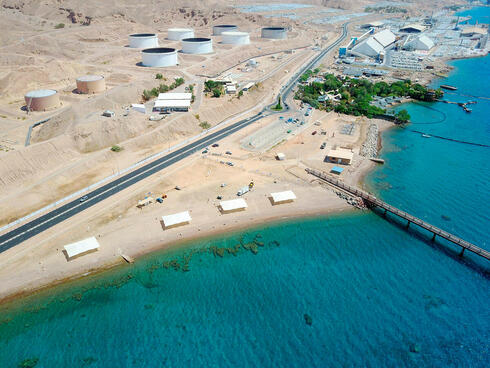
Israel weighs privatizing one of its most secretive state-owned companies
Government Companies Authority begins reviewing the possible sale of EAPC, the strategic energy company whose operations remain under a sweeping secrecy order.
The Government Companies Authority is examining the possible privatization of the Europe Asia Pipeline Company (EAPC), one of Israel's most secretive state-owned companies, whose operations are conducted under a sweeping confidentiality order.
The Government Companies Authority told Calcalist that its review of the economic aspects of privatizing the company is still in its early stages and forms part of a broader examination. Only after that process is completed will a decision be made on whether the move is feasible.
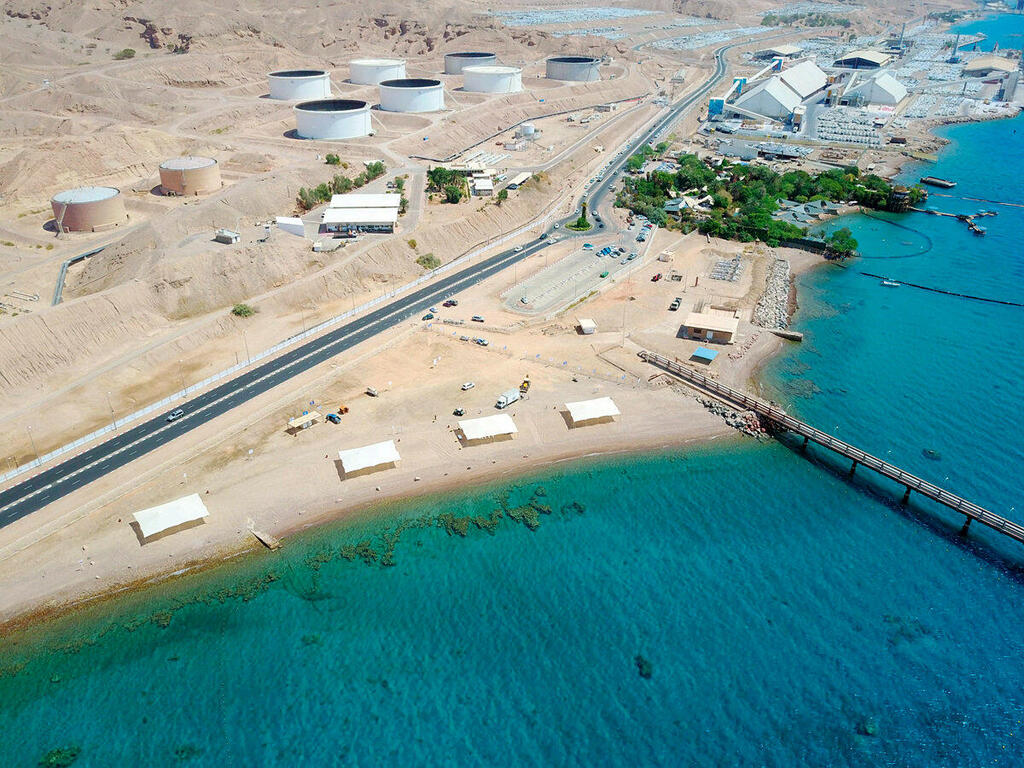
EAPC's core business includes the unloading, loading, storage and transportation of crude oil and refined petroleum products through its ports in Ashkelon and Eilat. The company is responsible for importing approximately 40% of Israel's cooking gas and also provides services to the natural gas sector.
It owns fuel storage facilities with a combined capacity of 3.7 million cubic meters, operates three crude oil pipelines, and owns an additional pipeline for transporting refined fuel products. The approximately 750-kilometer pipeline is operated by the government-owned Petroleum and Energy Infrastructure (PEI).
Speaking at a gathering of chairmen and CEOs of government companies at NTA's (Metropolitan Mass Transit System) maintenance center in Petah Tikva, Government Companies Authority Director Roi Kahlon referred to the privatization and IPO initiatives being promoted by the authority.
"Think about where we would be today if the state still owned ICL, IMI, El Al and Israel Post. It was the right decision to privatize them," Kahlon said. "I recently visited EAPC, and during the coming year we intend to examine its privatization. Think about what a private entrepreneur could do there."
The possibility of privatizing EAPC has surprised government officials involved in the company's operations.
One official told Calcalist that "it is unrealistic to think about privatizing a company whose activities and financial reports are subject to such strict confidentiality. It's delusional."
The secrecy surrounding EAPC was reflected in the Government Companies Authority's 2025 report, published on Tuesday, which reviews the performance of roughly 70 state-owned companies. Unlike the other companies, the report included no financial or operational information about EAPC because it is subject to a confidentiality order that also covers its financial statements.
Responding to the Authority's plans, EAPC said: "EAPC is a strategic government company that serves as the State of Israel's energy gateway in both routine and emergency situations. Any discussion regarding its future must take into account the unique nature of its operations, its strategic importance to Israel's energy sector and national security, and the welfare of its employees. EAPC will continue to fulfill its role in safeguarding Israel's energy security."
EAPC was established in the late 1960s as a joint venture equally owned by Israel and Iran during the reign of the Shah. Under a secret agreement between the two countries, Iranian oil was transported through the pipeline from Eilat to Ashkelon, giving the company its original name, the Eilat-Ashkelon Pipeline Company. In 2017, after the expiration of its 49-year concession, the company adopted its current name, Europe Asia Pipeline Company.
Over the years, however, the company has also been involved in several major environmental incidents caused by oil leaks from its infrastructure. The most severe occurred in 2014, when a massive spill caused extensive damage to the Evrona Nature Reserve.
According to the Government Companies Authority's 2025 report, state-owned companies generated combined revenue of approximately NIS 113 billion during the year, an increase of 11% compared with 2024. Most of the growth was driven by defense companies IAI and Rafael, both of which recorded record sales amid soaring demand for weapons and defense systems in Israel and abroad.
Combined operating profit rose 64% to NIS 9.5 billion, while net profit increased 28% to NIS 9.8 billion, up from NIS 7.6 billion in 2024.
The report also shows that government companies employed approximately 58,000 workers in 2025. The highest average monthly salary costs were recorded at Israel Ports Company, Rafael, Ashdod Port and Israel Aerospace Industries.



