










“2025 was full of uncertainty, we hope 2026 will be the year of private equity recovery”
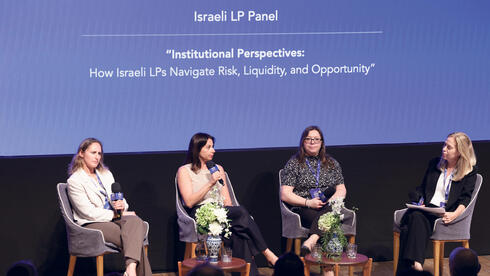
Ronny Zakay, Head of Alternatives and Direct Equity at Migdal Group, Katya Zbar, Head of Private Equity, Clal Insurance and Lena Krupalnik, and Head of the Citizens of Israel Fund (CIF) were panelist in a session entitled “Institutional Perspectives: How Israeli LPs Navigate Risk, Liquidity, and Opportunity” at the Israel Private Markets Summit (IPM) in Tel Aviv.
“2025 was full of uncertainty, we hope 2026 will be the year of private equity recovery,” said Ronny Zakay, Head of Alternatives and Direct Equity at Migdal Group, as part of an all-female panel entitled “Institutional Perspectives: How Israeli LPs Navigate Risk, Liquidity, and Opportunity” which concluded Leader Private Capital’s Israel Private Markets Summit (IPM) on Tuesday at the The Peres Center for Peace and Innovation in Tel Aviv.
The panel. moderated by Dorit Zak, Managing Director, HarbourVest Partners, also included Katya Zbar, Head of Private Equity, Clal Insurance, and Lena Krupalnik, Head of the Citizens of Israel Fund (CIF).
1 View gallery
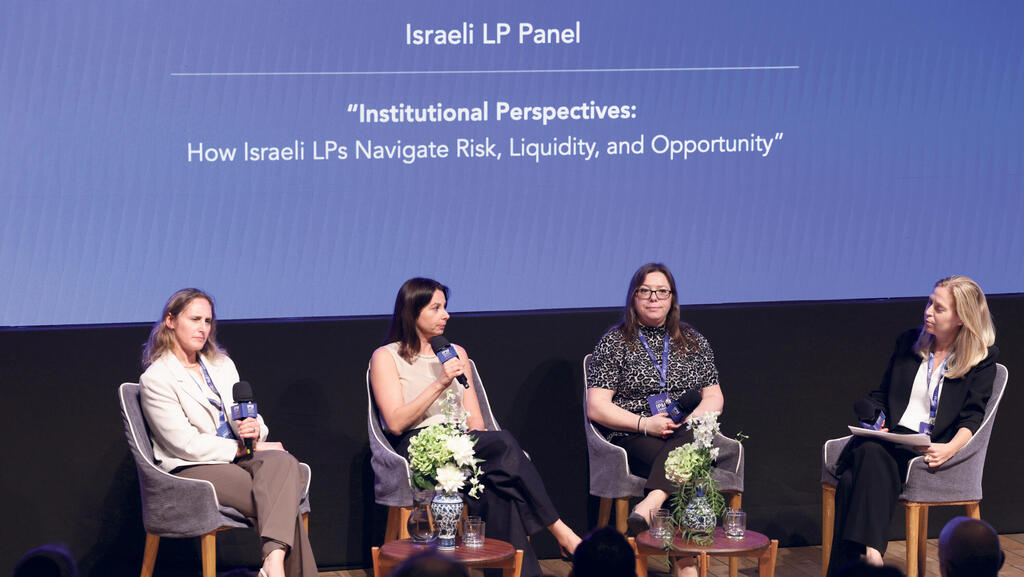
Israeli LP Panel (from left): Ronny Zakay, Lena Krupalnik, Katya Zbar, Dorit Zak
(Orel Cohen)
“The last two years have been a personal roller coaster for everyone in Israel with the war, people working from home, and many of our family and friends and colleagues serving in the reserves,” Zak said in her opening remarks. “It seems like everything was placed on hold for a very long time. And the world didn't make it easy on us either. Lack of liquidity was caused by various fundamentals which we've heard a lot about today, so it was very difficult to deploy funds.
Zak mentioned that many of the conference speakers spoke about DPI liquidity. “We heard all about the lack of DPI, lack of money coming back, and we saw it in the highest numbers today. Budgets were cut and cut again and people were waiting for money to come back, hoping it'll be at the beginning of the year, then waiting until the middle of the year. Now we heard it might be coming now.”
I know you don't have budgets for 2026 yet, but I want you to look into your crystal balls and tell us what you think will be in 2026? How will it play out? Lack of liquidity, is it coming back? Will the budgets come back?
Zbar: “Regarding DPI's environment, we see somewhat muted DPI versus the historical averages, although there is a slight pick up in this as well. So we do a lot of work really diving into our portfolios before we plan our programs. Sometimes we invest a little bit less or a little bit more. But in general, I would say that we're sticking to investments, doing what we really believe in, and this is operating in such a wonderful environment as alternative asset classes.”
Zakay: “I think like institutional investors worldwide, we too felt the slower markets the past year, the lack of DPI, the uncertainty, and of course it affected our budget. All of you know that we had reduced budgets the past two years. Unfortunately, I do still feel that private markets are underperforming compared to the public markets, and until that reverses, I think it will continue to affect the budget.
“But there is some good news as well, some factors that have positive effects or implications on 2026 budgets. First of all, we're feeling a bit of a slowdown in income flowing into the Israeli pension track, that's linked only to public indices such as the S&P track. So that's good news for private investments because we have more capital available for these types of investments. The second thing is our AUM is growing. So as long as we're not changing target allocations, our budgets are growing accordingly. And the third major event that we felt this year was our exchange rates and the shekel getting a lot stronger compared to the U.S. dollar and the euro which caused a decrease of allocation in our portfolios.
“When I take everything into consideration, we are optimistic regarding 2026. After a lot of uncertainty during 2025, we hope that 2026 will be the year of recovery for private equity. And we do expect budgets in all private asset classes to be higher than they were the past two years, but we don't expect them to reach the record levels that they reached few years ago.”
Lena, when you build a new portfolio, how do you look at yielding strategies or equities?
Krupalnik: “Our funds' risk appetite is relatively high. Our benchmark exposure is 70% to equity, which naturally brings us to focus to privatize higher return and higher risk strategies. As a result of that, we are heavily focused on private equity, both secondaries and primary strategies. As we are only in the early stages of building our portfolio and are growing rapidly, we are far from reaching our long-term target allocation through private markets, so our main worry is actually a slow pace of deployment rather than the lack of.”
Ronny, you guys always had a big credit mandate. What is it now for 2026? How do you see it? More yielding or less?
Zakay: “I think regarding next year, since there still is a liquidity issue and the private equity market is still lacking some DPI, I do believe that these asset classes will receive high budgets next year.”
2026 vs 2025: Increase, maintain or decrease private equity?
Zbar: “Private equity staying the same.”
Zakay: “Target allocation, but budget increase.”



