










BiblioTech
CTech’s Book Review: What strategy really is and why so many organizations get it wrong
Yotam Gil, Founder and CEO of Imagen, shares insights after reading “Good Strategy Bad Strategy” by Richard Rumelt.
Yotam Gil is the Founder and CEO at Imagen, a company which develops AI-powered editing solutions for professional photographers. He has joined CTech to share a review of “Good Strategy Bad Strategy” by Richard Rumelt.
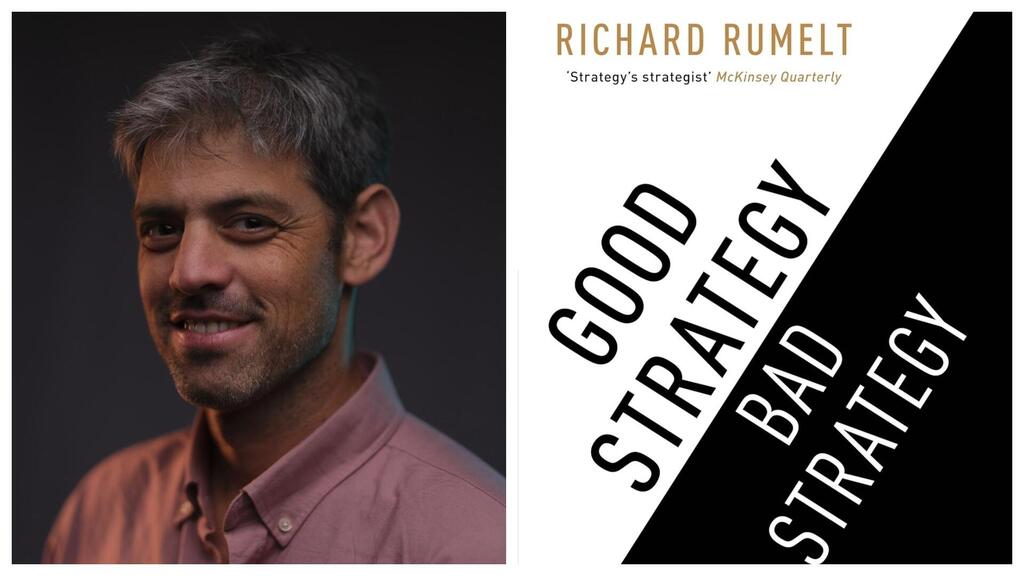
Title: Good Strategy Bad Strategy
Author: Richard Rumelt
Format: Book
Where: Home
Summary:
Good Strategy Bad Strategy is a sharp, highly practical exploration of what strategy really is and why so many organizations get it wrong. Richard Rumelt strips away buzzwords, inflated vision statements, and vague corporate goals, and instead offers a clear framework for identifying challenges and crafting meaningful action.
The book is filled with examples from business, military history, and public policy, showing how good strategy aligns diagnosis, guiding policy, and coordinated action. Rumelt demonstrates why most “strategic plans” fail: they confuse aspirations with strategy and avoid confronting the core problem. The book offers a refreshing, grounded approach to strategic thinking that leaders at any level can apply.
Important Themes:
A central theme in Good Strategy Bad Strategy is the distinction between real strategy and what Rumelt calls “bad strategy,” which often consists of empty slogans, wish lists, and unfocused ambition. Rumelt emphasizes that good strategy begins with a clear-eyed diagnosis of the critical challenge. Without a correct diagnosis, even strong execution is wasted effort. This idea forces leaders to confront uncomfortable truths about their market, their capabilities, and their competitive position.
Another major theme is the value of focus. Rumelt argues that organizations often try to do everything at once, spreading resources thinly across too many initiatives. Good strategy requires prioritization: choosing what not to do. This is particularly relevant for growing companies where opportunities can be abundant but not all of them matter.
A third theme is leveraging strengths. Rumelt highlights the importance of identifying areas where a company holds a real advantage and concentrating efforts there, rather than chasing trends or imitating competitors. Strategy is not an exercise in perfection; it is an exercise in intelligent leverage.
Finally, Rumelt underscores coherence. A good strategy coordinates actions so they reinforce one another. When diagnosis, guiding policy, and action lines align, the organization moves forward with clarity and force. This coherence is what separates meaningful progress from organizational noise.
What I’ve Learned:
The biggest lesson I took from this book is that strategy is ultimately about clarity and courage. Clarity to articulate the real problem, and courage to acknowledge trade-offs. In my work at Imagen, especially in shaping our long-term B2C growth strategy, the book helped me draw sharper distinctions between goals, tactics, and actual strategic direction. It pushed me to ask: What is the critical challenge right now? What policy will guide our decisions? And are our actions truly aligned around that policy, or are they just tasks that feel productive?
Another key learning is that strategy is not static. Rumelt’s framework encourages continuous evaluation: diagnose, act, learn, and refine. This mindset fits perfectly with a data-driven environment where we constantly analyze user behavior, cancellations, retention, and new growth opportunities. Instead of viewing data as a retrospective tool, the book helped me see it as a strategic compass. The real value is not in collecting metrics, but in turning insights into coordinated directional changes.
Lastly, the book sharpened my sensitivity to “bad strategy” patterns: vague objectives, inflated promises, and misalignment between vision and action. I now recognize these red flags much faster, which improves decision-making and helps avoid wasted cycles. Rumelt’s approach reminds me that good strategy is not about knowing everything, but about focusing on the things that matter most.
Critiques:
The book’s strength is also its limitation: its examples, while powerful, lean heavily on familiar historical and business cases that some readers may have encountered before. Some sections are repetitive in reinforcing the central framework, and leaders looking for step-by-step operational tools may find the guidance high level. Still, the clarity of thought outweighs these minor issues.
Who Should Read This Book:
Anyone involved in leadership, planning, product direction, or organizational growth should read this book. It is especially valuable for founders, executives, and team leads who need to make decisions under uncertainty. The book helps cut through noise and forces a disciplined approach to choosing direction, confronting real challenges, and building aligned actions. It is a practical, thought-provoking guide for anyone who wants to sharpen their strategic thinking and avoid common traps that derail organizations.



