









"High-tech must be Israel’s social engine too"
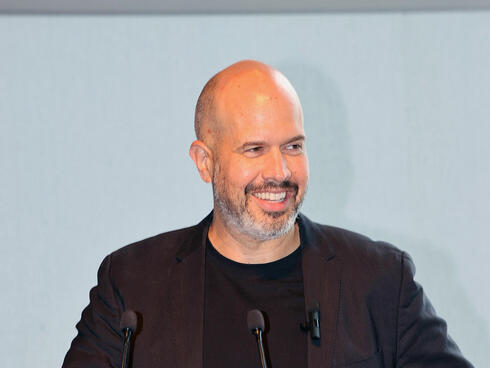
Idan Tendler, partner at Vine Ventures, and chairman and founder of Anu Banu, was speaking at the Israel 2.0 conference by Calcalist and the Anu Banu organization.
“We founded Anu Banu to ensure that high-tech will not only serve as Israel’s economic engine, but also become its social engine,” said Idan Tendler, Partner at Vine Ventures and Chairman and Founder of Anu Banu.
“A senior high-tech executive, a VP of procurement and product management, and a software developer walk into an elevator. This isn’t the start of a joke, it’s literally a Wednesday morning two weeks ago in one of Tel Aviv’s towers. That’s a day in the life of Anu Banu.
“We head into a meeting with members of Sayeret Nayeret, an organization that supports the rehabilitation of around 11,000 discharged soldiers. Collaborating with high-tech companies allows them to make a significant leap in the systems and services they’ve been offering to soldiers for the past two years.”
“South of there, in the Sha’ar HaNegev Regional Council, where council head Ofir Libstein and his son Nitzan were killed, a CEO, a VP of business development, a venture capitalist, and a senior technology manager join a session with local leaders to plan a new regional innovation center. In the same wheat fields where Ofir and others lost their lives, we are now cultivating fields of innovation and renewal.”
“In Bat Yam, teams from leading tech companies are working with the municipality to strengthen the city’s financial resilience and develop models that will help attract and retain young residents.”
“Across the country, technological teams and recruitment experts are building placement models to help people from every background enter high-tech. For example, Lidor Feldman from Kiryat Gat, a first-generation college graduate from Sami Shamoon College, and Bayan Kassem, a Druze IDF officer from Rameh who studied at Ben-Gurion University, both struggled to find jobs in tech. After connecting with us through our collaboration with Wix, both have now started their careers as front-end engineers.”
“Matan Sabag from Gvar’am never completed his matriculation exams but went on to earn a BA at Ben-Gurion University. After two years of job searching, he found a position at Dicomano, in a branch we helped establish in Sderot. Hanin Jaris from Shfaram, a Technion graduate with honors, spent a year looking for work before joining Agava, an algae-sector company near Karmiel, one of our 200 partner firms.”
Tendler explained how the idea for Anu Banu came about: “What I just described is a single day of Anu Banu’s work. On October 7, we saw the extraordinary volunteer spirit of Israelis, especially from the high-tech sector. We asked ourselves how we could channel that same spirit into long-term efforts that would serve future generations. There are many inspiring initiatives that mobilize the entrepreneurial power of high-tech, but most are ad hoc, created in times of crisis or for specific causes. We saw a need for infrastructure that could connect high-tech to long-term social missions across the country. That’s why I founded Anu Banu, an organization for social action within Israel’s high-tech community.”
“We have brought together everything high-tech can offer: human capital, technology, entrepreneurial spirit, and management. The goal is to leverage professional capabilities, build lasting infrastructure, and change Israeli society through partnership.”
“Israel faces deep challenges, foremost among them, polarization. It makes no sense that such a small country is divided into so many separate worlds. The dreams of children in Ofakim, Yarka, Kiryat Shmona, or Bnei Brak are far more limited than those of children in the center of the country.”
“High-tech has an untapped toolbox to help reduce polarization, narrow social gaps, and change this reality. High-tech already drives Israel’s economy, accounting for 20% of GDP and 50% of exports. We founded Anu Banu to ensure that high-tech will not only power the economy, but also become Israel’s social engine.”
“We already have over 2,000 volunteers,” said Tendler. “There are roughly 400,000 high-tech workers in Israel. One day, we hope all of them will join us. We’re partnering with social organizations nationwide, Sayeret Nayeret is just one example. In the coming year, we’ll collaborate with 100 more, and we’re also connecting with local authorities. Within a month, we’ll triple the number of municipalities we work with, and we won’t stop until every local authority in Israel has a partnership with high-tech. Next year, we’ll expand to another 500 associations and academic institutions in the periphery.”
“Together with 200 companies, we’ve already introduced 300 people from Israel’s social and geographic periphery to high-tech, many of them first-generation college graduates. This month, we’re launching a new program for students to enter the industry, because they are the future. We’re also moving into education, the most powerful way to reduce inequality. We want every child in Israel to have the support they need. Hundreds of volunteers will soon adopt 1,000 classrooms in the periphery.”
Tendler also addressed the role of artificial intelligence: “To the world, Israel is an AI powerhouse, but that’s not enough. This revolution must also reach our public systems: education, healthcare, and local government. It must make services smarter, simpler, and more efficient. This month we established Build-Up, a development group that takes the AI capabilities of the tech sector and applies them to national needs. High-tech is racing ahead, and we must ensure that Israel doesn’t fall behind.”
“In conclusion,” Tendler said, “just as high-tech stabilized during and after October 7, it will also strengthen Israel’s social resilience for generations to come. Our mission is to build the infrastructure that enables every man and woman in high-tech who wants to make a difference to do so on a national scale. We are not a political body, we work with everyone in government. This is a partnership between high-tech and all sectors of Israeli society.”



