










Opinion
Peace as real estate: Trump’s layered diplomacy
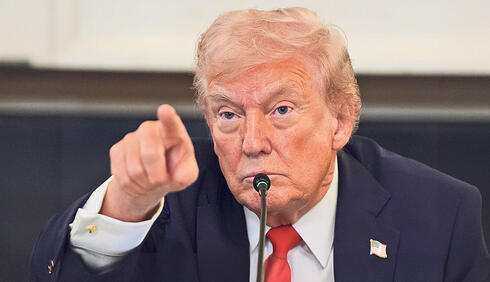
"Trump’s real achievement, both in his previous term and now, may be the recognition that peace in the 21st century is less about mutual admiration and more about mutual investment," writes Dr. Bella Barda Bareket.
When Donald J. Trump returned to the White House as the 47th president, few were surprised to see that his geopolitical playbook looked more like a property portfolio than a traditional doctrine of foreign policy. After all, Trump was never just a politician dabbling in real estate, he was a real estate developer dabbling in politics. His worldview, deeply shaped by decades of building towers, resorts, and golf courses, interprets stability not as an abstract diplomatic goal but as a function of land, infrastructure, and capital flow.
His earlier achievement, the Abraham Accords of 2020, now looks, in hindsight, less like a diplomatic miracle and more like the first phase of a layered economic masterplan. What the world initially perceived as normalization between Israel and several Arab states was, in fact, the opening of new corridors for trade, data, and development. The agreements unlocked a geography of opportunity that had long been frozen by ideology and mistrust.
Layer One: Diplomacy as Access
Traditional diplomacy treats peace as an end in itself. Trumpism treats it as access, the first step in reactivating dormant land, corridors, and supply chains. Every agreement becomes a zoning change: from a restricted territory to a developable asset. When the Abraham Accords were first signed, attention focused on the political theater, flags, signatures, photo-ops. But behind the stage, teams of consultants, financiers, and property developers were already mapping ports, logistics hubs, and potential investment zones.
The geopolitical handshake, in other words, was merely the front office of a much larger construction site.
Layer Two: Infrastructure as Diplomacy
Here enters Jared Kushner, Trump’s son-in-law and key architect of the Accords, a figure who, like his father-in-law, straddles the boundary between real estate and geopolitics. For Kushner, peace was not only about treaties but about connectivity: pipelines, flight routes, fiber cables, and free-trade corridors. His post-White House ventures, including the Abraham Accords Institute for Peace and his investment fund Affinity Partners, backed by Gulf capital, continue to translate diplomatic language into infrastructure deals.
In this worldview, a port can be as politically transformative as a summit; a data center, as stabilizing as an embassy. When Israel, the UAE, and Bahrain signed, it wasn’t just airspace that opened, it was bandwidth. Dubai’s role as a regional logistics and financial hub fused with Israel’s innovation economy, creating what might be described as a peace network built on fiber optics rather than fragile promises.
Layer Three: Investment as Strategy
The third layer, the investment dimension, reveals how economic gravity can reshape politics. Enter figures like Steve Witkoff, the New York developer and long-time Trump ally who understands that buildings are not static objects but instruments of influence. For Witkoff and others in Trump’s orbit, real estate is a geopolitical technology: it anchors capital, attracts talent, and projects soft power.
Under Trump’s renewed leadership, this logic has become explicit. His administration’s regional strategy fuses diplomatic agreements with private-sector momentum. American, Israeli, and Gulf funds are increasingly co-investing in strategic assets, ports, renewable energy, digital infrastructure, effectively turning “peace” into an asset class. In Trump’s version of statecraft, peace dividends are no longer metaphorical; they are measurable in square meters, fiber kilometers, and megawatts.
The New Cartography of Peace
This layered model, diplomacy granting access, infrastructure generating interdependence, and investment securing permanence, marks a profound shift in the logic of peace-making. Where 20th-century agreements relied on ideology and mutual restraint, 21st-century accords are built on shared logistics. The more intertwined the infrastructure, the harder it becomes to return to conflict.
It is, in essence, a geopolitical feedback loop: trade routes breed stability, stability attracts capital, and capital entrenches peace. The result is a new kind of deterrence, not military, but material.
Critics may see in Trump’s approach a crude commodification of diplomacy, a transformation of statesmanship into deal-making. But to dismiss it entirely would be to overlook the material foundations of modern peace. History suggests that agreements endure not because leaders trust each other, but because their cities, ports, and data centers are too intertwined to risk collapse.
Seen through that lens, Trump’s real achievement, both in his previous term and now, may be the recognition that peace in the 21st century is less about mutual admiration and more about mutual investment. By turning diplomacy into development, and treaties into transactions, he has redefined not only the architecture of the Middle East but the architecture of geopolitics itself.
After all, peace that can be built upon, literally, tends to last longer than peace that only exists on paper.
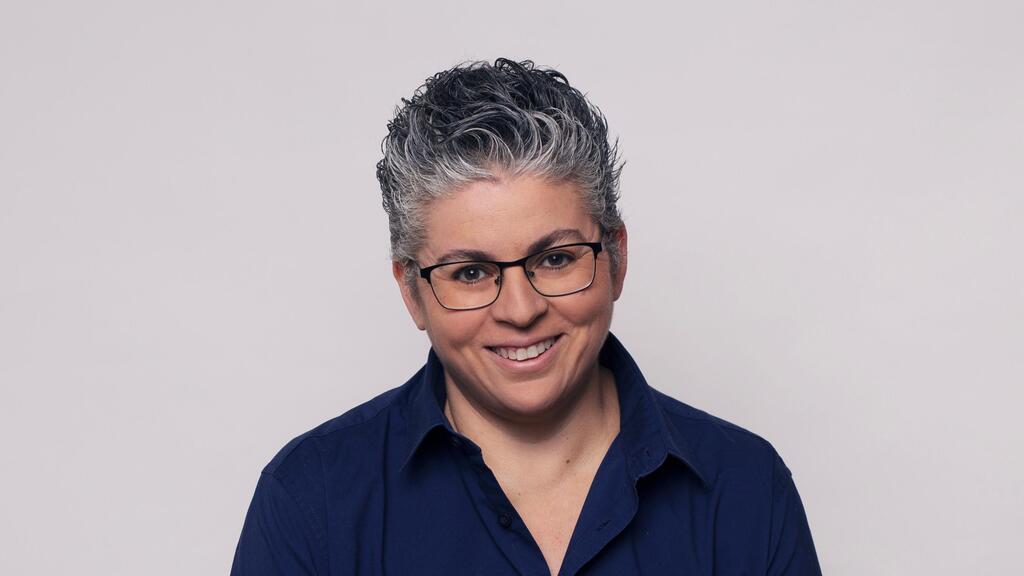
Dr. Bella Barda Bareket is a global trends analyst specializing in the intersection of economics, geopolitics, and technology.



