










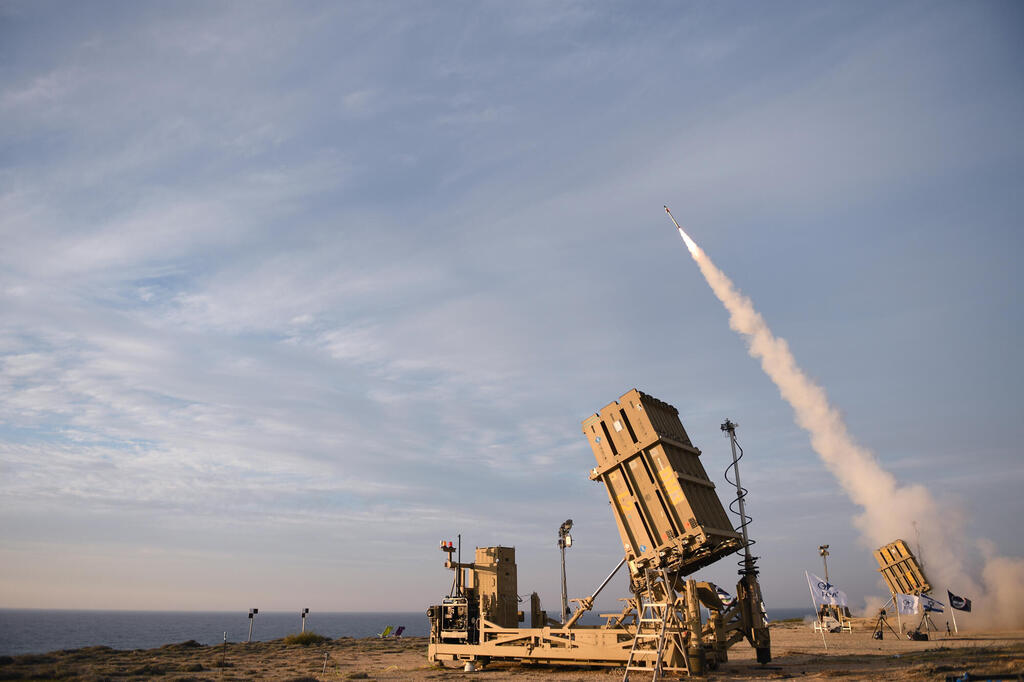
Iron Dome and Iron Beam maker Rafael's IPO complicated by fresh security review
Defense Ministry security chief has reopened a review of the proposed listing because of Rafael's highly classified operations, even as Israel continues pushing IPO plans for its two largest state-owned defense companies.
Israel is accelerating plans to bring its two largest state-owned defense companies to the public markets, even as growing security concerns and political uncertainty threaten to delay the process.
The Government Companies Authority is pushing forward with the planned initial public offerings of Rafael Advanced Defense Systems and Israel Aerospace Industries (IAI), according to new government data. However, with elections approaching, officials believe it is unlikely that either transaction will be completed in the coming months.
The latest development comes just a week after plans emerged for the companies to explore listings in the United States, where government officials and senior executives are expected to meet investors, banks, legal advisers and regulators to examine the feasibility of raising capital on American exchanges.
While IAI's privatization process is advancing steadily, Rafael's path has become more complicated.
According to the Government Companies Authority, IAI, which already has publicly traded bonds, is significantly closer to selling a minority stake and is currently valued at approximately NIS 100 billion ($33.3 billion).
Rafael's proposed IPO, by contrast, remains in its early stages after the Ministry of Finance opposed the Authority's proposal to sell shares privately to institutional investors rather than through a stock exchange.
Adding another layer of complexity, Defense Ministry Director of Security Gil Reich has recently begun reexamining the defense establishment's position on Rafael's planned flotation because of the highly classified nature of significant parts of the company's operations.
The renewed push comes as Israel's state-owned defense companies continue to benefit from unprecedented global demand for weapons and military systems.
According to the Government Companies Authority's 2025 report, state-owned companies generated combined revenue of approximately NIS 113 billion ($37.7 billion) last year, an 11% increase from 2024. Much of that growth was driven by record sales at IAI and Rafael amid surging demand for defense equipment in both Israel and overseas markets.
Combined operating profit climbed 64% to NIS 9.5 billion ($3.2 billion), while net profit rose 28% to NIS 9.8 billion ($3.3 billion) from NIS 7.6 billion ($2.5 billion) a year earlier.
Government company boards also approved dividend distributions totaling NIS 1.6 billion ($533 million) in 2025, up from NIS 1.2 billion ($400 million) the previous year.
IAI approved a dividend of NIS 772 million ($257 million), while Rafael approved NIS 263 million ($88 million), equivalent to half of each company's 2024 net profit.
The report also provides a snapshot of the scale of Israel's state-owned defense sector.
Government companies employed approximately 58,000 people during 2025, with Rafael accounting for more than 10,000 employees.
Average monthly employment costs were highest at Israel Ports Company, at NIS 47,600 ($15,867) per employee, followed closely by Rafael at NIS 47,400 ($15,800).
Salary data also highlights the concentration of highly paid technical employees within the defense industry. The report shows that 110 Rafael employees earned gross monthly salaries exceeding NIS 85,000 ($28,333), while 75 IAI employees earned more than NIS 81,000 ($27,000) per month. At Israel Electric Corporation, 115 employees earned more than NIS 69,000 ($23,000) monthly, as did 13 employees at Mekorot.
The latest update builds on broader government efforts to reshape ownership of Israel's defense industry.
As previously reported, officials have been examining the possibility of listing minority stakes of up to 30% in IAI and Rafael, potentially through U.S. exchanges, where disclosure requirements for companies handling classified defense programs are viewed as more accommodating than in Israel.
Based on current estimates, IAI is valued at approximately NIS 100 billion ($33.3 billion), while Rafael is estimated to be worth around NIS 60 billion ($20 billion).
Both companies enter the process from a position of strength. Their combined order backlogs exceed $50 billion, with IAI accounting for more than $30 billion and Rafael more than $20 billion, reflecting sustained international demand for Israeli defense technologies.



