










Boarding Pass
How CatAmmon is tackling hydrogen’s stalled adoption
Born over a card game in 2024, CatAmmon is an Israeli deep-tech startup rethinking how ammonia is cracked and produced, targeting one of the biggest barriers to large-scale hydrogen adoption.
“A few years ago, hydrogen was considered one of the biggest promises in the transition to clean energy… and many believed it would become the backbone of a NetZero future,” said CatAmmon. “But its adoption stalled once it became clear that storing and transporting hydrogen is extremely complex and expensive.”
CatAmmon is an Israeli deep tech startup that is working towards the breakthroughs needed for hydrogen-based energy to become affordable, competitive, and widely adopted.
“The technology aims to bring the green energy world a major step closer to a NetZero future.”
You can learn more about the company below.
Company Name: CatAmmon
Sector: Energy and Climate
Product/Service description:
CatAmmon’s product is the next generation of ammonia catalysts. Its tailor-made catalysts for both ammonia cracking and ammonia synthesis are based on five years of deep-tech academic research led by two professors. CatAmmon’s solution is built on a unique crystallized ceramic matrix doped with nanometric performance enhancers.
Across the hydrogen value chain, CatAmmon reduces both the cost of producing green ammonia from hydrogen for easy and simple storage and transport, and the cost of cracking ammonia back into hydrogen at the point of use for energy generation. It’s the breakthrough needed for hydrogen-based energy to become affordable, competitive, and widely adopted. The technology aims to bring the green energy world a major step closer to a NetZero future.
What it does:
Green ammonia synthesis: CatAmmon’s synthesis catalyst can produce green ammonia at near-atmospheric pressure, replacing the over 100-year-old Haber-Bosch process, which operates at 100 bars and requires extremely high CapEx and OpEx.
Ammonia cracking into hydrogen: CatAmmon’s catalyst replaces today’s commercial solutions with a cost-effective, high-performance catalyst that cracks ammonia at half of the energy and temperature, reducing cracking costs by up to 50%.
Founder Bios:
Dr. Gilad Lando, CEO & Co-Founder: Ph.D. in Chemistry (Hebrew University) with over 15 years of executive leadership as CEO, VP, and CTO. Lando has led over $20M in fundraising from investors and the Israel Innovation Authority. His expertise lies in chemistry and materials with experience in building technologies, partnerships, and commercial strategies.
Prof. Michael Zinigrad, CScO and Co-Founder: A global expert in physical chemistry and catalysis with over 30 years as Head of the Materials Research Center at Ariel University, where he also served as Rector. Zinigrad has developed multiple patented catalysts, including CatAmmon’s proprietary ammonia-cracking catalyst, and brings scientific credibility and decades of applied research experience.
Prof. Alexander Sobolev, Lead Physics & Co-Founder: Ph.D. in Physics and specialist in electrochemistry and ammonia catalysis. Principal inventor of CatAmmon’s ammonia-cracking catalyst, developed under Prof. Zinigrad. Former lab head at INTEX and current lecturer at Ariel University, with hands-on expertise in advanced materials and catalyst development.
Year of Founding: 2024
Last Investment Round: $1.85 million
Last Investment Stage: Pre-seed
Date of Last Investment: 13 February 2025
Total investment to date: $1.85 million
Investors: NetZero Tech Ventures and IIA
Current number of employees: 8
Open positions: N/A
Website: https://catammon.co/
Social Media: https://www.linkedin.com/company/catammon/
How was the idea born?
CatAmmon was born in one of the least expected places for a deep-tech startup, a card game night. CEO Dr. Gilad Lando posted online looking on Facebook for an extra player to complete a table. Avishay Mor from the University’s tech-transfer team came across the post and joined the game, thinking it would just be a fun break.
What followed is still debated: each insists the other one cried after losing, and to this day no one agrees on who won. But somewhere between the joking, the competitiveness, and the questionable card-skills on display, a meaningful conversation started.
Avishay mentioned a breakthrough catalyst technology developed by Professors Michael Zinigrad and Alexander Sobolev and said he was looking for an experienced leader to commercialize it. Gilad shared that this was exactly his background and passion.
Despite the painful defeat at the card table (again, opinions vary), the meeting ended in a clear win-win. A spontaneous game became the spark that created CatAmmon.
What is the need for the product?
A few years ago, hydrogen was considered one of the biggest promises in the transition to clean energy. Hydrogen’s reaction with air produces only energy and water, and many believed it would become the backbone of a NetZero future. But its adoption stalled once it became clear that storing and transporting hydrogen is extremely complex and expensive. In Europe, hydrogen-based energy is still roughly two-three times more expensive than fossil fuels.
Today, the global energy sector increasingly converts hydrogen into liquid ammonia, ships it internationally, and cracks it back into hydrogen at the point of use. Ammonia is the most efficient hydrogen carrier: each molecule contains three hydrogen atoms, it is already the second most-produced chemical worldwide, and it relies on a well-established global supply chain and infrastructure.
The problem is that cracking ammonia back into hydrogen is highly energy-intensive and costly; at large scale it typically requires 700-800°C with today’s commercial catalysts. This makes cracking the single largest bottleneck in the hydrogen value chain.
CatAmmon solves this with a revolutionary low-temperature catalyst that cracks ammonia at just 350–400°C, reducing energy demand and cutting cracking costs by up to 50%. The catalyst is ceramic-based, low-cost, and scalable for mass manufacturing.
On the production side, ammonia synthesis still depends on the 100-year-old Haber–Bosch process, which requires extremely high pressures of 100 atmospheres (equivalent to the pressure at diving at a depth of ~1,500 meters). CatAmmon’s second catalyst produces ammonia at just 1.5 atmospheres, dramatically reducing both CapEx and OpEx and enabling affordable green ammonia production.
Together, these breakthroughs remove the major barriers holding hydrogen back, making it cheaper, cleaner, scalable, and bringing the world significantly closer to a hydrogen-based NetZero future.
How is it changing the market?
CatAmmon’s technologies make hydrogen far more affordable and practical by cutting the cost and energy needed for both ammonia cracking and ammonia synthesis. This allows hydrogen to compete directly with today’s polluting fuels and brings it back to the front of the clean-energy transition.
As global energy demand surges, especially from data centers and AI, CatAmmon’s catalysts enable hydrogen to become a scalable, cost-effective solution, helping almost all industries shift toward cleaner and more sustainable energy sources.
How big is the market for the product and who are its main customers?
The global hydrogen market is vast and growing rapidly, projected to reach $410 billion by 2030. Europe is pushing hydrogen to replace Russian natural gas and reduce fossil-fuel dependence, while in Southeast Asia, Japan, Korea, Australia, and China are investing heavily in hydrogen to address rising temperatures and climate stresses. By 2050, analysts expect that about 45% of all hydrogen will be transported and stored as ammonia, making efficient cracking a critical global need.
Within this landscape, CatAmmon focuses on two major catalyst markets. The ammonia-cracking catalyst market is forecast to reach $1.04 billion by 2030, with optimistic projections as high as $2.5 billion. The ammonia-synthesis catalyst market is even larger, expected to grow to around $2.4 billion by 2030 and possibly exceed $3 billion under optimistic scenarios.
CatAmmon’s primary customers span the full hydrogen-ammonia value chain, including major engineering firms developing ammonia production and cracking systems such as Topsoe and KBR, automotive companies transitioning to hydrogen fleets such as Hyundai and Mitsubishi, hydrogen-powered shipping companies like Amogy, and ports preparing ammonia-to-hydrogen infrastructure, like the Port of Rotterdam.
Does the product exist already? If not - at what stage is it and when is it expected to hit the market?
CatAmmon currently has two catalysts under development, each at a different stage of technological readiness. Our ammonia-cracking catalyst is at TRL 5, with an alpha version already operating in pilots with several industrial partners. This product is moving toward scale-up and is expected to reach commercial production and first sales in 2027.
Our green ammonia synthesis catalyst is at TRL 3, following a successful 1,000-hour run in the lab. It is now progressing through the next stages of development and is planned to enter production and commercial sales in 2028.
Who are the main competitors in this sector and how big are they?
The sector is currently led by several large multinational catalyst companies. Haldor Topsoe (Denmark) provides high-temperature ammonia-cracking systems mainly suited for large industrial facilities. Johnson Matthey (UK) supplies rare-metal catalyst solutions, which are limited by the scarcity and high cost of precious metals.
What is the added value that the founders bring to the company and the product?
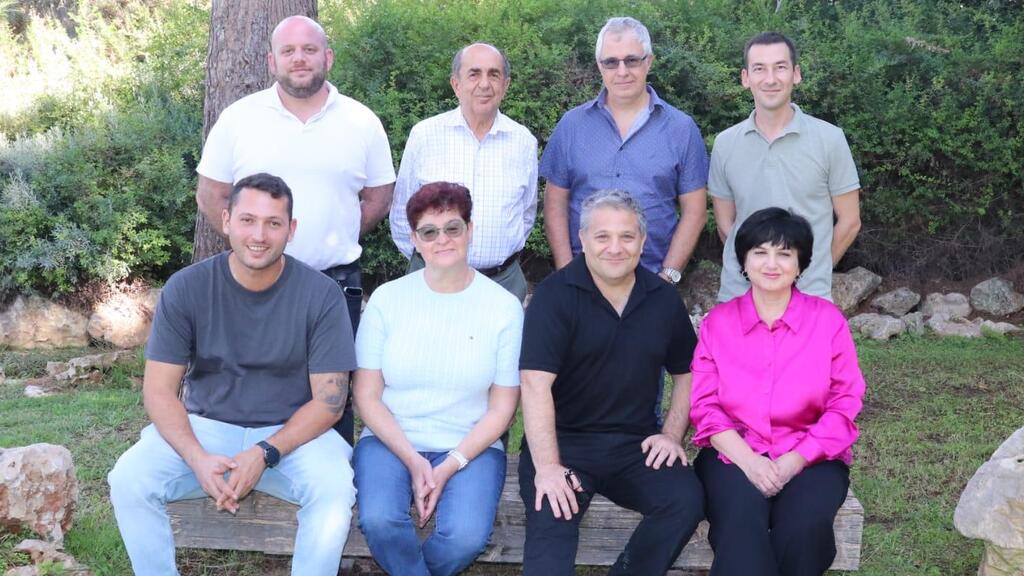
CatAmmon’s founders combine scientific expertise with commercialization experience. CEO Dr. Gilad Lando brings over 15 years of leadership in chemistry-driven ventures, alongside experience in fundraising and industry partnerships. Professors Michael Zinigrad and Alexander Sobolev, the inventors of CatAmmon’s catalysts, are experts in materials science and ammonia catalysis. We are supported by board member, Dr. Gideon Friedman, former Chief Scientist at Israel’s Ministry of Energy, who provides strategic guidance.
Together, the team brings the scientific depth and industry insight needed to commercialize breakthrough ammonia technologies.
What will the money coming in from the round be used for?
The new funding will support four main activities. First, it will allow CatAmmon to expand the number of pilots and strengthen business development in order to reach the market faster and capture a larger chunk of the growing hydrogen-ammonia sector. Second, it will accelerate the development of the company’s second catalyst for green ammonia synthesis, currently at TRL 3, with the goal of advancing it to TRL 6. Third, the funding will enable scale-up of production for the ammonia-cracking catalyst, allowing high-volume pilots involving tens to hundreds of kilograms. Finally, the company plans to expand its team and laboratory space to support these growth steps.
In the "Startup Boarding Pass" section, CTech will cover the (relatively) small investments made in companies during the early stages of their existence - and the entrepreneurs and startups who have not yet had the opportunity to reveal their stories to the world. Please use the linked form and fill it out according to the guidelines. This form is intended for startups raising between $500,000 and $3 million from venture capital funds, angels, or official grants from Israeli and foreign institutions. If relevant, someone at CTech will be in touch for follow-up questions.



