










Inside Israel’s hidden server boom: AI drives a race for mega-facilities
Developers chase double-digit returns as demand for power-hungry AI reshapes the real-estate and energy landscape.
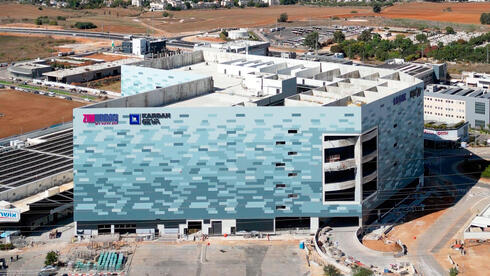
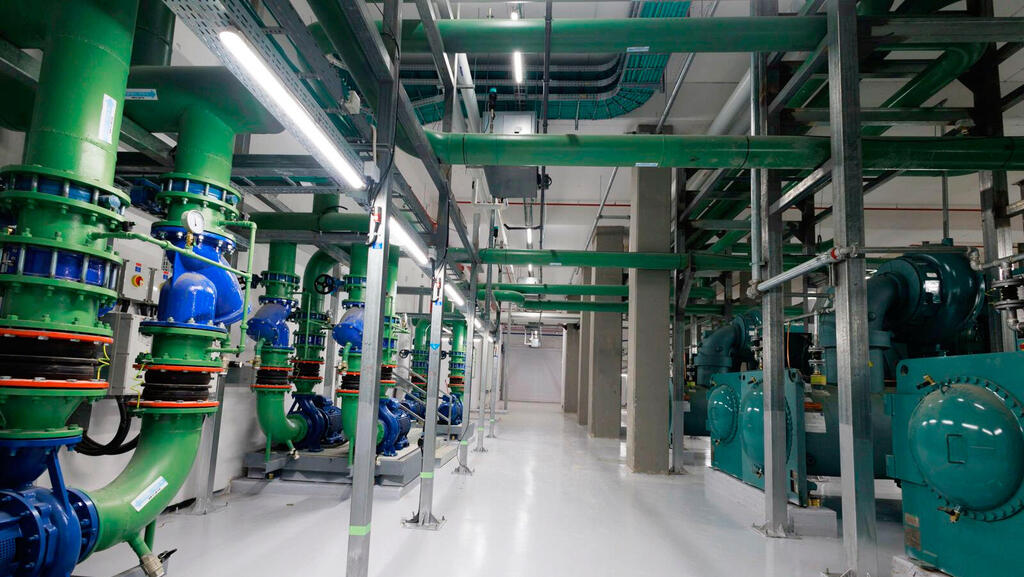
Anyone visiting the Malanta shopping complex now under construction in Kfar Saba likely has no idea what lies beneath the bustling Osher Ad branch. Those with special permits who make their way through multiple secured doors reach basement levels that resemble a classified defense facility, complete with guards, identity checks, cameras, and reinforced infrastructure, from advanced fire-suppression systems to high-capacity air conditioning. All of it exists to protect the real treasure inside: servers.
The complex was built by Serverz, a partnership between Kardan Geva and entrepreneur Rani Zim, both known until now for developing and managing shopping centers. Covering 12,500 square meters, the facility meets the Tier 3 international standard, ensuring high operational availability and protection from physical damage and cyberattacks. It is engineered to support an enormous electrical capacity of 16 megawatts.
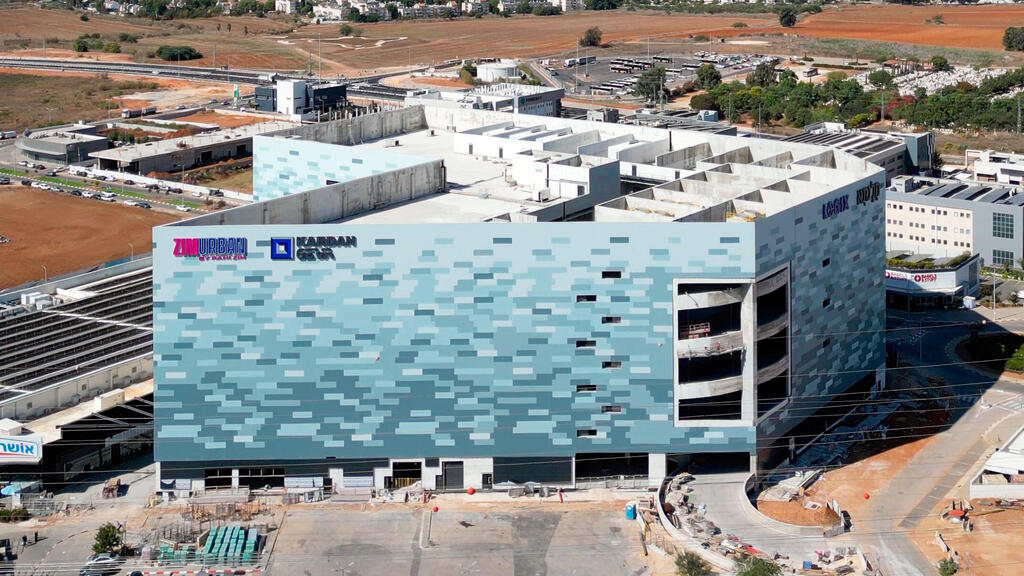
This facility is one of dozens of new server farms recently built, or about to rise, across Israel. The sector is expanding rapidly worldwide, and Israel is no exception. A study by market research firm Arizton found that in 2020, Israel had only 10 server farms; today, 18 are operating and 27 more are planned. By 2030, investments in Israeli server farming are expected to reach $1.39 billion, with annual growth exceeding 13%.
Electricity demand reflects the surge. In 2020, Israeli server farms consumed roughly 40 megawatts. Today, that figure is estimated at 200 megawatts.
A Growth Engine Called AI
Server-farm demand is driven by cloud computing, streaming, crypto, and, above all, AI applications that require massive processing power. Industry estimates suggest global investments could reach $6.7 trillion by 2030. Alongside construction costs, electricity usage for operating servers and cooling systems continues to soar; data centers already account for about 2% of global power consumption.
Large tech companies, including Google and Amazon, distribute their server farms across multiple countries and regions to reduce risk and improve service. Smaller firms typically outsource their needs to hosting providers.
Eran Barak, CEO of Serverz, says AI is the single biggest force behind current growth. “In the past, a server unit consumed 10 kilowatts. Today it needs 40, because computers are more powerful and faster,” he explains.
Barak notes that Israeli server-farm operations began about 20 years ago, as companies realized they could no longer host critical systems on-site. The September 11 attacks accelerated the shift. “Before then, there were no dedicated backup facilities. The collapse of the Twin Towers changed the mindset and led to server-farm development,” he says.
In Israel, major banks were early adopters. In 2011, Bank Leumi opened a fortified 4,500-square-meter underground facility in Lod, designed to withstand missile strikes, earthquakes, and chemical or biological attacks and operate autonomously for three days.
Developers Spot an Opportunity
The need for server infrastructure has not gone unnoticed by real-estate developers grappling with a tough market, marked by slow apartment sales, high financing costs, and struggling office demand. Server farms, by contrast, promise strong returns.
“If you do it right, you can enjoy high double-digit returns,” says Uzi Levy, CEO of the Mivne Group, which, alongside Ashtrom, Amram Avraham, Azrieli, RAD-Bynet, Papouchado, and others, has moved aggressively into the sector.
Azrieli, best known for offices and malls, entered the server-farm business in 2019 with the NIS 2.8 billion acquisition of Norwegian operator Green Mountain. By 2024, analysts expected the sector to account for a quarter of Azrieli’s activity.
Real-estate players have natural advantages: land reserves and construction expertise. Yet, not all land qualifies. “We’ve been helping an international company for a year to find at least 50 dunams in the center with access to electricity and communications. We haven’t found any,” says Mor Ziv, director of real-estate investments at JLL Israel. In Shoham’s industrial zone, a single dunam can cost NIS 7–8 million.
Even once land is secured, progress isn’t guaranteed. Developers depend entirely on Israel Electric Corporation, which controls the national transmission grid and does not prioritize the sector. By contrast, the U.S. and UAE have designated server farms as strategic infrastructure, giving them top priority. Israel has made no comparable decision.
High Costs, High Complexity
Server-farm development often takes six to seven years, and single sites may cost over NIS 500 million. This limits the field to large players or consortiums.
Unlike office construction, where most costs go to the physical building, here, most costs involve systems: cooling, electricity, fire suppression, redundancies, and cybersecurity.
According to Ran Samuelov, CEO of Massad Oz CPM, 70% of energy consumed in a data center goes directly to servers. Efficiency gains of even 30% can be significant. He expects Israel to eventually adopt facilities integrated with photovoltaic fields, although none exist yet.
Two business models dominate: building a farm for one large anchor tenant under a long-term lease, or building multi-tenant “colocation” facilities for smaller customers. The first reduces risk and improves financing options; the second offers higher returns but carries greater operational risk.
“The standard in this field is zero malfunctions,” Barak emphasizes. “If you don’t know how to operate it properly or meet deadlines, you're out.”
A senior industry executive warns that the market could overbuild. “There are only so many clients like Microsoft, Amazon, Google, Oracle, or Meta,” he says. “Entrepreneurs are tempted by high yields, but the infrastructure is extremely expensive and requires constant upgrading. Anyone entering this field must stay very close to demand and supply.”



