












Top 50 Most Promising Startups
Beyond the exit: What the $7.75 billion Armis deal says about Israel
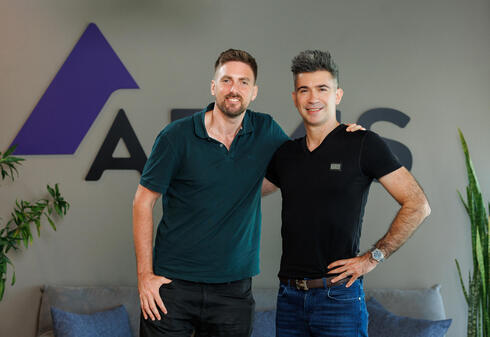
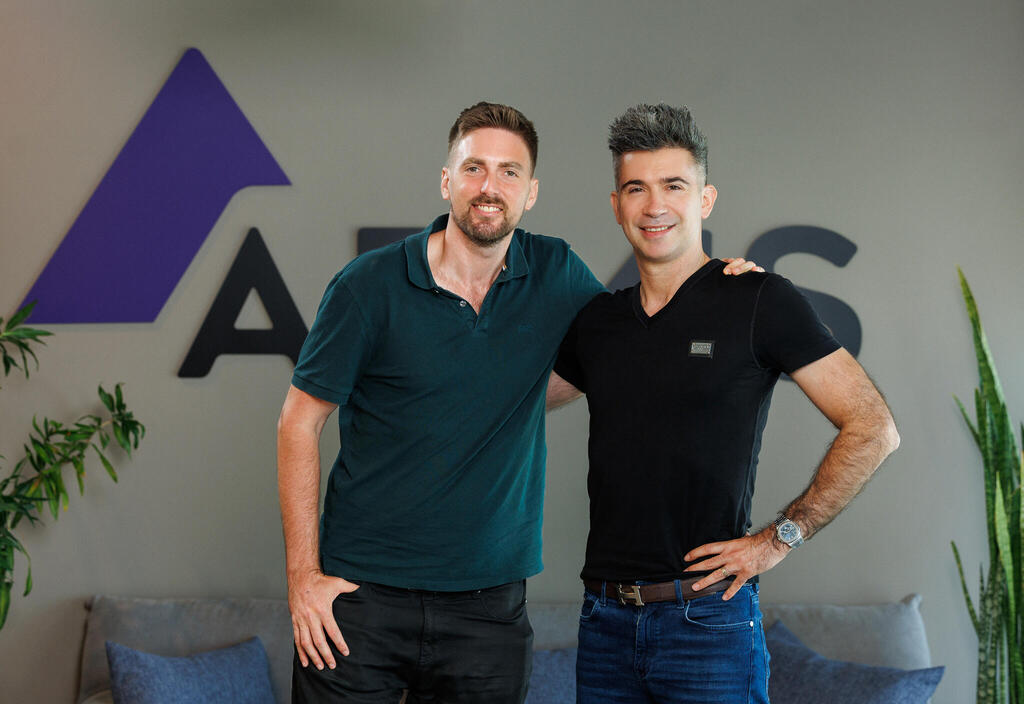
The personal story of Armis co-founders Yevgeny Dibrov and Nadir Izrael mirrors the rise of an entire ecosystem.
Last December, we signed a deal to sell Armis to ServiceNow for $7.75 billion, in one of the largest transactions in the history of Israeli high-tech. It was an exciting moment for us, for our families, and for the many employees who were part of the journey (some from the very beginning). But we soon realized that this was not just a personal milestone. It is a moment that tells a broader story, not just of one company, but of an era, an industry, and an entire country.
We come from different backgrounds, but with starting points quite similar to those familiar to many Israelis. I, Yevgeny, was born in Dnipropetrovsk in the former Soviet Union (now Ukraine). At the age of four, I immigrated to Israel with my mother, grandparents, and great-grandparents. Like many immigrants from the former Soviet Union, our story may sound almost like a cliché, but it is not. It is simply the story of hundreds of thousands of families.
I grew up in Rehovot. My mother, who was an economist, worked in physical labor, including picking citrus, and held several jobs at the same time just to support me and provide me with opportunities and education. My grandfather, a gas engineer in the Soviet Union, worked as a gas station attendant. I worked in a logistics factory to buy my first car.
I, Nadir, grew up in Kiryat Ata. Our home was not lacking in love or support, but from a young age we understood hardship. My mother was in a serious car accident before I was born and struggled for years to recover, living with blindness, epilepsy, and many long-term effects. We never went hungry, but we did not grow up with abundance either. We learned early what it meant to be responsible, persistent, and to “never give up.” I learned that everything in life requires hard work. I helped support the family when necessary, and I taught myself programming through books and evening courses after school.
We met in the army, in Units 81 and 8200. We worked together on projects that later received the Israel Defense Prize, long before we thought about founding a startup. We met again later at the Technion, where we already knew we would start a company together. It took a few years, we held roles at Adallom and Google, but eventually it happened. A little over a decade ago, we founded Armis.
This is not an extraordinary story, but quite the opposite: it is an Israeli story. The fact that such a story can lead to the creation of a global company worth billions of dollars is perhaps the most important thing to remember, especially on the 78th Independence Day of the State of Israel.
There is one idea we return to again and again, which is also the motto of Unit 81: “To make the impossible possible.” In many ways, this is also the guiding principle of those serving in technological units, of Israeli high-tech more broadly, and perhaps of the State of Israel as a whole. We do not excel in technology because it is a convenient choice, we do it because we have no other choice. We must build, develop, refine, innovate, and lead, because it is part of our ability, and necessity, to exist and prosper. And if the past few years have taught us anything, it is this: Israelis know how to create reality, even when conditions are far from ideal.
Not a closed club
Israeli high-tech is often described as a “closed club,” belonging to a small group of people with a privileged starting point. But the reality, as always, is more complex. High-tech is one of the few sectors in Israel that truly enables social mobility. It is far from perfect, and there is still much work to be done - by the state, civil society, and the industry itself - but it does offer a clear path: those willing to work hard, learn, and take risks can advance and achieve significant success.
One of the key drivers of this is service in the IDF’s technological units. At an age when many young people around the world are still finding their way between high school and academia, Israelis are given real responsibility, for critical systems, and sometimes for tasks where there is no room for error. This is not just technical training; it is an experience that teaches teamwork, decision-making under pressure, and the understanding that sometimes there is no “someone else,” only you, responsible for solving the problem.
Israeli high-tech does not operate in a vacuum. It is shaped by reality and responds to it. In times of uncertainty, a deeper sense of responsibility has emerged within the industry: to continue building, creating, and driving the economy forward. When workers were called up for reserve duty, others stepped in. When we were forced to work from shelters for extended periods, we continued moving forward. This is not a disconnect from reality, but an understanding of how critical the industry is to Israel.
Exit is a vote of confidence
Some look at the wave of acquisitions of Israeli companies and ask whether this represents a missed opportunity. Are entrepreneurs selling too early? But what is called an “exit” is not the end of the story. In many cases, it is the beginning of a new phase. We have experienced this ourselves in the past, and now for the second time. Such transactions do not necessarily end a company’s journey; they often transform it, accelerate it, and open opportunities that did not exist before. The path is not always simple or linear, but it is far from the end of the road.
When global companies acquire Israeli firms, they are not only buying technology, they are investing in Israel. They establish development centers, hire employees, and build long-term operations. Every international company that expands its presence in Israel is expressing confidence, not only in the technology, which has long been recognized, but in Israeli talent. The knowledge that is created does not disappear; it spreads. Employees and managers who gain experience building companies, scaling globally, and leading organizations often go on to found the next generation of startups. From every company that is sold, many more are born. This is how an ecosystem is built. If Zionism once meant draining swamps and building kibbutzim and moshavim, today it also means building companies, not instead of the past, but as a continuation of it, using different tools.
The story of Armis is just one page in a much larger narrative. Yes, it is the story of Yevgeny from Rehovot and Nadir from Kiryat Ata, but it could just as easily be the story of thousands of other entrepreneurs, managers, and employees from across Israeli society. This story did not begin with us, and it will not end with us. It begins anew with every boy and girl growing up in Israel today, in the periphery and in the center, from every community, who understands that the path is open to them.
Yevgeny Dibrov and Nadir Izrael are the co-founders of Armis.



