










VC Survey 2026
“Israel’s next growth chapter will be built on critical systems the world cannot afford to fail”
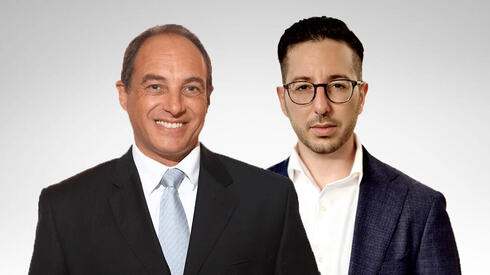
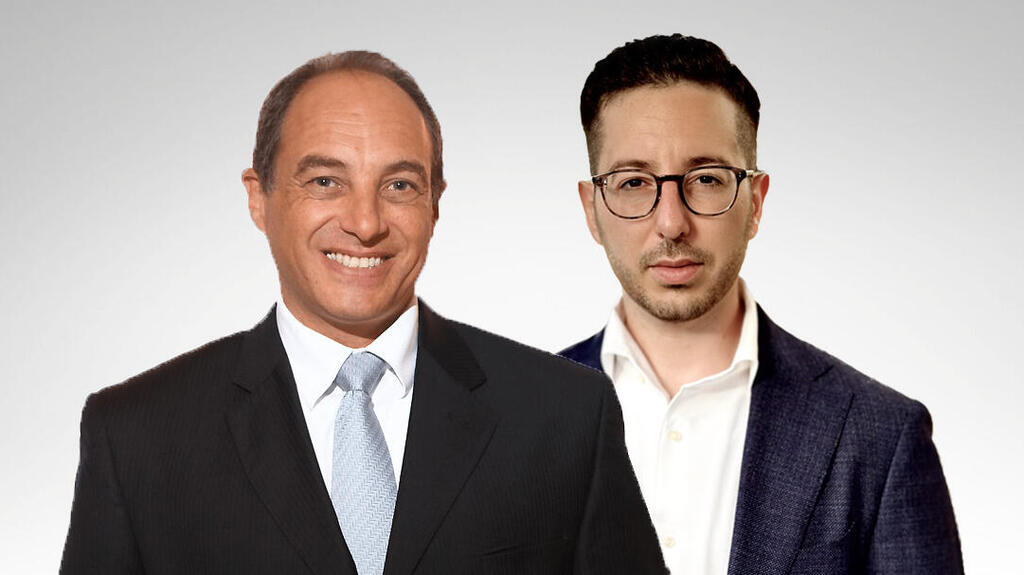
Catalyst Private Equity’s managing partner Edouard Cukierman and partner Ariel Anati join CTech to offer their outlook for 2026, from how VCs will need to adapt for the rise of high-CAPEX sectors to why Israel is now the "Scale-Up Nation," as part of CTech's VC Survey 2026: The Next Leap.
“The Israeli tech brand is no longer being sold as ‘the startup nation’ but mostly as the ‘scale up nation’ in very specific industries and segments,” say Edouard Cukierman, managing partner, and Ariel Anati, partner at Catalyst Private Equity. They argue that Israel’s next growth chapter will be driven by “critical systems the world cannot afford to fail,” citing AI infrastructure and vertical AI applications as the primary domains set to eclipse cybersecurity as the country’s leading export engine by 2030.
Following the turbulence of recent years and the stabilization of 2025, the Israeli tech ecosystem is entering a new era: The Next Leap. Cukierman and Anati joined CTech to share insights for its VC Survey 2026, which invites prominent investors to discuss the topics, trends, and “leaps” expected in the year ahead.
With hardware-heavy, high-CAPEX sectors gaining traction, Cukierman and Anati believe that “there is a need for a more permanent and flexible capital solution when hardware and long cycle sales are being part of the equation.” The winning Israeli funds in this case, they contend, “will not be pure VCs – they will look more like early-stage infrastructure investors.”
You can read the entire interview below:
Fund ID
Name of Fund: Catalyst Private Equity
Total Assets Under Management (AUM): $450M
Partners: Edouard Cukierman, Yair Shamir, Boaz Harel, Luc Muller, Ariel Anati
Notable Portfolio Companies (Active): Addionics, Speedata, Nexar, Arbe
Notable Exits: Mobileye, Tufin, Otorio, Taboola, Satix
The Liquidity Leap: After a period defined by cash preservation, will 2026 see the reopening of the IPO window for Israeli tech, or will M&A remain the sole viable liquidity event?
In our opinion, it seems that 2026 won't mark a full reopening of the IPO window for Israeli tech, but it will mark its selective return. Since 2024 and especially since last year, the bar has structurally moved. Public markets are now demanding profitability, cash-flow visibility, and durable growth, not just revenue acceleration.
We are already seeing the setup: Israeli growth-stage companies have cut burn by 35-50% on average since 2022 (according to data collected by Catalyst), and median gross margins in mature SaaS (these days mostly known as 'Vertical AI') are back to around 80%. If inflation stabilizes below 2.5% in the U.S. and the Fed executes even 150-200bps of cumulative rate cuts by Q3-2026, the IPO window will continue to be open, but only for companies with over $150M ARR, and a clear path to profitability within four to six quarters.
That said, M&A will remain the dominant liquidity path. Strategic buyers are sitting on over $6T in global cash, and PE dry powder exceeds $2.3T globally. For Israel specifically, 70-80% of exits in 2026 will still be M&A-driven, particularly in cybersecurity, fintech infrastructure, and vertical AI, where acquirers are paying six to 12 times ARR for profitable companies and three to six times for near-breakeven ones. The liquidity story in 2026 is less so “IPO vs. M&A,” but rather “selective IPOs at scale, and accelerated consolidation everywhere else.”
The Global Leap: How is the 'Israeli Tech' asset class being rebranded to global LPs in 2026? Are we shifting the narrative from 'Innovation' to 'Extreme Resilience'?
The Israeli tech brand is no longer being sold as “the startup nation” but mostly as the "scale up nation" in very specific industries and segments. In 2026, global investors are underwriting Israel as a resilience-driven production engine for critical infrastructure tech – cyber, defense, data, and applied (vertical) AI. Since October 2023, Israeli companies have continued shipping, selling, and raising despite geopolitical shock, talent displacement, and capital tightening. That operational continuity is now a differentiator. Investors are no longer asking, “Is Israel risky?” They are asking, “Why does Israel consistently produce top-quartile technical teams under stress?”.
The Deep Tech Leap: With the rising focus on hardware-heavy sectors (Defense, Quantum), is the Israeli VC model adapted to fund high-CAPEX ventures?
The traditional Israeli VC model is not structurally built for high-CAPEX deep tech – at least not yet. Most local funds are optimized for SaaS slash vertical AI-style capital needs: $10M to $20M to Series A, quick ARR scaling, and early exit optionality via secondary markets. That model breaks down in defense, hardware, quantum, and advanced manufacturing, where capital intensity is three to four times higher and commercialization timelines are three to five years longer. A single advanced defense or quantum platform now requires $80M-$150M to reach meaningful revenue scale, versus $25M-$40M for a classic SaaS company. The adaptation is already underway, but uneven.
We’re seeing the emergence of hybrid structures: VC and venture debt stacks, corporate co-investments, and government-backed guarantees. Defense-tech rounds in Israel grew from less than $300M in 2020 to over $1.2B in 2024-2025. The winning Israeli funds in this cycle will not be pure VCs – they will look more like early-stage infrastructure investors, where a possibility of a 'refinancing' or an embedded secondary option (underwritten by the company) will be a mandatory term for new investments to be made. In this current cycle a fund with only five years to invest the capital and five years to exit will not be enough. There is a need for a more permanent and flexible capital solution when hardware and long cycle sales are being part of the equation.
The Efficiency Leap: In the era of AI-driven hyper-productivity, is the traditional correlation between 'Headcount Growth' and 'Company Success' permanently broken?
Yes, the correlation between headcount growth and company success is structurally broken. Permanently. AI has turned productivity into a non-linear variable and also the expectation from investors and managers has significantly changed. We are already seeing Israeli startups with $10M-$15M ARR operating with 30-50 employees, versus 120-180 employees just five years ago. In vertical AI, cybersecurity, and developer infrastructure, revenue per employee is now routinely crossing $300K-$500K, with top-quartile companies pushing past $700K (based on data collected from Pitchbook). This changes everything: hiring strategy, capital planning, valuation frameworks, and even exit dynamics.
The next generation of breakout Israeli companies will scale revenue five to 10 times before doubling headcount. That means smaller burn, faster paths to profitability, and lower dilution, but also the barrier of entrance for junior employees will increase, which could affect the future generation of entrepreneurs and founders.
The Next Engine: Cybersecurity has been Israel's primary export engine for a decade. Which domain is best positioned to take the lead by 2030?
By 2030, cybersecurity will still matter and maybe even more than today, but it won’t be the primary growth engine of Israel. The next dominant domain will be AI infrastructure and vertical AI applications, followed closely by data infrastructure for AI-native enterprises. In addition, it seems that defense-tech is no longer a niche: global defense spending is now above $2.4T annually, growing at 6-8% CAGR, and NATO countries alone have committed to sustained budget expansion through 2035. Israel is uniquely positioned here, with embedded domain knowledge, battlefield-proven R&D loops, and rising global demand for autonomous systems, sensors, and cyber-physical security.
The second engine will be AI-native infrastructure – compute optimization, and the intersection between cyber and AI – where the threat of code being 'contaminated' is a key sovereign risk.
The macro pattern is that Israel’s next growth chapter will be built not on consumer apps or generic SaaS, but on critical systems the world cannot afford to fail.
Finally, what are 2-3 startups that, in your opinion, are likely to make a leap forward in 2026?
From Catalyst's portfolio:
1. Addionics: The need of electrification for both the EV industry and going forward to the new robotics leap and the move to physical AI will position Addionics as a key player providing the next generation of batteries and power.
2. Speedata: With more data being generated, the more data needs to be processed and faster. Speedata is developing the next leap of data compute known as analytics processing units (APU).



