





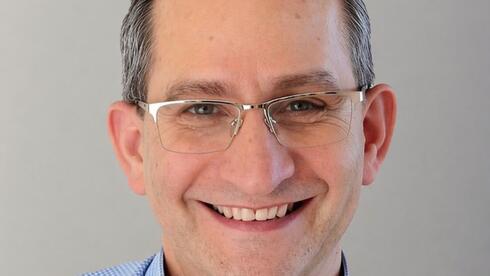





“Combined with AI and classical computing, quantum computing is the most influential and dangerous tool we’ve ever had”
IBM’s Alessandro Curioni explains how quantum, classical, and AI together could reshape technology and society.
When Dr. Alessandro Curioni, IBM's director of research in Europe and Africa and one of the most influential figures in the world of quantum computing, is asked how he sees Israel's place in the quantum revolution, he does not hesitate: "I can't think of a better ecosystem than Israel to carry out the critical experiments that will lead to the next paradigm shift."
According to Curioni, who heads the Central Quantum Research Laboratory in Zurich and recently visited Israel, the country or organization that wins the quantum race will be the one that can develop the right applications, along with the right classical interfaces, software, security, and the ability to scale globally.
"The thing we have the most uncertainty about is what will be the first area where we gain an advantage, and how that will scale," he says. "So the ability to try different areas, different algorithms, and different products quickly is, in my opinion, critical. And I can’t think of a better ecosystem than Israel to conduct these experiments and bring them to maturity. You have to be fast. That’s why I believe Israel has enormous opportunities to take on this challenge."

He adds, "I believe Israel has both: you already have the ecosystem, and as a people, you have this ability to jump in and take risks, even in the early stages. Part of my team that deals with algorithms, applications, and security is at the Haifa lab. I know the people who work there well, and I know you have this willingness to take risks when things are still in their infancy."
Let’s step back for a moment. To most people, quantum computing sounds distant or abstract. Can you explain why it is considered revolutionary?
"If you think about the last 70+ years of information technology and the impact it has had on society and the business world, it is clear it has been enormous. It has completely changed business, daily life, and basically everything around us. But despite all this, everything that has happened so far is based on the same basic way we represent our world on a computer: we take reality, simplify it, translate it into something a computer can represent, and then perform calculations to produce results.
"The way we describe the world on a computer has not changed: we translate reality into mathematics, mathematics into bits, zeros and ones, and then perform operations. Computing has evolved, but the fundamental idea of representing reality has remained the same. Quantum computing changes that for the first time. Instead of describing information as just zero or one, we describe it as a continuum, including all possible values between 0 and 1."
And what does that mean?
"Think of it like a sphere: the South Pole is 0, the North Pole is 1, and in between are infinite points on the surface. In fact, there are infinite possible states, just as there are infinite latitudes on Earth. This change in representation also changes how information can be calculated and manipulated. In a classical computer, we only work with 0 and 1; in a quantum computer, we use the entire sphere and apply quantum mechanics. This allows information to be processed in a completely different way, within a richer mathematical space.
"It means we start looking at the world through a new lens. Tasks that were very difficult using zeros and ones become simpler. The areas where this change helps most are the critical problems in science and business. Quantum computing doesn’t just let you do more, it lets you do things that were almost impossible before."
For example?
"Accurate simulation of the physical world. Creating a 'digital twin' of nature at high accuracy is nearly impossible on classical computers but feasible on quantum computers. Simulating drug-protein interactions, for example, is computationally intensive on classical systems, forcing compromises in accuracy. A quantum computer allows much higher accuracy, improving drug design.
"The same applies to materials science. Many of humanity’s biggest problems, energy storage, biodegradable packaging, efficient transportation, clean energy production, even safer nuclear reactors, are problems of materials. To solve them, accurate simulation of material behavior is crucial. Quantum computers excel here."
What else?
"Large optimization problems, such as logistics, flight crew scheduling, aircraft locations, airport timetables, involve countless factors. Classical computers handle small problems well, but as complexity grows, they struggle. Quantum computing reduces complexity, enabling solutions to previously unsolvable problems.
"A third area is combining AI with quantum computing, known as Quantum Machine Learning. Quantum principles improve AI’s ability to work with small or complex datasets, revealing hidden connections classical methods cannot detect.
"These are the three main areas where quantum computing is expected to bring real change. It is not just a more powerful computer; it’s a new language of information representation. The future will combine classical and quantum computing. Classical computers remain more efficient for simple operations, but tasks hard for classical systems can be easy for quantum computers, and vice versa. That is what makes it revolutionary."
Are we approaching the quantum edge with today’s AI?
"People often see AI and quantum computing as separate, but they are not. AI, especially machine learning, relies on computing infrastructure, currently classical, to learn from data. Quantum infrastructure will allow more accurate AI, even on limited or complex data. Quantum computing is a new way to compute that will enhance AI directly or indirectly.
"AI also accelerates quantum computing. In quantum computing, you write an algorithm and map it to hardware. AI helps optimize this mapping, improving error correction and noise reduction. At IBM Research, we’ve created a strategy called ‘Algorithms and Applications,’ focusing on this intersection. The combination of mature quantum computing and AI is creating an era of new algorithms, connecting quantum, classical, and AI worlds, a true 'Algorithmic Renaissance.'"
Europe, the US, China, all aim to achieve quantum advantage. Can Europe compete?
"The US and China lead in hardware due to focused, long-term investment. Europe should invest in hardware, but the real opportunity is in software and ecosystem development. That is where the returns are greatest, in money, employment, and innovation. Software and algorithms are areas where Europe can still win. Missing this opportunity would be a strategic mistake."
In the eyes of many, quantum computing is considered a technological breakthrough that will change humanity. Do you agree?
"Let’s imagine we put aside everything we’ve done so far in IT, and only quantum computing remains, reaching maturity. Do I say it’s the biggest thing we’ve ever done? No. Because on its own, it isn’t enough. But quantum computing emerging today, when classical computing is already mature enough to enable everything we’ve achieved with AI, then I say yes. Together, classical + quantum + AI on top, it will become the most powerful, most influential, and at the same time, the most dangerous tool we’ve ever had. The most powerful tool in the hands of humankind."
IBM has become a leading quantum player through open approaches: publishing roadmaps, cloud access, and collaboration with research institutions and industry. Google, Microsoft, and others are also developing quantum systems. IBM focuses on superconducting qubits, software, and early usability for organizations.
In 2023, IBM achieved "Quantum Utility," when a quantum computer performed tasks beyond classical simulation. By 2026, IBM aims to demonstrate proven "quantum advantage," beating classical computers in real performance. Its 2029 goal is a quantum computer with thousands of logical qubits and full error correction, enabling large-scale industrial applications.
Commercial adoption is underway. HSBC tested integrating quantum algorithms into automated bond trading, reporting a 30% improvement in accuracy, largely from streamlining existing processes. IBM operates quantum centers in Spain, Germany, Japan, Korea, and Canada, with a leading research team in Haifa focusing on quantum algorithms and security.



