










Thoma Bravo closing on $2 billion acquisition of Verint
Transaction includes debt and values call center software company well above current market cap.
U.S. private equity firm Thoma Bravo is planning to acquire call center software maker Verint Systems for about $2 billion, including debt in a deal that could close as soon as Monday, according to Bloomberg.
The company closed at $20.47 on Friday, giving it a market valuation of $1.23 billion, according to LSEG data.
Thoma Bravo, which had about $184 billion in assets under management as of March 31, is among the largest software-focused investors globally. The private equity firm has acquired or invested in more than 530 software and technology companies. Earlier this month, it bought human resources software provider Dayforce for $12.3 billion, including debt, marking one of Thoma Bravo's largest take-private deals. Verint Systems, based in Melville, New York, describes itself as a leader in customer experience automation and lists Google, Microsoft, and Lyft among its clients, according to the company's website.
Even if the talks to sell the Israeli company do result in a deal, it won’t be a cause for major celebration, despite the seemingly impressive sum.
In reality, it will mark the end of an exhausting and disappointing journey for Verint, a company that develops customer relationship management (CRM) software. Verint began with great promise but made numerous strategic missteps and largely failed to adapt to shifts in the enterprise software market in which it operates.
Typically, Thoma Bravo targets profitable companies or those with positive cash flow but sluggish growth, then subjects them to deep organizational restructuring, sometimes merging them with other portfolio companies. The goal is usually to boost performance, relist the business at a higher valuation, or sell it to another fund.
For example, the firm acquired cybersecurity company SailPoint for $6.9 billion in 2022, after the post-pandemic market downturn, and re-listed it at a valuation of $12 billion in early 2025.
At first glance, Verint fits this playbook, although the deal would be relatively small for Thoma Bravo. Verint generates around $900 million in annual revenue, maintains stable positive operating cash flow of about $150 million, and has decent profitability. On the downside, it carries a heavy balance sheet burden in the form of $1.3 billion in goodwill, accumulated through a series of acquisitions, as well as $400 million in zero-interest convertible debt.
Verint’s core problem is its stagnant growth and uncertain outlook, especially given the growing threat from artificial intelligence, which increasingly enables organizations to replace bulky and costly CRM systems with simpler, in-house AI-driven solutions. The recent sale of Maor Shlomo’s Base44 to Israel’s Wix points squarely in this direction.
Founded in 1994 as a division of Comverse, then one of Israel’s tech titans, Verint’s original focus, like NICE’s, was in security and surveillance systems, with CRM emerging only later as a side business.
Verint’s big break came in the aftermath of the September 11 attacks in the US, when new legislation made it much easier to surveil suspects who fit certain profiles. The company rode this wave to a Nasdaq listing, but as its current share price shows, it never fully capitalized on that momentum. Instead, it stumbled through a series of failures, driven by what appears to have been strategic inertia on the part of management and the board. Unlike NICE, which shed its security business a decade ago to concentrate on the enterprise market, Verint clung to it until just three years ago.
That separation ultimately happened via a spin-off, with the security business listed on the Nasdaq as Cognyte. But the value transfer failed to deliver: Cognyte’s share price has dropped about 70% since, and it now trades at roughly $700 million. Verint also missed the cloud revolution, unlike NICE, which made a major acquisition to pivot decisively into this crucial market.
Moreover, Verint stuck for too long with the outdated model of selling perpetual software licenses rather than adopting the subscription-based SaaS model that now dominates the industry. Only in the past two years has Verint managed to shift about 80% of its revenue to subscriptions, which has helped profitability but failed to revive growth.
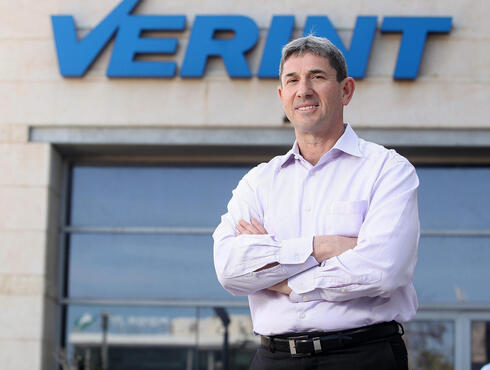
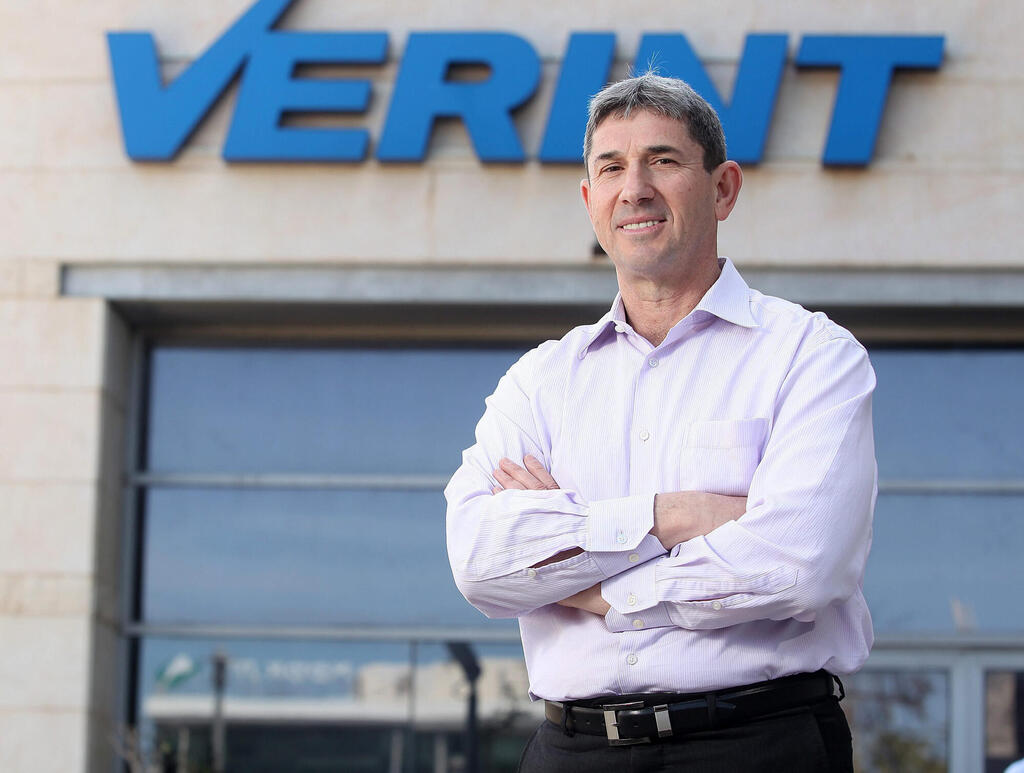
From its beginnings as part of Comverse, Verint has been led by Dan Bodner (66), who in recent years has also served as chairman in addition to CEO. Over his tenure, Bodner has accumulated more than $100 million in compensation, with an average annual pay package of around $10 million in recent years. If the sale goes through, Bodner stands to be the biggest winner: he is set to receive an additional $18 million in the event of a change in control, thanks to a special bonus and accelerated vesting of stock awards.
Other top Verint executives, most of whom are non-Israelis, will also receive sizable payouts if the sale closes. The company’s largest shareholder today is Apax Partners, which owns 13.8% but faces significant losses: Verint’s valuation was around $3 billion when Apax invested in early 2021. That investment came after activist investors pressured Bodner and the board to shake up the underperforming company.
Apax injected $400 million in two $200 million tranches. The first came in May 2020, when Verint’s stock was near its current price; the second arrived in February 2021, when shares were trading at $50, more than double today’s price. Other major shareholders include US asset managers Vanguard and BlackRock.
Today, Verint has little connection to Israel. Its entire management team is American except for Bodner, and only about 200 of its 3,800 employees are based in Israel, mostly in R&D, just 5% of the total workforce. Many Israeli employees moved to Cognyte when the security business was spun off. In short, even if the sale to Thoma Bravo goes through, it won’t be a landmark event for Israel’s high-tech industry or its broader economy.



