










Trump’s $100,000 visa fee sparks global backlash: All you need to know about the new H-1B fee
From Silicon Valley to Bangalore, critics warn the decision will harm innovation and fracture the tech workforce.
A dramatic decision by U.S. President Donald Trump is reshaping the global labor market: a $100,000 fee will now be charged for each new application for the H-1B work visa, one of the primary visas for foreign workers in the United States. The move has caused an uproar in the high-tech industry and sparked concern among tens of thousands of foreign professionals.
1 View gallery
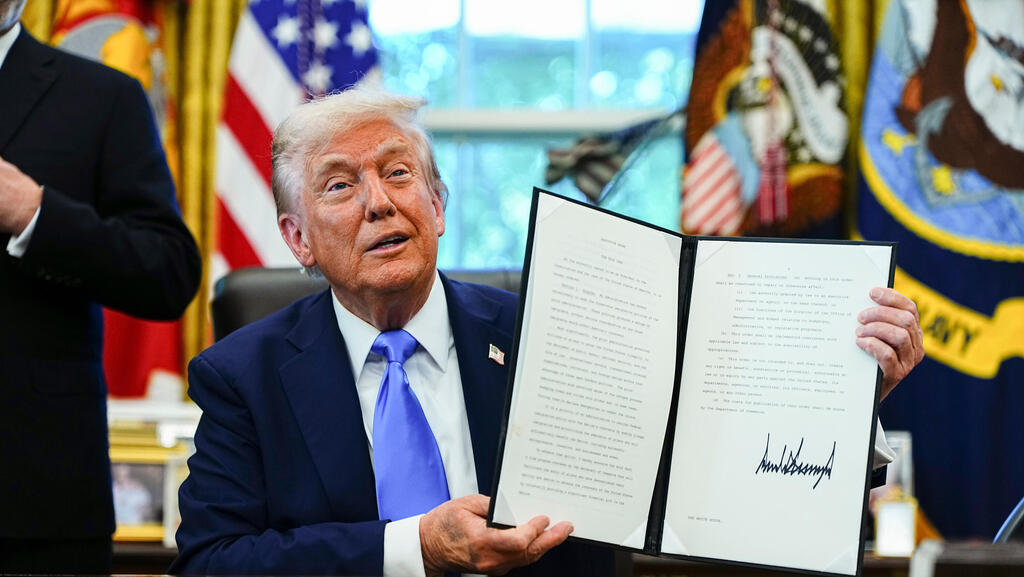
US President Trump signed an order to charge a $100,000 for high-tech H-1B visas
(Bloomberg)
What does Trump’s new order state?
The order stipulates that each new application for an H-1B visa will require a $100,000 fee. The measure is valid for one year but could be extended at the administration’s discretion. Previously, visa costs ranged from about $1,700 to $4,500, depending on the category and processing fees.
Will the fee also apply to existing visas?
No. The fee applies only to new applications. Existing H-1B visa holders, renewals, and family members (such as H-4 holders) are exempt.
What is the official justification?
The administration argues the move will encourage companies to prioritize American workers and reserve visas for an “elite” group with especially rare skills. The rationale is that companies will only pay such a steep fee if a worker is truly indispensable.
Which countries are most affected?
India is the hardest hit: over 70% of H-1B holders are Indian, primarily in technology, engineering, and IT services. Companies like TCS warn of project delays and job disruptions. China, which accounts for around 12% of visa holders, will also feel the impact, particularly in research and science.
How might this affect Israel?
The direct effect on Israelis is limited. Most Israelis in the U.S. use other visas, such as the L1 for intra-company transfers. Still, professionals in medicine, academia, research, and Israeli graduates of U.S. universities working under H-1B may be affected.
How did the industry respond?
Tech giants like Amazon, Google, Microsoft, and Meta strongly oppose the measure. They warn it will shrink the available talent pool in science, technology, and engineering, fields already facing U.S. labor shortages. They argue the move could derail projects, slow innovation, and undermine America’s global competitiveness.
Who is likely to be hit the hardest?
Startups and mid-sized companies. Few can afford $100,000 per hire, meaning the visa will likely be restricted to large corporations filling only senior or highly specialized roles. This could stifle smaller firms that rely on international talent for innovation.
What are the international implications?
Countries such as Canada, the UK, the EU, and Australia stand to benefit by offering more affordable immigration pathways for engineers and scientists. Once the prime destination for global talent, the U.S. risks ceding that status.



