












Top 50 Most Promising Startups
AI is turning uncertainty into the new normal
Why founders are re-entering execution mode and abandoning long-term certainty.
Many tech companies are currently at the crossroads between threat and opportunity. The AI revolution is perhaps the first to impact technology companies themselves first and foremost. Companies that were until recently considered the most innovative are suddenly facing existential questions: how unique and defensible is the value they create, how can new opportunities be realized, and what are the right operating and business models in the AI era. Within a few months, the focus of many companies has shifted from orderly growth according to multi-year plans with clear goals and KPIs to a re-examination of the equity story.
Uncertainty is pushing entrepreneurs back into Founder’s Mode (a term coined by Paul Graham of YC): cutting through layers of management and presentations and returning to the core, the product, the customer, and the market. Companies are forced to act quickly, flexibly, and creatively. The questions have shifted from tactics to strategy: whether to change the product, the customer value proposition, and the business model, and how to build a moat through proprietary data, deep integration into customer processes, distribution, and pricing.

Alongside the push for major strategic changes, there are also doubts: to what extent are the declines in software company valuations and prevailing theories actually relevant to each individual company; to what extent can a company be transformed on the fly; and what is the cost of such a shift in relation to customers and partners. For example, the transition from selling systems of record to systems of action benefits customers, but also creates friction with organizational users, as new systems replace parts of their work.
Many companies are currently examining strategic alternatives: acquisitions, structural changes, asset sales, and in some cases even full exits. All of these are expected to lead to a significant wave of mergers and acquisitions. At the same time, companies that have built stable businesses with revenues in the tens or hundreds of millions of dollars and reasonable growth, but still below the high thresholds of U.S. public markets, are exploring alternative IPO routes, primarily in London and Israel.
Alongside the turbulence affecting companies founded before 2022, a significant wave of AI-native companies with record levels of investment is also emerging. These companies are exploring new operational and commercial models suited to a world where AI reshapes both the cost structure (the token economy) and the value structure, including outcome-based pricing versus input-based or fixed pricing. For example, will Palantir’s success bring the forward-deployed engineer model back to center stage, after years in which tech companies tried to move away from customization and professional services? And how should companies properly enter the major opportunity now emerging in robotics?
Unlike previous technological revolutions, managers in traditional industries who have experienced the basic capabilities of AI in their personal use can now clearly imagine its impact, both as a threat and as an opportunity, for their companies, and are increasingly eager to invest in innovation. The process of adoption is itself becoming an opportunity, and challenges such as data organization, system integration, workflow design, and workforce training for an era in which value shifts from knowledge to judgment are not only obstacles, but also the foundation of a new market.
This is a fascinating time for Israeli high-tech. Entrepreneurship, creativity, mental flexibility, and the ability to analyze and make decisions in uncertainty are core strengths. Artificial intelligence will enable entrepreneurs to pursue even larger ambitions. The major acquisitions and the renewed interest of the world’s largest and most sophisticated funds in large seed and early-stage investments in Israel over the past two years, despite everything that has happened here, reflect confidence in this enormous potential.
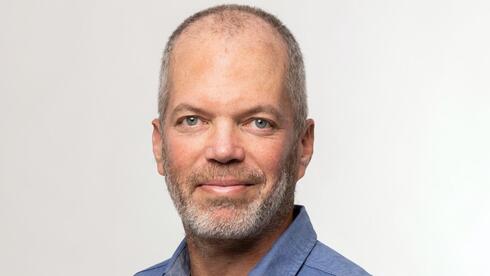
Noam Canetti is Managing Partner at EY Israel.



