











VC Survey 2026
“We are entering the age of the 'Lean Sovereign'”
Square Peg partner Yonatan Sela joins CTech to explore how AI and cloud infrastructure is set to replace cybersecurity as Israel’s main export and how the country is adapting to a global, integrated VC model, as part of CTech's VC Survey 2026.
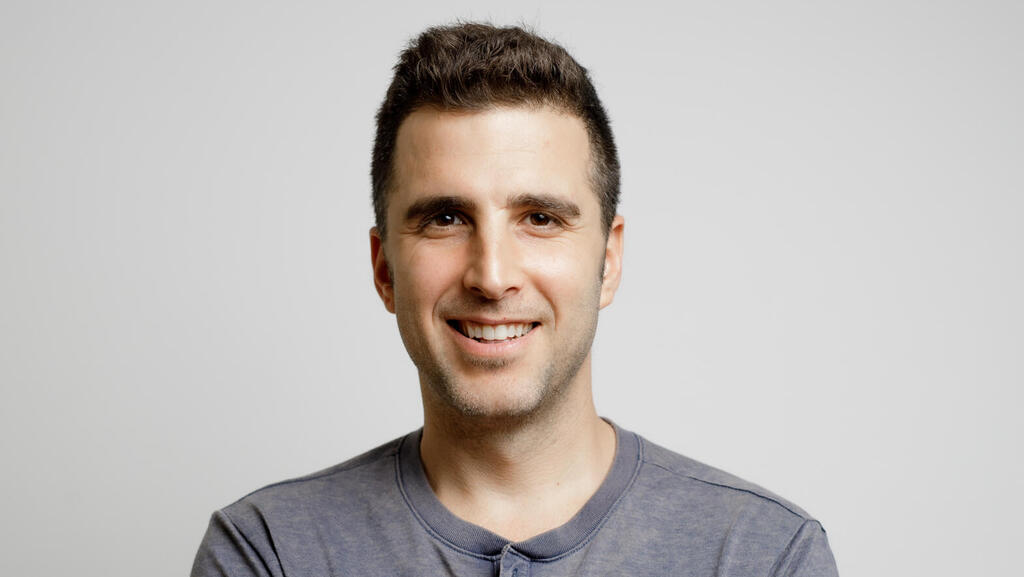
Yonatan Sela
(Video: Orel Cohen)


“We are entering the age of the 'Lean Sovereign': companies that maintain massive market influence with a fraction of the traditional workforce,” says Yonatan Sela, partner at Square Peg. As a result of the “AI-driven hyper-productivity era,” Sela argues that “the 'human-capital-heavy' model becomes a liability rather than an asset.”
Following the turbulence of recent years and the stabilization of 2025, the Israeli tech ecosystem is entering a new era: The Next Leap. Sela joined CTech to share insights for its VC Survey 2026, which invites prominent investors to discuss the topics, trends, and “leaps” expected in the year ahead.
Sela predicts that “globally, we are seeing signals of a monumental IPO year,” but cautions that the scale of prominent private companies like Canva, Stripe, and SpaceX represents a class of outliers. Nonetheless, he notes that the VC category “has expanded to fund late-stage growth that was historically reserved for public markets.”
Considering Startup Nation's brand in 2026, Sela maintains that “to maintain our position as a global leader, we must ensure that our edge in ingenuity remains the primary story, with resilience serving as the proof that the engine never stops running.”
You can read the entire interview below:
Fund ID
Name of Fund: Square Peg
Total Assets Under Management (AUM): $4.3 billion
Partners/Managers: Yonatan Sela, Philippe Schwartz, Paul Bassat
Notable Portfolio Companies (Active): Canva, Airwallex, Stripe, Aidoc, Supabase, Vi, Exodigo
Notable Exits: Fiverr (IPO), Deci (acquired by Nvidia)
The Liquidity Leap: After a period defined by cash preservation, will 2026 see the reopening of the IPO window for Israeli tech, or will M&A remain the sole viable liquidity event?
Globally, we are seeing signals of a monumental IPO year. Prominent private companies like Canva (a Square Peg portfolio company since its Seed), Stripe, OpenAI, Anthropic and SpaceX represent an incredibly exciting batch of generational businesses poised for the public markets (though some of them, like OpenAI, will likely need to improve financials first).
However, it is important to distinguish these outliers from the broader ecosystem. The scale of these businesses is immense and fundamentally different from what we typically see in Israel. The VC category has expanded to fund late-stage growth that was historically reserved for public markets; today, 'mega-rounds' of hundreds of millions or even billions allow companies to remain private almost indefinitely. The bar for a successful IPO has risen significantly; the market is no longer buying narratives as it did in 2021. It demands massive scale and proven unit economics. According to Vintage Investment Partners’ 2025 report, most recent IPOs are trading below their initial valuations, which has enforced a much stricter discipline on public market pricing compared to late-stage private rounds.
In Israel, very few companies currently possess the scale required to clear this higher bar. Consequently, I anticipate M&A will remain the primary engine for liquidity, with very few exceptions. The data supports this: Israeli tech reached $41B in M&A exits in 2025 (even excluding the Wiz acquisition, the figure stands at $9B), with 99% of that capital coming from foreign acquirers. Some of the world’s most significant M&A stories of the last two years, such as Wiz and Armis, originated here. We expect this trend to continue as multinationals remain eager to acquire Israeli innovation to bolster their local R&D centers.
The Global Leap: How is the 'Israeli Tech' asset class being rebranded to global LPs in 2026? Are we shifting the narrative from 'Innovation' to 'Extreme Resilience'?
No. The narrative hasn’t shifted from innovation to resilience. It’s still innovation, enabled by resilience.
It is impossible not to be in awe of how Israeli founders, employees, and the broader ecosystem have performed over two chaotic years. However, resilience alone isn't an investment thesis; it’s an operational requirement.
We are proving that our talent can execute on deep-tech and mission-critical infrastructure under conditions that would collapse most other markets. Resilience is the 'how,' but innovation remains the 'why'. Our resilience effectively reduces the risk premium posed by the complex geopolitical conditions in the Middle East; in many ways, the 'worst-case scenario' has already occurred, and the ecosystem weathered the storm exceptionally well. To maintain our position as a global leader, we must ensure that our edge in ingenuity remains the primary story, with resilience serving as the proof that the engine never stops running.
The Deep Tech Leap: With the rising focus on hardware-heavy sectors (Defense, Climate, Quantum), is the Israeli VC model adapted to fund high-CAPEX ventures?
Yes. The premise of an isolated 'Israeli VC model' hasn't truly existed for a long time; the vast majority of capital flowing into the ecosystem comes from global firms and the world’s top-tier VCs are exceptionally active here. As a result, the ecosystem is already well-integrated into a global network (Square Peg included) that possesses both the deep pockets and the long-term horizon required to finance high-CAPEX ventures.
A prime example is our portfolio company Exodigo. They are an outlier in many ways, having built a highly differentiated Hardware plus Software platform for non-intrusive underground mapping. While it is a capital-intensive play, the potential reward of disrupting lucrative, antiquated sectors like Energy, Utilities, and Infrastructure is immense. Investors are increasingly gravitating toward these 'real-world' challenges because the barriers to entry are high, the markets are large and the need is urgent. In 2026, the question isn't whether the capital is available for hardware (or various forms of deep tech), but whether the technology can solve a multi-billion-dollar problem in a mission-critical industry. For companies like Exodigo, the answer is a resounding yes.
The Efficiency Leap: In the era of AI-driven hyper-productivity, is the traditional correlation between 'Headcount Growth' and 'Company Success' permanently broken?
Yes. It was always a fallacy to view headcount as a primary metric for success. One only has to look at Meta’s $19B acquisition of WhatsApp when the team had just 55 employees, or similar trajectories at Instagram and Figma. However, in the past, those were the outliers; today, they are becoming the blueprint.
The correlation between headcount growth and company success has been permanently disrupted by the AI-driven hyper-productivity era. When AI agents can effectively augment or replace the output of entire teams in software development, customer support, and sales development (SDRs), the 'human-capital-heavy' model becomes a liability rather than an asset.
We are seeing remarkable new benchmarks: companies like Cursor and Lovable have scaled toward significant ARR milestones with teams of only 25 to 45 people. In 2026, the hallmark of a generational company isn't how many people you’ve hired, but how much leverage you’ve created. We are entering the age of the 'Lean Sovereign': companies that maintain massive market influence with a fraction of the traditional workforce.
The Next Engine: Cybersecurity has been Israel's primary export engine for a decade. Which domain is best positioned to take the lead by 2030?
AI and Cloud infrastructure – GPU orchestration, MLOps, observability, and performance optimization, stretching all the way to silicon and chip design. Israel has a uniquely dense talent pool in these areas and a proven track record of building horizontal, deeply technical companies at the infrastructure level.
We’ve already seen early signals of this leadership: Mellanox and Square Peg’s portfolio company Deci (both acquired by Nvidia) were critical plays in AI acceleration. More recently, companies like Eon (redefining cloud backup as a dynamic asset for AI training) are showing incredible market traction.
In the age of agentic software, creating defensible 'moats' at the pure application layer is becoming increasingly difficult. However, there are meaningful pockets of value where AI cannot easily replicate human ingenuity, specifically in hardware-adjacent infra and deep-tech stacks. This layer requires the kind of 'hard-coded' technical expertise that Israel excels at, and it will likely prove to be our most defensible and lucrative export through 2030.
Finally, what are 2-3 startups that, in your opinion, are likely to make a leap forward in 2026?
From SquarePeg’s portfolio:
1. Hud - The software development paradigm is undergoing a fundamental shift. Developers and AI agents lack a critical layer of context to write production-ready code: real-time production data. While traditional observability tools were designed for human interpretation, Hud is developing a deep proprietary stack purpose-built for the agentic era. By providing agents with live feedback loops, Hud ensures that AI-generated code isn't just syntactically correct, but operationally sound.
2. Vi - Healthcare unit economics are fundamentally broken, characterized by high acquisition costs, low retention, and inconsistent patient outcomes. A full-stack AI approach is the only viable path to fixing these inefficiencies at scale. As the industry shifts from 'fee-for-service' to value-based care, Vi is positioning itself as the essential operating system for data-driven health outcomes, turning complex clinical data into actionable, high-margin patient care.
3. Qodo - In an AI-native world, writing code has become cheap, but ensuring software quality is a massive enterprise bottleneck. Building software that is reliable, secure, and enterprise-grade remains a significant challenge. Qodo sits at this critical intersection as the market leader in AI-driven Code Review. Based on the principle that the "fox cannot guard the henhouse," Qodo provides the necessary independent validation layer, ensuring that the AI generating the code is not the same logic responsible for its integrity.



