









Roadshow+
"AI makes life harder for entrepreneurs. It’s easier to show early value, but much harder to protect it and stand out"
Lior Handelsman, managing partner at Grove Ventures, was speaking on a panel focused on early-stage startups held at the Calcalist and Poalim Tech Roadshow. Emanuel Timor, partner at Vertex Ventures: "Barring geopolitical shocks, 2026 will be a very strong year."
In recent weeks, Israeli high-tech entrepreneurs have been raising extraordinary sums in very early rounds. A partial list: AI-agent developer Wonderful raised $100 million in a Series A round; cyber company Tenzai raised $77 million in a Seed round; and Majestic Labs, which develops AI infrastructure to compete with Nvidia, raised $90 million, also in a Series A round.
In a particularly turbulent year marked by war and an AI frenzy, a panel moderated by Hagai Gilboa examined what 2025 looks like for early-stage companies. The panel included Dr. Adi Hoorvitch Lavi, Head of Growth and Investments at Poalim Tech; Lior Handelsman, Managing Partner at Grove Ventures; and Emanuel Timor, General Partner at Vertex.
1 View gallery
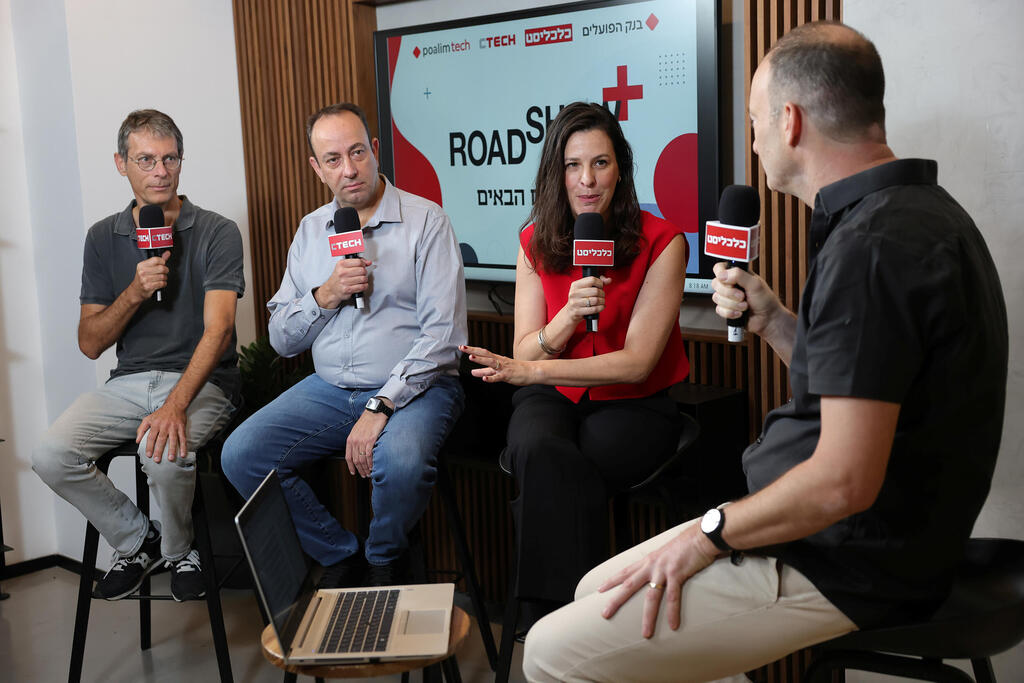
Roadshow+ panel (from left): Emanuel Timor, Dr. Adi Hoorvitch Lavi.
(Photo: Oz Mualem)
How would you summarize the year for early-stage companies?
Hoorvitch Lavi: “It was a very good year in high-tech. We’ll close at about $12 billion in fundraising. At the early stage, there are very large rounds at high valuations, alongside small rounds from climate-tech and energy entrepreneurs.”
Handelsman: “There is a fundamental shift in how the ecosystem evaluates companies. Cyber remains strong, but AI and market dynamics are pushing investors to look for something deeper, not just execution. It’s a strong year across the board, with significant capital flowing into both early and late stages.”
Timor: “It’s an impressive year with a broad and diverse scope of activity. Some areas are harder to raise in, but overall there is a wave of innovation and tremendous global interest in Israeli technology. It’s a real vote of confidence.”
What opportunities lie ahead for early-stage companies?
Hoorvitch Lavi: “First, everything related to AI, agents, orchestration, data. Second, deep tech, climate, and energy. And third: Israel’s traditional strengths, cyber, fintech, and defense tech.”
Handelsman: “AI has triggered breakthroughs in two areas: data-center infrastructure and the broad field of software orchestration, memory topologies, optimization, and everything around it. GenAI is also pushing robotics into manufacturing, the home, and defense.”
Timor: “Healthcare will see high activity. And we’ll see attempts to apply AI across every domain, from policing to financial management.”
What challenges do early-stage founders face today?
Hoorvitch Lavi: “Being an entrepreneur is hard. The pace of change is intense, and resilience and leadership matter more than ever.”
Handelsman: “It’s always difficult to raise capital and win customers. Expectations are rising, startups are now expected to hit $1 million in revenue within 18 months. AI accelerates everything, and global competition is fierce.”
Timor: “Even after raising money, the challenge is to move quickly, differentiate, and build a real growth trajectory.”
How is AI reshaping early-stage entrepreneurship?
Hoorvitch Lavi: “It enables single-founder companies, which is remarkable, but it also complicates decision-making for both investors and entrepreneurs.”
Handelsman: “AI makes life harder. It’s easier to show early value, but much harder to protect it and stand out. That creates huge opportunities that didn’t exist two years ago.”
Timor: “The opportunity is enormous, but the noise is high. Competition is intense. No one can afford to rest.”
How does the world view Israeli high-tech after two years of war?
Hoorvitch Lavi: “We meet investors in Israel and abroad, and there is strong support. There’s admiration for the founders' resilience and optimism heading into 2026.”
Handelsman: “Some investors, mostly in Europe and Asia, reduced exposure to Israel, and that wasn’t helpful. I hope the trend stops. But after the war, Israel saw an economic rebound, and American investors are showing renewed optimism.”
Timor: “The surge of foreign activity is a major vote of confidence. It strengthens the ecosystem, even if it increases competition.”
Foreign funds are now more active in early-stage deals. How does that affect you?
Hoorvitch Lavi: “It’s positive. It helps founders who struggle to raise money, though foreign investors tend to back teams that can generate rapid value. But it’s critical that Israeli funds maintain their infrastructure.”
Handelsman: “It’s an excellent trend. Foreign capital strengthens the entire ecosystem.”
Timor: “It’s good for companies aiming high. But yes, the market becomes more competitive.”
What are your expectations for 2026?
Hoorvitch Lavi: “I’m optimistic because the quality of entrepreneurs is so high. To keep the high-tech engine running, we need to invest in infrastructure and resources, this is why we’re on the roadshow. 2026 will be a year that proves we can grow out of the crisis.”
Handelsman: “I’m optimistic about the capital flow into Israel and about seeing a healthy IPO market return.”
Timor: “Barring geopolitical shocks, 2026 will be a very strong year. We’re past the peak of exits and will continue at high levels of activity.”



