









Israel Innovation chief: AI, chips and quantum are now national-security assets
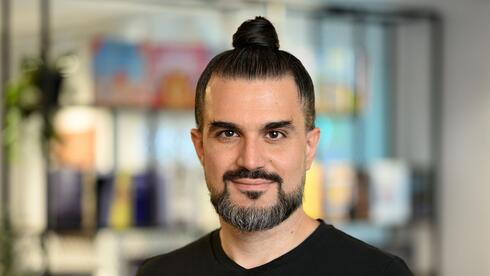
"Israel must understand that it is entering an era in which national technology programs must be part of its political and security strategy," said Dr. Alon Stopel, Chairman of the Israel Innovation Authority.
“The global game has already begun, and many countries are trying to imitate us. Israel must understand that it is entering an era in which national technology programs must be part of its political and security strategy,” said Dr. Alon Stopel, Chairman of the Israel Innovation Authority, speaking Thursday at Calcalist and Discount’s Global Economy Conference.
Stopel outlined three technological “waves” that he believes will shape the global economy over the next decade - chips, quantum, and bio-convergence - and urged the government to treat them as strategic national priorities.
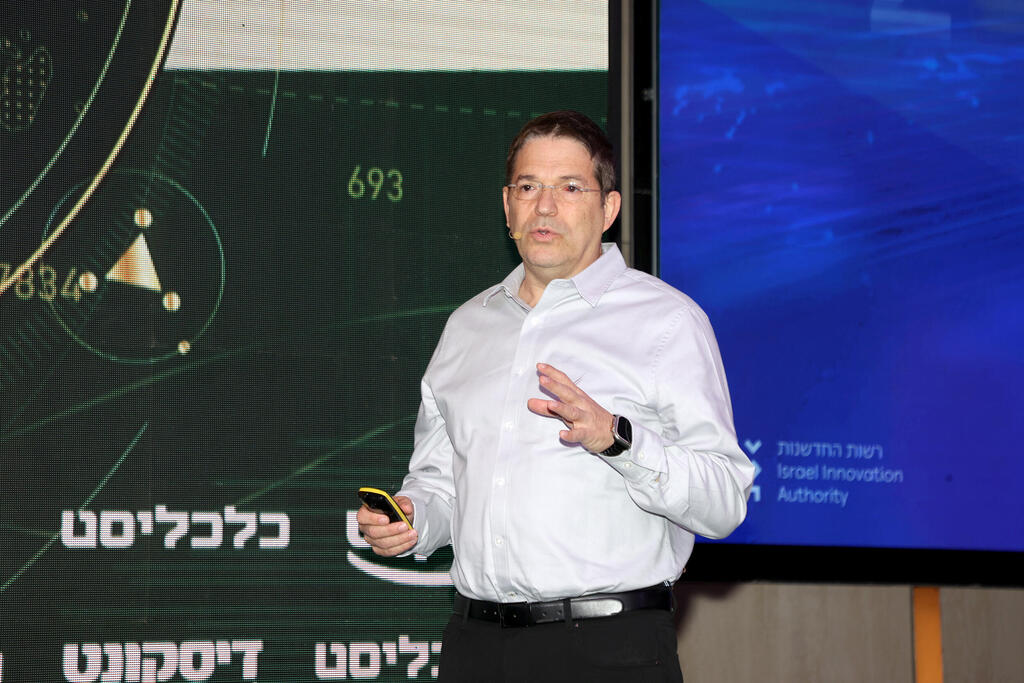
“We are not only looking at the near term, but at the next technological waves,” he said. “We are asking how to ensure that Israel remains a significant player in the global game, and what must be done to preserve Israeli high-tech leadership over the long run.”
He noted that the Israel Innovation Authority operates with an annual budget of about 2 billion shekels, focused on areas where private sector investment is insufficient. “Our role is to correct market failures,” he said. “We support academic research, private entrepreneurs, companies, and consortiums, and work to remove regulatory barriers that prevent technologies from reaching the market.”
According to Stopel, Israel is currently positioned as one of the world’s leading deep-tech ecosystems. “Over the past six years, $28 billion has been raised here in deep-tech, 36% of total fundraising. There are more than 1,500 active deep-tech companies in Israel.”
The first strategic wave, he said, is the chip industry, which sits at the heart of a global race. “Countries are investing hundreds of billions of dollars because semiconductors are now part of national security. About 10% of Israel’s high-tech workforce works in chips. Intel, Tower, Nova, and Camtek are just some of the flagship companies.” Artificial intelligence, he added, has accelerated demand for silicon wafers and advanced packaging.
The second wave is quantum technology, spanning computing, communications, and sensing. “We are in a period where quantum technologies are becoming central to national security planning. In Israel, there is activity across the full technology stack, from qubits to software.”
The third wave is bio-convergence, the merging of biology and engineering. “The potential is enormous,” Stopel said. “We’re talking about a $3-4 trillion market. Up to 60% of global production will eventually rely on biological processes.”



