










BiblioTech
CTech's Book Review: Appreciating our natural talents
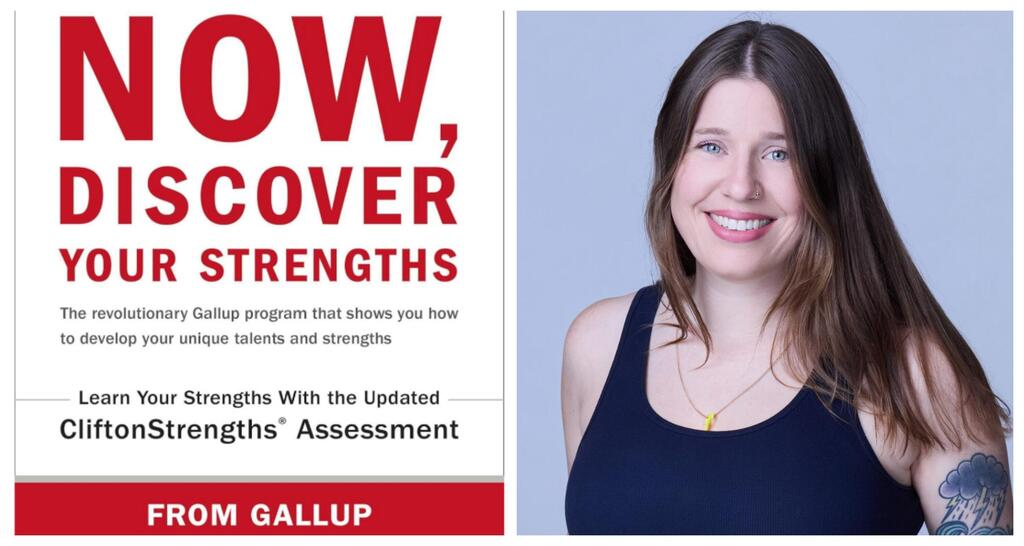
Noa Kremer, VP People at Noma Security, shares insights after reading “Now, Discover Your Strengths: The revolutionary Gallup program that shows you how to develop your unique talents and strengths” by Gallup.
Noa Kremer is the VP People at Noma Security, an agentic AI security platform giving enterprise organizations the confidence to build AI applications. She has joined CTech to share a review of “Now, Discover Your Strengths: The revolutionary Gallup program that shows you how to develop your unique talents and strengths” by Gallup.
Title: “Now, Discover Your Strengths: The revolutionary Gallup program that shows you how to develop your unique talents and strengths”
Author: Don Clifton and Gallup
Format: Book
Where: Home
Summary:
“Now, Discover Your Strengths” is based on 25 years of research by Don Clifton and Gallup, introducing strengths psychology: the idea that people and organizations thrive by focusing on what they do best rather than trying to fix their weaknesses.
It defines a strength as the combination of talent, knowledge, and skills, and presents CliftonStrengths, an assessment tool designed to help individuals identify their strengths.
The book emphasizes applying these strengths in both work and life, building teams that complement one another, and leading by managing people according to their natural abilities. Ultimately, it argues that true success comes from amplifying what’s strong rather than repairing what’s weak
Important Themes:
1. Setting the foundation for strengths psychology
Drawing on decades of research by Don Clifton and the Gallup Organization, the book challenges the long-standing belief that improvement comes primarily from fixing weaknesses. Instead, it presents a new paradigm: people and organizations reach their greatest potential when they identify and cultivate what they already do well. This shift in perspective lays the groundwork for a more positive and empowering approach to personal and professional development.
2. Introducing strengths and defining them clearly
A strength is described as the productive combination of talent (natural patterns of thought, feeling, or behavior), knowledge, and skills. This definition helps distinguish raw talent from a fully developed strength, emphasizing that strengths are built intentionally over time through practice and investment.
3. The classification of 34 strengths
The book introduces a classification of 34 strengths, each given a name and definition. These categories, revealed through the CliftonStrengths assessment, provide a structured language to better understand ourselves and others. Examples include themes like Achiever and Strategic as well as Empathy and Relator, each reflecting different ways individuals create value.
4. Practical advice for applying strengths
Beyond theory, the book offers concrete guidance on how to apply and work with specific strengths. It explains how individuals can shape their roles around their natural talents, how leaders can motivate and manage people according to their strengths, and how teams can be built to complement one another. This makes strengths psychology an actionable tool for everyday success rather than just an abstract concept.
What I’ve Learned:
My biggest personal lesson from the book is to never take for granted the things we are naturally good at. Because they feel effortless, we often overlook or undervalue our talents, assuming they are nothing special. This book reminded me that those very abilities are unique gifts that deserve recognition, appreciation, and intentional development. It also encouraged me to look not only at my own strengths but to notice and celebrate the strengths of those around me. By becoming more mindful of these natural talents, I can shift from simply acknowledging them to actively developing them.
Strengths should not remain “raw potential” but be developed to their fullest. For example, if someone demonstrates strong communication skills, it is not enough to simply appreciate that ability; We should create opportunities for them to refine and apply their talent in ways that contribute to both personal and organizational growth. This could include offering storytelling or public speaking courses, or involving them in key networking events. By nurturing strengths in this way, they are magnified, stretched, and transformed into powerful assets that fuel growth.
The impact extends far beyond the individual: when people are encouraged to do what they are good at and given chances to expand their natural talents, they become more engaged, fulfilled, and motivated. This positive energy directly benefits the organization by creating a stronger, more resilient, and innovative culture. Ultimately, when strengths are recognized, nurtured, and celebrated, both people and organizations thrive, building success that is sustainable and deeply rewarding.
Critiques:
While I strongly agree with the central idea of focusing on and developing strengths, I found the book lacking in its treatment of the other side of growth: Constructive feedback, dissatisfaction, and how to address them. In real-life settings, developmental feedback is often necessary to help individuals recognize blind spots, correct harmful behaviors, or meet essential standards. By focusing almost exclusively on strengths and advocating against putting effort into weaknesses, the book leaves managers with little guidance on how to navigate dissatisfaction or performance gaps in day-to-day leadership.
I still believe the greatest results come from magnifying strengths, since this is where energy and motivation are strongest, but pairing that with clear strategies to manage dissatisfaction would make the framework more whole and equip managers to lead more effectively in real-world situations.
Who Should Read This Book:
This book is valuable for anyone who wants to grow and develop, both personally and professionally. It offers a powerful way to get to know yourself better, appreciate the unique qualities you may take for granted, and learn how to turn those natural talents into true strengths.
It is especially useful for managers and leaders. One of the book’s greatest gifts is the clear and practical terminology it provides, giving names to behaviors and patterns that often go unspoken. This shared language helps managers assess employees more effectively, communicate feedback with clarity, and recognize the distinct value each individual brings to the team.



