










BiblioTech
CTech's Book Review: Adopting AI into our marketing worlds
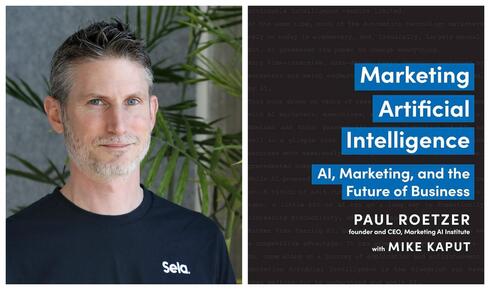
Doron Aaronsohn, CMO at Sela, shares insights after reading “Marketing Artificial Intelligence: AI, Marketing, and the Future of Business”, by Paul Roetzer and Mike Kaput.
Doron Aaronsohn is the CMO at Sela, a cloud and AI service provider. He has joined CTech to share a review of “Marketing Artificial Intelligence: AI, Marketing, and the Future of Business”, by Paul Roetzer and Mike Kaput.
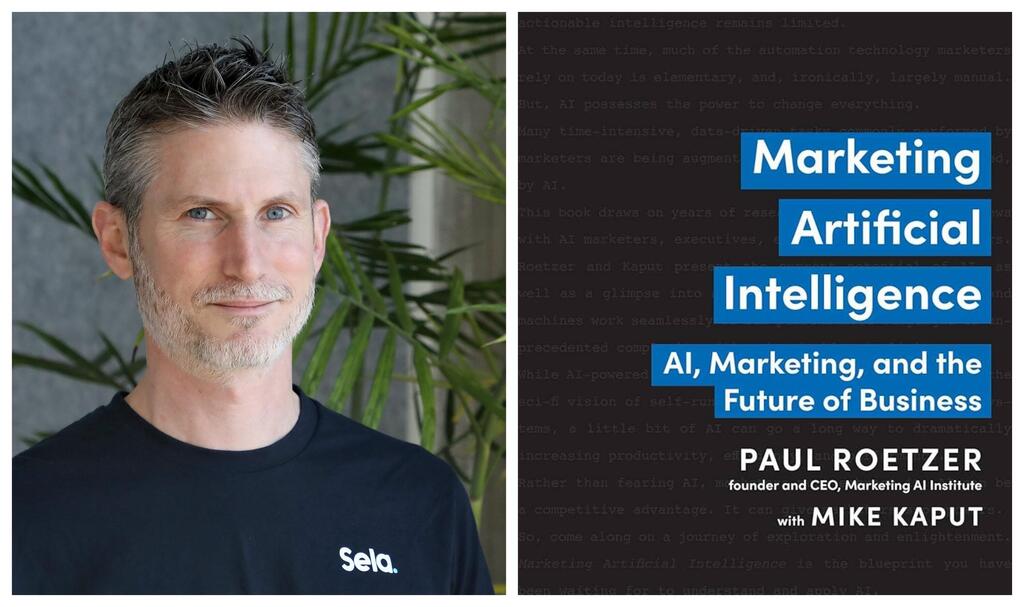
Title: “Marketing Artificial Intelligence: AI, Marketing, and the Future of Business”
Author: Paul Roetzer and Mike Kaput.
Format: Tablet
Where: Other
Summary:
As a CMO, you're constantly bombarded with the term "AI." It's either a magic bullet that will solve all your problems or a terrifying force that will make your team obsolete. This book cuts through all that noise. Roetzer and Kaput argue that even small AI deployments can significantly boost a company's productivity, efficiency, and performance. The book details AI's foundational concepts and impact on key marketing functions like personalization, campaign development, and data-driven insights. It also offers practical frameworks for adoption, vendor assessment, and addressing ethical considerations. Roetzer and Kaput propose that the future involves a "marketer plus machine" collaboration, where AI enhances human capabilities, making the capacity to wield AI for deeper customer engagement a major source of competitive advantage.
This is a grounded, actionable playbook for the modern marketing leader. The book effectively serves as a bridge between the high-level, often abstract, potential of artificial intelligence and the day-to-day realities of running a marketing department. It's less of a technical manual and more of a strategic guide on how to start thinking like a "Next-Gen Marketer" and build a business case for integrating AI.
Important Themes:
The most critical theme, for me, was augmentation, not replacement. There’s a lot of fear in the creative and marketing fields about AI taking jobs (what’s known as “AI Doomerism”). This book argues convincingly that the real power lies in the "human-in-the-loop" approach. AI becomes a powerful assistant that supercharges your team's capabilities. For example, an AI can analyze thousands of data points to suggest the best time to send an email campaign, but a human strategist is still needed to understand the brand's voice and the campaign's emotional context. It’s about using AI to handle the scale and data, freeing up your human talent to focus on strategy, creativity, and empathy—things machines can't replicate.
Another major theme is the call for a paradigm shift from a campaign-centric to an always-on, intelligent operation. The book pushes you to stop thinking in terms of isolated campaigns and start building intelligent systems. How can we use AI to personalize every website visit? How can we use it to score leads in real-time, not just at the end of the month? This requires a fundamental change in how we structure our teams and measure success.
Finally, the theme of pragmatic adoption is woven throughout the book. The authors advocate for a "pilot, pilot, scale" approach. Don't try to boil the ocean and implement a massive, company-wide AI solution from day one. Instead, identify one specific, high-value use case, like drafting ad copy variations or categorizing customer feedback—run a small-scale pilot, measure the ROI, and then use that success to gain buy-in for broader implementation. This is a language that CEOs and CFOs understand, making it an invaluable theme for any marketing leader trying to secure a budget for innovation. From my own personal experience working with startups implementing AI, this approach is very instrumental in pushing AI adoption forward
What I’ve Learned:
My biggest takeaway wasn't a specific tool, but a new mental model for running my department. I've stopped asking "Should we use AI?" and started asking "What is the most repetitive, time-consuming, data-driven task my team performs, and is there an AI solution that can do it 80% as well?" This simple reframing, inspired by the book's use-case-first methodology, has been a game-changer.
I realized I must lead two immediate, critical shifts:
- Re-architecting for Hyper-Personalization at Scale: The book detailed how AI enables predictive analytics to forecast individual customer behavior and then leverage Generative AI to create highly personalized content and experiences seamlessly across all channels. This capability moves us beyond basic segmentation to a "segment of one" approach. It’s the only way to genuinely meet modern consumer expectations and drive superior ROI. This means I need to invest heavily in data quality and an integrated MarTech stack that can actually feed our AI models effectively.
- Elevating the Human Role and Developing AI Literacy: The core of the book's philosophy—that AI enhances human creativity—is the perfect message for my team. AI automates the tedious, data-heavy, repetitive tasks—like keyword research, ad optimization, and simple content drafts—freeing up my team to focus on high-value, strategic work: brand storytelling, deep customer relationship building, complex creative strategy, and ethical oversight. I must immediately prioritize training to boost the team’s data literacy and prompt engineering skills. This shift isn't about cutting jobs; it's about making my team members "super-marketers" who can wield an unprecedented new power.
Finally, the book has fundamentally changed how I think about hiring, outsourcing and team development. I'm no longer just looking for a "social media manager", a "content writer.", or a “PPC Agency”. I'm looking for talent that is curious, adaptable, and eager to partner with intelligent technology. I’m looking for vendors who use the most up-to-date AI tools and methods.The concept of the "Next-Gen Marketer" is very real. My job as a leader is now to provide my team with the tools and the permission to experiment, to fail, and to learn how to delegate the 'robotic' parts of their jobs to actual robots, so they can excel at the human parts.
Critiques
While the book is an excellent primer, its greatest strength- its accessibility, can also be a limitation for those already deep in the MarTech world. If you're a CMO who has been experimenting with predictive analytics or advanced personalization engines for years, some of the introductory chapters might feel a bit basic.
My main critique, which is less a fault of the authors and more a reality of the subject matter, is the shelf life of specific tool recommendations. The AI landscape is evolving at a breathtaking pace. A cutting-edge tool mentioned in one chapter might be acquired, surpassed, or become obsolete six months after publication. The reader needs to approach the book for its strategic frameworks and ways of thinking, rather than as a definitive, up-to-the-minute directory of AI vendors. The principles are timeless, but the players will constantly change.
Who Should Read This Book:
Two specific groups will find this book both interesting as well as beneficial:
Marketing Leaders (CMOs, VPs, Directors): If you are responsible for a marketing budget and team performance, this book is your guide. It provides the language and frameworks you need to have intelligent conversations about AI with your C-suite peers, to justify investments, and to lead your team confidently into the future without getting lost in technical jargon.
Ambitious Marketing Practitioners: The content manager, digital strategist, or performance marketer who wants to become indispensable should definitely read this. It will help you identify opportunities in your own role to deliver more value. By understanding how to leverage AI, you can move from being a task-executor to a strategic driver, significantly accelerating your career growth.
Ultimately, it’s for anyone in marketing who wants to shift their perspective on AI from a vague, intimidating concept into a tangible, powerful set of tools they can start using tomorrow.



