













Top 50 Most Promising Startups
A quiet shift is underway in the startup nation
Israeli founders are moving earlier, hiring abroad and rethinking where development should sit.
For years, an unwritten rule defined Israel’s high-tech industry: while marketing and sales teams were established in the United States to be closer to customers, development remained firmly anchored in Israel. Even during periods of security crises, the presence of R&D in Israel was never seriously questioned. The industry took pride in its resilience, repeatedly pledging to deliver under any circumstances.
That assumption is now beginning to crack.
After two and a half years of war and persistent security threats on the home front, the strain is no longer theoretical. A severe shortage of manpower due to reservist mobilization, delays in development and product launches, and repeated airspace closures have created a reality that is increasingly difficult to ignore. Even in high-tech, companies are acknowledging the challenge of maintaining routine operations under such conditions.

For the first time, the industry is openly discussing the possibility of shifting parts of development activity abroad, sometimes as early as the founding stages of startups. The long-held belief that core development must remain in Israel is giving way to a more pragmatic approach: spreading risk and ensuring stability for global customers. At the same time, local development costs have risen by an estimated 10-15%, driven in part by the strengthening of the shekel against the dollar. The result is a growing, if still uneven, shift of development roles beyond Israel’s borders.
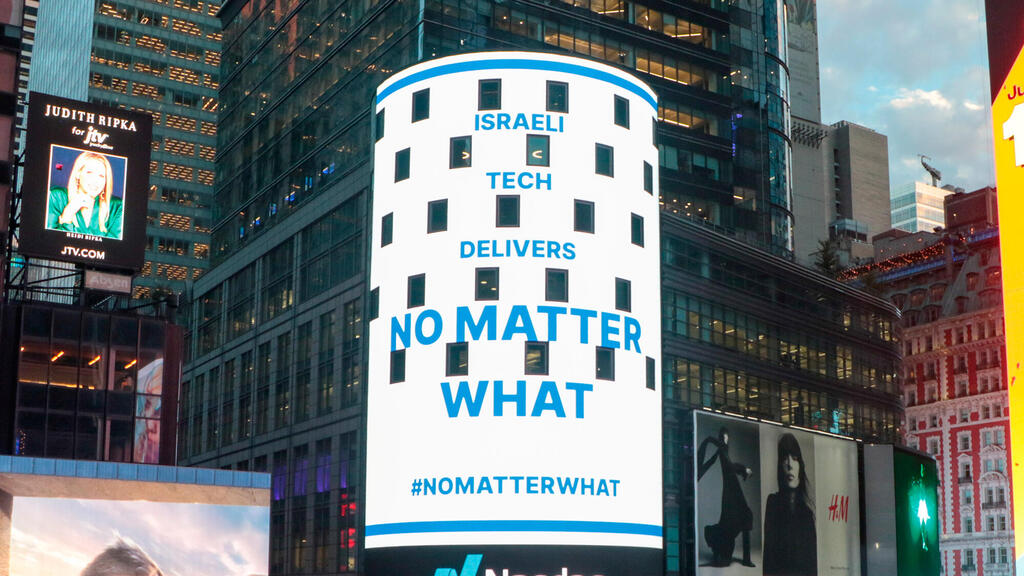
In October 2023, as it became clear that Israel was entering a prolonged conflict, the industry rallied around the slogan “Israeli Tech Delivers - No Matter What.” The message was displayed on the Nasdaq sign in Times Square in New York. However, two and a half years later, despite major achievements such as the sale of Wiz, CyberArk and Armis, the listing of Palo Alto on the Tel Aviv Stock Exchange and continued capital raising, the burden on the sector is becoming increasingly heavy.
The current war with Iran, the second in a year, has touched on an exposed nerve that many preferred to ignore: the difficulty of conducting business routines from Israel. Evidence comes from across the industry. U.S. government officials, for example, instructed development centers of multinational corporations operating in Israel not to open their offices after Iranian threats to target these sites. As a result, while centers in Israel were closed, work and projects shifted to other, more stable regions, raising questions about whether they will return after the war.
An Israeli executive at Intel provided a glimpse into the operational reality: “The war broke out at a sensitive time for one of the company's important projects. Hundreds of employees were drafted into the reserves, and because of the shortage of manpower and the urgent need to deliver on schedule, some of the work was transferred to the company's development teams in India.” According to the same executive, the core of the project remained in Israel and Intel met its deadlines, but the precedent was set.
Other companies have faced similar disruptions. Wix acknowledged that the development of a major AI-based design product was delayed and ultimately launched a quarter later than planned due to reserve duty among development staff.
Startups Delayed Development Due to War
Startups, the most sensitive layer of the ecosystem, are bearing much of the impact. A survey by the Israel Innovation Authority found that 42% of startups reported significant delays in development due to the war. Twenty-two percent said they had already significantly postponed meeting development goals or launching a product. A month after the outbreak of the war, no less than half of the companies surveyed reported that more than a quarter of their employees were absent due to reserve duty or lack of childcare. Only a tenth said their workforce was not affected.
Beyond workforce challenges, flight restrictions have also disrupted operations, limiting access to industry events and complicating the import of materials. Thirty-five percent of companies reported significant business damage as a result.
While only 31% of companies surveyed are considering moving operations abroad, there is a growing shift in mindset among entrepreneurs. Increasingly, founders are considering establishing part of their development teams overseas from the outset, with New York City emerging as a preferred destination. More than 500 Israeli startups, or startups founded by Israelis, are already operating there. At the same time, around 38,000 Israelis have left the country over the past three years.
The shift is gradual but measurable. In 2024, Israeli tech companies hired approximately 5,000 development workers outside Israel, while in the first half of 2025 the number of developers working domestically declined by about 6%.
New startups such as Majestic Labs, Cylake, founded by Nir Zuk, and Dimer Health are already distributing development teams between Israel and the United States. In many cases, non-Israeli founders or relocated executives provide the ability to lead development efforts abroad early on.
More established companies have long maintained distributed teams. Firms like Forter, Gong and HiBob operate development centers outside Israel, while public companies are expanding their global footprint. Riskified, for example, opened a development center in Portugal in 2023 and has since expanded its operations abroad. Today, only 60% of its employees are based in Israel, compared to 70% at the end of 2022.
A newly unveiled cybersecurity startup, Artemis, currently employs 30 people entirely in New York, many of them Israeli, and plans to establish an Israeli development center only at a later stage.
Founders Are Moving Abroad Earlier
The shift is also evident among founders themselves. Increasingly, at least one founder relocates abroad shortly after raising initial funding. While in the past this role was typically filled by business-oriented founders, even technically focused founders are now moving overseas and building development teams there.
Tamir Hay, a partner at PwC Israel who recently relocated to New York, described the trend: “The homes in Tenafly [New Jersey] are already sold out, real estate prices have skyrocketed, and the Israelis who have been arriving in recent months are already looking for homes in the four nearby towns. In one of the schools here, a regular public school, not Jewish, 40% of the children in the class are Israeli,” he told Calcalist. “From my conversations with leading figures in the industry, it appears that more and more companies that are being set up these days are examining and sometimes actually establishing development centers in the United States. Sometimes these centers are led by Israeli managers who relocated, but most of the workforce is local. It could be that this is a one-off extreme event due to the series of wars, but two years ago there was no discussion at all among young startup entrepreneurs about establishing development activities outside of Israel. Now the discussion exists, there are buds that are not yet a trend, but we need to address this and think strategically in advance.”
Economic factors are also driving the shift. A strong shekel has increased local costs, while alternatives abroad are cheaper. “On the one hand, as Israelis, it is pleasing for us that in such a time of war the shekel is so strong, and it is a good sign, but on the other hand, alternatives abroad are becoming a significant consideration,” Hay said. “A development center in Canada today costs 20% less than in Israel, and in Central Europe and Portugal the costs are even lower. It is true that Israeli human capital is still the great technological game changer, but because of AI tools, many development processes are becoming increasingly automated. The focus is still on high-quality people, but in the age of AI, less of them are needed.”
Danny Akerman of Key1 Capital pointed to another factor: “The entire Sarona area in Tel Aviv produces FOMO: employees are constantly talking to each other about the conditions and the new companies that are starting up and recruiting, and there is constant movement, so there are quite a few companies that prefer to look for employees in places where there is less competition, mainly in Europe.”
Gili Raanan of Cyberstarts argued that distributing development is becoming a necessity: as Israeli companies sell more critical platforms to global clients, they cannot risk having key personnel unable to travel or operate freely.
Lior Handelsman of Grove Ventures offered a more cautious view: “Opening development activities abroad is a privilege of companies above a certain size. For it to really succeed and contribute, you need very strong management abroad and a dominant development group. Also, for the impact on costs to be significant, you need to be above a certain size.” He added: “This is a difficult month or two operationally, and it's not worth the costs, the headache, and the dispersion. We see that high-tech is delivering its products and that the companies are working.”
Whether these shifts are temporary or structural remains unclear, but the direction is increasingly visible.
During the pandemic, Israel succeeded in bringing back talent from abroad. Today, the trend appears to be reversing, raising concerns not only about jobs but also about the potential loss of knowledge and expertise.
Despite this, policymakers remain focused primarily on capital raising and exits, rather than employment trends. According to official data, the number of high-tech workers in Israel has remained around 400,000 since October 7, masking deeper changes in where development work is actually taking place.
Large multinational companies such as Nvidia and Google continue to expand their presence in Israel, underscoring the country’s enduring strengths. But startups, more exposed to cost pressures and operational risk, are increasingly looking outward.
The question now is whether this is a temporary adjustment to an extraordinary period, or the beginning of a more fundamental shift in the structure of Israel’s high-tech industry.



