










Smartphone review
iPhone Air review: Beautifully thin, but a battery that can’t keep up
Apple’s lightest flagship impresses with design but stumbles on endurance and heat.
Top Line
The iPhone Air is visually impressive, light enough to carry comfortably, yet still offering a large screen. Performance is solid, though with two significant caveats: it tends to heat up, and its battery struggles to last a full workday, especially under heavy use. Internal competition within Apple’s lineup also complicates the picture: the basic iPhone 17 starts at around $1,100), about $300 less than the Air, while the Pro model costs only $120 more.
It is tempting to opt for an extremely thin and light device, particularly when the technical specifications match Apple’s most powerful model in the series, aside from additional lenses. But the iPhone Air demands compromises: one excellent camera may be sufficient, but the weak battery is a serious drawback. Carrying a power bank solves the problem, but that undermines the whole point of choosing a lightweight device. For many, waiting for the next generation might be the wiser choice.
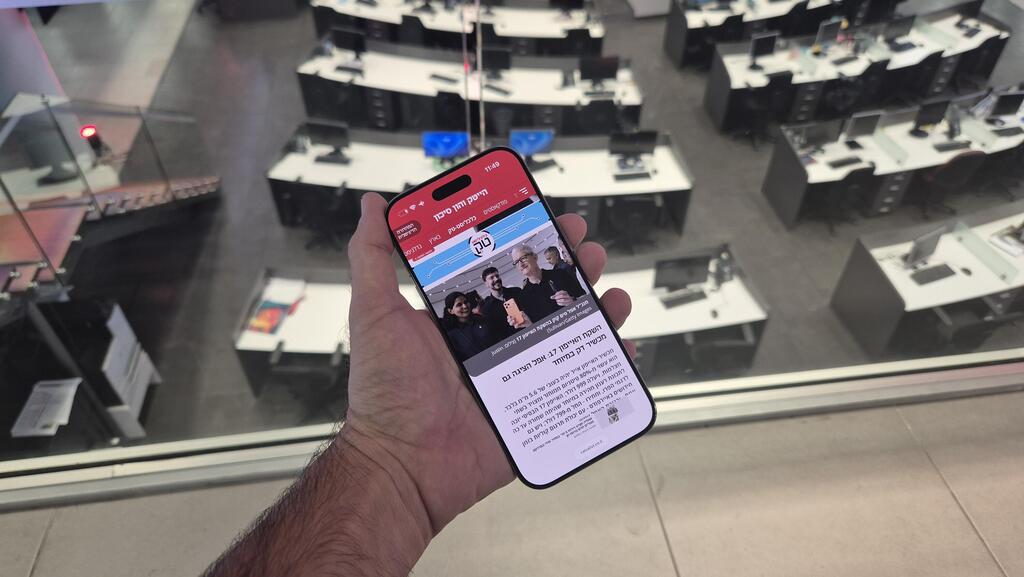
As far as Apple is concerned, by the way, this is not another model in the 17 series, but something else - the official name is iPhone Air and that's it. The new addition to the iPhone family closes out the year on a thin trend, which included Samsung's S25 Edge and also extremely thin foldable devices, at least when they're open in tablet mode - both Samsung's Fold 7 and Oppo's Find N5. And in keeping with the trend, thin is the new premium, or if you prefer, less is more, meaning more expensive: the price of the iPhone Air starts at 4,900 shekels ($1463) and goes up to 6,750 shekels ($2016), depending on the storage capacity.
So what does it have to offer besides minimal thickness and light weight, and what do you have to wait for or compromise on? We took it for a brief test, courtesy of the iStore chain.
Details
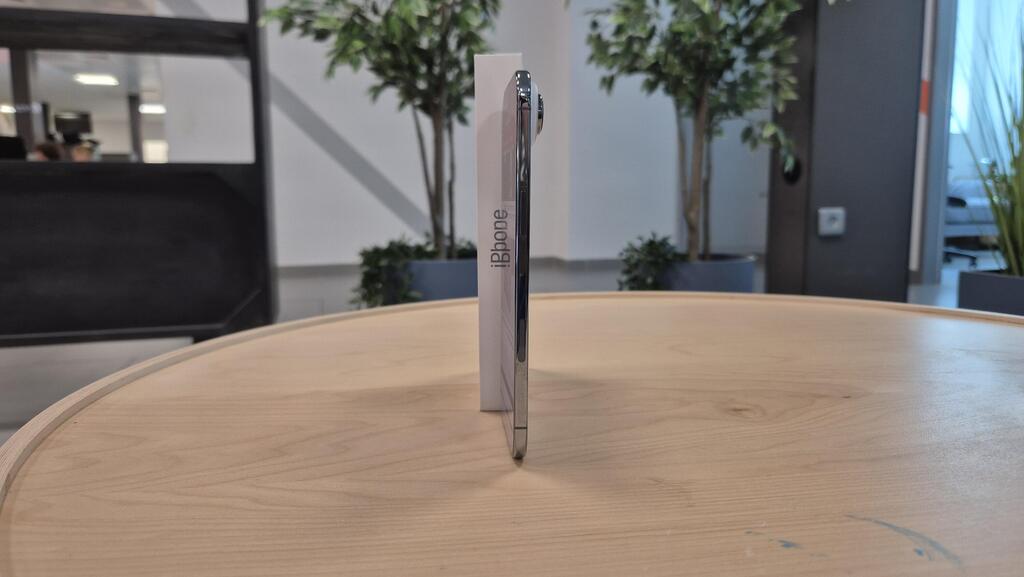
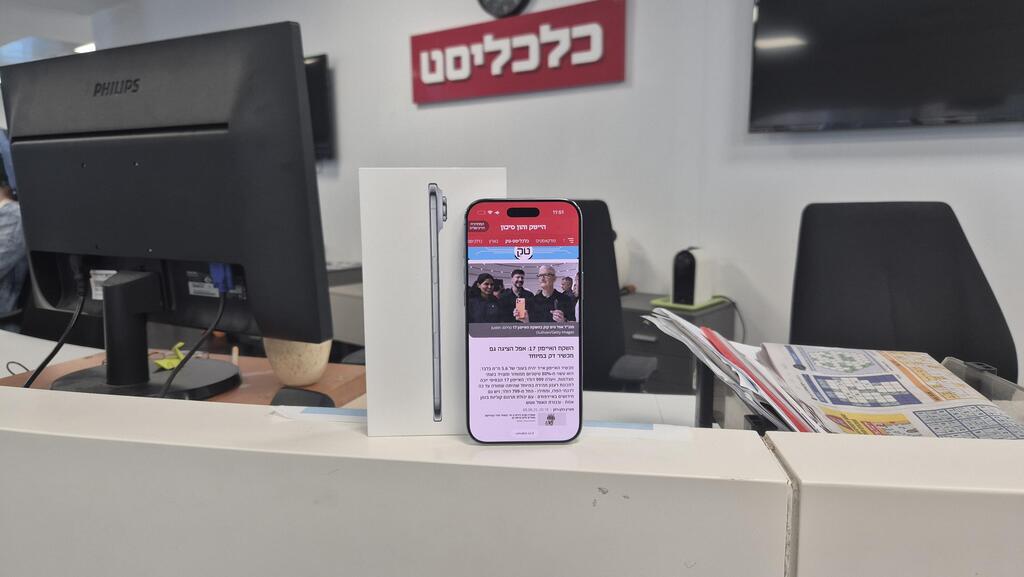
It’s hard to remain indifferent to the iPhone Air. In the Calcalist newsroom, its ultra-thin profile drew admiration, though some worried it looked fragile. Apple anticipated this concern, emphasizing its durability. Still, in person, it feels different.
Apple doesn’t classify the Air as just another model in the iPhone 17 lineup. Officially, it’s simply “iPhone Air.” The device reflects a wider industry trend toward thinness, echoed by Samsung’s S25 Edge, as well as ultra-slim foldables like Samsung’s Fold7 and Oppo’s Find N5. Thinness, it seems, is the new premium. That minimalism comes at a cost: the iPhone Air starts at $1,400 and climbs to $2,000 depending on storage.
We took it for a brief test, courtesy of the iStore chain.
Structure and Design: Ultra-Thin First
The device features a 6.5-inch flat display with Apple’s familiar Dynamic Island. On the right side sit the power button and a dedicated camera key, first introduced with the iPhone 16. A quick press opens the camera; a longer press reveals a menu for adjusting shooting modes, exposure, tone, and zoom. On the left side are the volume buttons and Apple’s versatile action button.
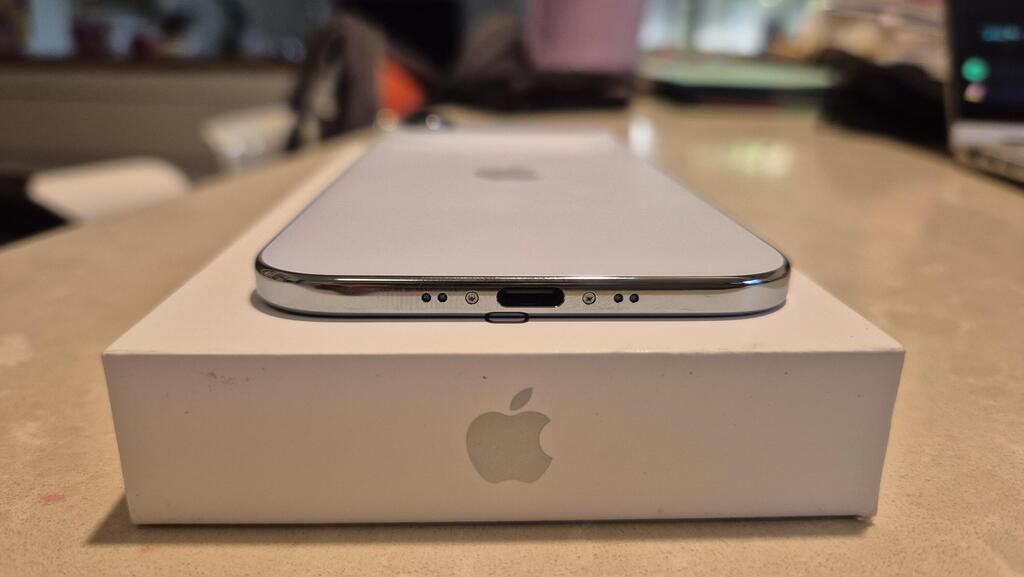
Absent, however, is a SIM tray. Unlike Samsung’s S25 Edge, which is only 0.2 mm thicker but still includes one, Apple skipped it in pursuit of thinness, part of its broader push toward eSIM-only devices.
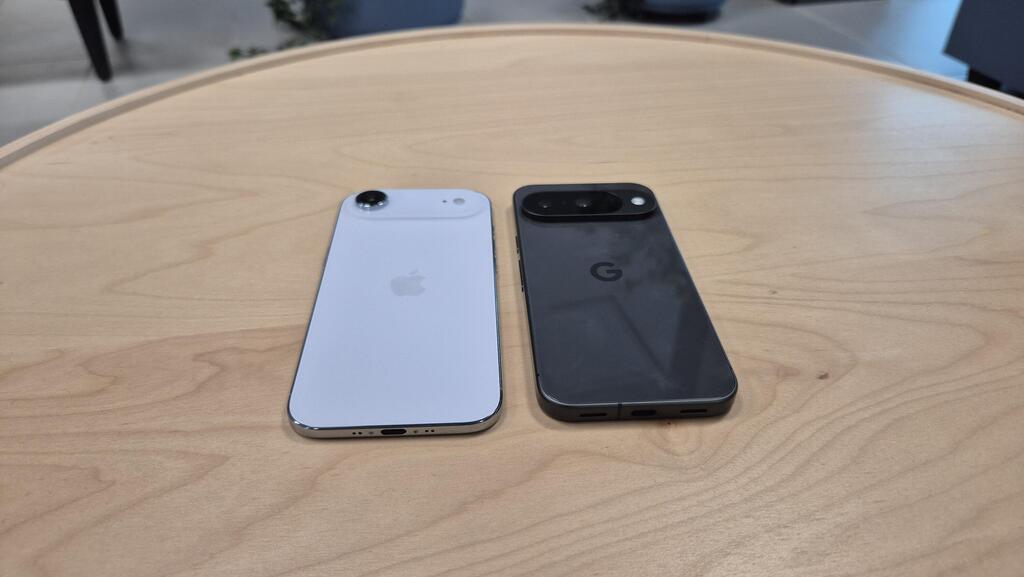
The back of the phone resembles Google’s Pixel line. The Air features just one camera, housed in a protrusion spanning the device’s width, similar in appearance to the cheaper iPhone 16e, which also ships with a single lens.
At 5.6 mm thick, the Air looks thinner than numbers suggest; phones just 3 mm thicker appear twice as bulky. Despite its delicate appearance, the Ceramic Shield 2 front and Ceramic Shield back (as on the Pro Max) inspire confidence. At 165 grams, it is featherlight yet stable in hand. Water and dust resistance meet the IP68 standard, with Apple claiming the device withstands immersion up to 6 meters for 30 minutes, beyond standard requirements.
Hardware: Battery Trade-Offs
On paper, the Air nearly mirrors the iPhone 17 Pro Max: A19 Pro processor, 12 GB RAM, and storage options of 256 GB, 512 GB, or 1 TB.
Performance is responsive, handling everyday tasks easily. Still, thinness comes at a price: the Air tends to heat up, especially during graphics-intensive gaming. The 3,149 mAh battery is another limitation (compared to the S25 Edge’s 3,900 mAh). In testing, the Air drained faster than expected, often failing to last a full day. Fast charging helps, using a 65W charger (sold separately), it recharged from 15% to 50% in 20 minutes, and to full in just over an hour.
Software: AI Still Half-Baked
Apple Intelligence, a centerpiece of Apple’s AI push, remains underwhelming, especially in Hebrew. Many features aren’t enabled by default and must be activated manually. Others simply don’t work with Siri set to Hebrew, including writing tools and translation features. Even the new Image Playground app requires a separate download, and won’t function unless Siri is set to English.
The Photos app’s object-removal tool is also an optional download, though once installed it works well, quickly erasing people or details with minimal artifacts. For more advanced AI capabilities, users may still prefer third-party apps like ChatGPT or Gemini.
Camera: One Lens, Strong Results
Despite its premium price, the Air includes only one rear camera, a 48 MP main sensor, plus an 18 MP front-facing camera. The single-lens design likely reflects space constraints, though Samsung has managed to fit two into its competing thin model.
That said, results are strong: daytime and night shots are crisp, with natural tones. Zoom is limited to 2x, but image quality remains high. A dedicated camera key offers quick access to shooting modes, though its recessed design takes time to get used to.



