










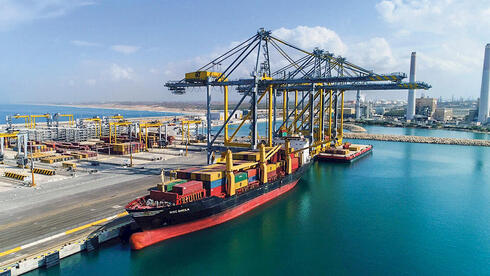
Ashdod Port's profits plunge despite 200,000-container record quarter
CEO Nissan Levy highlighted a record volume of containers unloaded in the third quarter, but revenue barely grew and net profit fell 68.5%. The port is also losing general cargo business to the South Port.
Ashdod Port's revenue rose by 7% during the first nine months of 2026, but its net profit fell by more than 40%. In the third quarter, revenue was virtually flat, operating profit dropped by 45%, and general cargo volumes continued to shift to competitors. The figures suggest that, despite growth in container traffic and vehicle imports, competition from private ports is taking a growing toll on the state-owned port.
Ashdod Port ended the first nine months of 2026 with higher revenue but significantly weaker profitability, raising questions about whether the increase in activity can be considered a business success. Revenue totaled NIS 968.1 million, up approximately 7% from NIS 902.5 million in the same period last year. However, the increase in turnover did not translate into higher profits. Net profit fell from NIS 162 million to NIS 93.6 million, a decline of approximately 42%.

The third quarter, during which Port CEO Nissan Levy highlighted the unloading of 200,000 containers as a "record quarter," painted a less encouraging picture. Revenue totaled NIS 311.3 million, compared with NIS 308.9 million in the corresponding quarter last year, an increase of less than 1%. Operating profit before other expenses fell 45%, from NIS 41.7 million to NIS 23 million. Adjusted EBITDA declined from NIS 78 million to NIS 66 million, while net profit plunged 68.5%, from NIS 57.5 million to just NIS 18.1 million.
The port attributed the decline in profitability to rising input costs, labor expenses and depreciation. The results were also affected by a sharp decline in net finance income. For the first nine months of the year, net finance income totaled NIS 44 million, compared with NIS 104.1 million in the corresponding period last year. In the third quarter, the port recorded no net finance income or expenses, whereas the same quarter in 2025 included NIS 37.6 million in finance income. That figure reflected an accounting gain resulting from the reversal of an impairment charge on Ashdod Port's assets. In other words, alongside the pressure on its operating business, the port also lost a source of accounting income that had boosted its results a year earlier.
Operationally, the picture was mixed. The port handled 982,000 TEUs (twenty-foot equivalent units) during the first nine months of the year, an increase of 4.6%, and accounted for 38.7% of local container traffic. Vehicle imports surged 21% to approximately 82,000 units, even as the Port of Eilat, which is in the process of recovering its operations, resumed vehicle imports after a three-year hiatus.
Bulk cargo traffic at Ashdod Port also grew by 2.7%, to approximately 7.1 million tons. General cargo, however, suffered a sharp decline. Volumes fell from 1.091 million tons to 643,000 tons, a drop of approximately 41%.
The decline in general cargo reflects intensifying competition in the sector. Ashdod Port has lost a significant share of this traffic to the South Port, which has benefited from the acquisition of new cranes and a sharp increase in metal-related cargo activity.
Ashdod Port has outlined plans to expand its operations by 2027 and set a revenue target of more than NIS 1.5 billion for 2028. But the latest results highlight the challenge facing the company: it must find a way to turn higher volumes and investment into stronger profitability, rather than simply increasing revenue.



