









Sam Altman expects OpenAI to surpass $20B in revenue in 2025, with goal of ‘hundreds of billions’ by 2030
OpenAI chief says market competition should determine winners: “If one company fails, other companies will do good work. That’s how capitalism works.”
OpenAI CEO Sam Altman has sought to clarify the company’s approach to government involvement and financing, saying the maker of ChatGPT does not want, and has not sought, public guarantees for its data centers.
In a detailed post, Altman said OpenAI believes “governments should not pick winners or losers,” and that taxpayers should not be asked to “bail out companies that make bad business decisions or otherwise lose in the market. If one company fails, other companies will do good work.”
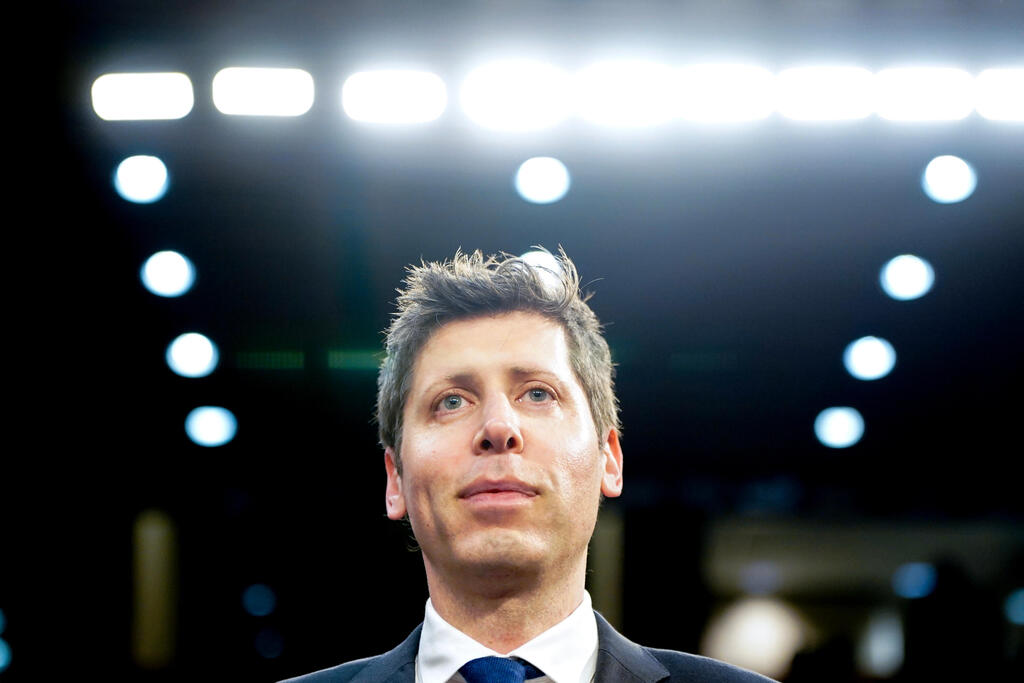
His comments follow speculation about OpenAI’s growing infrastructure commitments and its potential to become “too big to fail.” The company, which is expanding rapidly, is reportedly preparing for a possible public offering that could value it at up to $1 trillion, according to Reuters.
Altman said OpenAI supports the idea of governments developing and owning their own AI infrastructure, what he described as a “strategic national reserve of computing power,” but not for the benefit of private companies.
“The upside of that should flow to the government,” he wrote, adding that such initiatives could help strengthen public-sector capacity and national resilience in areas like computing power.
Altman drew a distinction between potential government-backed semiconductor manufacturing projects, where OpenAI and others responded to Washington’s call to strengthen domestic supply chains, and guarantees for data centers, which he said would amount to private support.
Altman also provided details on the company’s financial outlook, saying OpenAI expects to end the year with a revenue run rate above $20 billion, with plans to grow to “hundreds of billions” by 2030.
He said OpenAI is “looking at commitments of about $1.4 trillion over the next eight years” to expand its computing infrastructure.
“This requires continued revenue growth, and each doubling is a lot of work,” he wrote, adding that OpenAI may raise additional capital through equity or debt in the future.
Altman said the company’s investments are aimed at building the infrastructure for a future economy powered by AI. “Massive infrastructure projects take quite a while to build, so we have to start now,” he said.
Altman also outlined several areas of expected growth, including enterprise offerings, AI-powered devices, robotics, and scientific applications. He said OpenAI plans to sell computing capacity to other organizations, describing this as an “AI cloud” that could meet rising global demand.
“The risk to OpenAI of not having enough computing power is more significant and more likely than the risk of having too much,” he said, noting that current compute limitations have already constrained product rollouts.
Altman also addressed recent remarks about the U.S. government acting as an “insurer of last resort” for AI. He said his comment referred to security risks such as the potential misuse of AI in large-scale cyberattacks, not to financial protection for private companies.
“I do not think the government should be writing insurance policies for AI companies,” he said.
Altman’s post follows comments by OpenAI’s CFO, Sarah Friar, about possible government financing mechanisms, which she later clarified.
Altman’s remarks come amid an ongoing restructuring at OpenAI that has reduced its dependence on Microsoft and opened the way for a possible IPO in the next two years. While the company has not made a final decision, advisers have reportedly discussed potential filings as early as 2026.
Altman said the company’s focus remains on building a durable business rather than pursuing a listing. “We are trying to build the infrastructure for a future economy powered by AI,” he wrote. “It is a privilege to take a run at building infrastructure at such scale. But if we get it wrong, the market — not the government — will deal with it.”



