










Israel's tech sector raises $8.4 billion in the first half of 2026
129 funding rounds spanning AI infrastructure, cybersecurity, healthcare and defence signal sustained investor appetite despite an ongoing war and global economic uncertainty.
Israeli startups closed at least 129 funding rounds in the first six months of 2026, raising approximately $8.4 billion in disclosed capital, according to CTech data. The total understates the true figure as several deals were announced without financial terms. The pace represents one of the strongest half-year performances in the country's technology history.
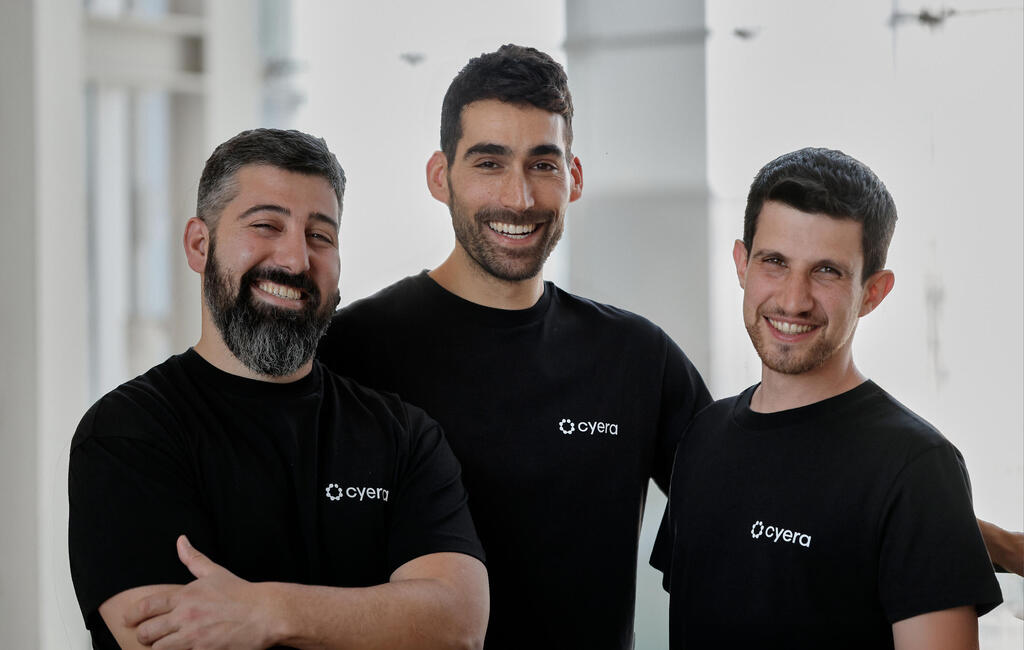
The money was not spread evenly. A handful of very large rounds accounted for a disproportionate share of the total. Vast Data raised $1 billion, reaching a $30 billion valuation. Cyera raised $400 million in January and a further $600 million in June, bringing its valuation to $12 billion, up fourfold in 18 months. AppsFlyer raised over $1 billion from Google, Meta, Unity, and Moloco. DriveNets raised $410 million. Coralogix raised $200 million. Kela raised $200 million backed by Bill Ackman and Eric Schmidt.
Strip out those outliers and what remains is a dense layer of Seed and Series A rounds, most of them between $10 million and $60 million, concentrated in artificial intelligence and cybersecurity.
AI infrastructure was the dominant theme. Companies building the operational layer beneath AI systems, managing compute costs, handling data, cooling data centres, securing deployments, attracted consistent capital throughout the period. ScaleOps raised $130 million to manage GPU resource inefficiency. ZutaCore, based in Sderot, raised $100 million for liquid data centre cooling, backed by Samsung and Mitsubishi Electric. PointFive raised $60 million to help enterprises control runaway AI infrastructure spending.
Cybersecurity produced the highest volume of rounds. Oasis Security raised $120 million for machine identity protection. Vega raised $120 million just five months after a $65 million round. Claroty raised $150 million. Below those headline figures, more than two dozen early-stage cybersecurity companies raised between $6 million and $56 million, most of them arguing that traditional security tools are poorly designed for environments dominated by autonomous AI systems. Above Security, eight months old with ten employees, raised $43 million. A Security raised $37 million backed by Wiz co-founder Assaf Rappaport and Cyera CEO Yotam Segev.
Identity security emerged as a distinct subcategory. NewCore raised $66 million to rebuild enterprise identity infrastructure for the AI era. Linx Security raised $50 million. Venice raised $25 million. Offroad, Capsule Security, and Oasis Security all raised funds targeting related problems. The common argument across these companies is that AI agents, which can outnumber human users inside large enterprises, require a fundamentally different approach to access management.
The shadow of the Wiz acquisition, Google's $32 billion purchase of the Israeli cloud security company, completed in the period, is visible throughout the data. Rappaport participated as an angel investor in at least 10 rounds during the first half of the year, across companies ranging from Engram, which raised $98 million for AI memory infrastructure, to Spirit, a stealth cybersecurity startup that raised $50 million three months after launch. Several other rounds were backed by Wiz founders or alumni, whose involvement has become a recognisable signal in the Israeli market.
Outside the AI and cybersecurity mainstream, the period included a cluster of quantum computing rounds, Quantum Art extended its Series A to $140 million, Q-Factor raised $24 million backed by Intel Capital, as well as significant defence technology fundraising, including Kela's $200 million raise and Airis Labs' $60 million for battlefield AI. In healthcare, Aidoc raised $150 million and NVision raised $55 million.
All of this occurred against the backdrop of an active military conflict. That fundraising continued at this pace is a reflection of how deeply embedded Israeli technology companies have become in global supply chains and investor portfolios. The local situation registers as a risk factor in deal documents, but has not materially slowed the flow of capital.



