








A $50 million purchase has opened a new battle for Maccabi Tel Aviv
The Recanati family’s acquisition of the Federmans’ 29% stake has triggered a shareholder dispute and a court battle over the right of first refusal. A recording submitted to the court reveals the controlling shareholder’s candid account of the deal and his plans for Maccabi.
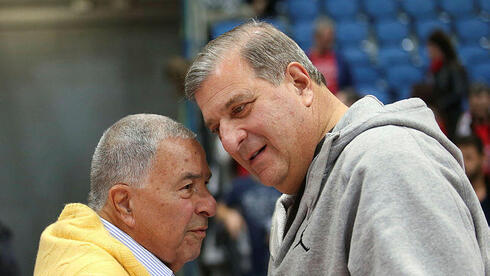
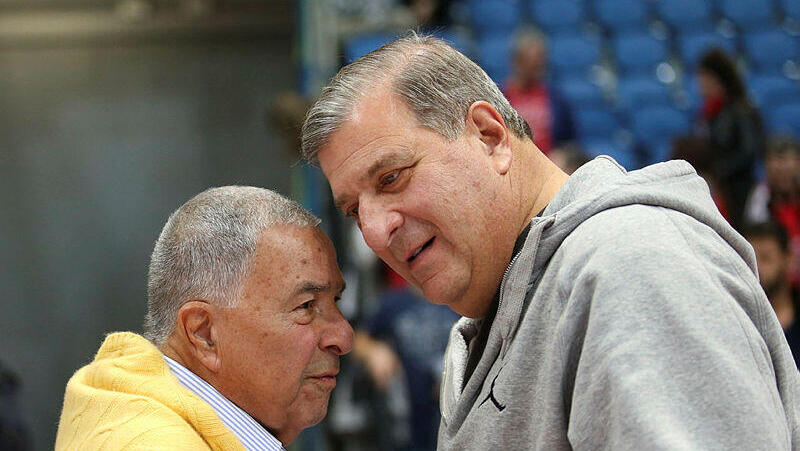
Businessman Udi Recanati, 77, scion of one of Israel’s most prominent banking and financial families and a controlling shareholder of television company R.G.E., rarely gives interviews or speaks publicly about his businesses and partners. He is also known for being particularly careful about allowing the media to quote him directly. But a shareholder dispute that has erupted in recent weeks around Maccabi Tel Aviv, Israel’s most decorated basketball club, has prompted him to speak unusually candidly.
A recording and transcript of a recent conversation between Recanati and R., one of the organizers of a protest by Maccabi fans against the business and management decisions of the Recanati family, were submitted this week to the Tel Aviv District Court as part of a request to appoint an arbitrator in the shareholder dispute. The material contains rare and candid statements by Recanati about his former partners, David Federman and his son Danny; Maccabi sponsor Arik Shtilman, founder of fintech company Rapyd, who sought to acquire a stake in the team; Jason Levien, the former CEO of the NBA's Memphis Grizzlies, whom Recanati wants to bring in as a new partner; and Maccabi's budget and financial position.
The court request stems from the Recanati family's decision last month to sell a 29% stake in Maccabi, which they had recently purchased from their former partners, the Federman family, for $50 million, to Jewish-American businessman Jason Levien for the same amount. Businessman Richard Deitz, who owns 17.5% of Maccabi, opposes the transaction and has demanded to exercise his right of first refusal. Through his lawyer, Zohar Landa, Deitz went to court on Sunday and requested injunctions. Deitz attached the transcript of the conversation between Recanati and the fan to his filing.
At this stage, Judge Ariel Zimmerman has referred the parties to arbitration, as required under the shareholders' agreements between them.
One of the main subjects of the conversation was the Federman family, the late David Federman and his son Danny, and Recanati's relationship with them. The Federmans entered Maccabi as sponsors and later became controlling shareholders in 2000. In May, they agreed to sell half of their stake in the team, 29%, to Shtilman, who was Maccabi's sponsor through Rapyd. The Recanatis decided to block the transaction by exercising their right of first refusal, and the Federmans subsequently sold their entire stake to the Recanati family in July for $50 million.
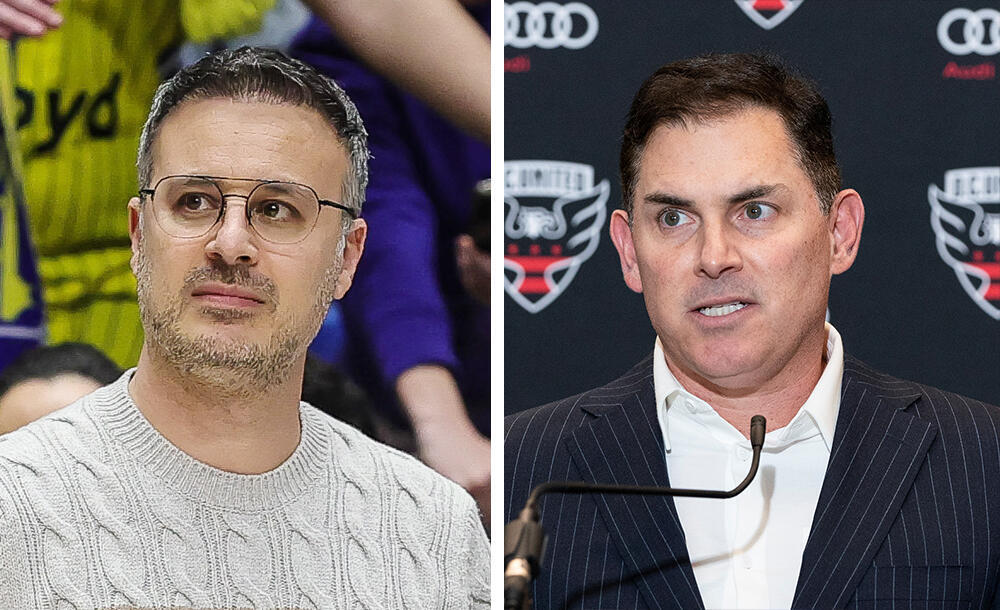
The 26-year partnership that ended with the sale was apparently far from harmonious. Asked why the families had parted ways, Recanati referred to Danny Federman, who had also served as the club's CEO.
"There was a Federman who was not right for us!" Recanati said.
"Why wasn't he right for us? Because we didn't get along with him. I loved his father very, very much. He was a very, very close friend of mine for 50 years. But I can tell you that in terms of Maccabi's management, the directions it was taking were unequivocally under the table, behind the back. It was very difficult. Instead of uniting everyone together, they did the exact opposite, okay?"
The disagreements were not limited to management. Recanati also described longstanding differences with the Federmans over the team's budget, a critical factor in competing with major European clubs.
"How much money did we spend this year, do you know? $31 million, $31.8 million is our budget," Recanati said. He added that "the one who was usually the one who would always get in the way of increasing the budget was the Federmans. They wouldn't let us increase the budget."
The conversation then turned to Shtilman, who had agreed to buy part of the Federmans' stake but ultimately did not become a shareholder. Shtilman has been outspoken in recent weeks about Maccabi's management and spending.
"I'll tell you the truth, Shtilman, from the first day I met him, he came as a sponsor, right? I straight away told Shimon Mizrahi [the club's chairman, who holds 14.5% of the shares]: Shai [Recanati] and I really don't fancy him. I really don't think he's suitable to be our sponsor. He's too aggressive, he's trying to take over and do, and that's what's important to him. What's happening at Maccabi doesn't matter to him first of all. And I know that he's been a fan his whole life, by the way, and so on and so forth."
Recanati said the relationship nevertheless worked initially because Shtilman was only a sponsor.
"Now, when we saw that, we said okay, right now he's not going for any ownership, he's only going for the sponsorship thing. And the sponsorship between us was good. I mean, in terms of the price we got and everything, but he would intervene. Sticking his nose into all sorts of things he shouldn't have stuck his nose into. It's not his place to start talking to Claudio [Coldebella , the general manager], and it's not his place to start talking to Oded [Kattash, the coach]."
The situation changed in May, when Shtilman agreed to acquire 50% of Fedanco, the company through which the Federmans held their controlling stake in Maccabi.
"In May, Shtilman bought 50% of Fedanco, which supposedly made him a shareholder. The Federmans brought him in as a director. It was for two or three meetings. He started saying he would do it and he did and it had to be done that way. When I saw this, together with Shimon and Shai, we said: This man cannot be an owner of Maccabi. He cannot be an owner of Maccabi! That's what spurred me on, and that's what spurred me to buy the shares."
For Recanati, the dispute is ultimately about both money and management. Yet he insisted that he is not seeking to maintain control of Maccabi and said he wants younger partners with relevant management experience.
"But I don't want to control the club! I'm not blind, I'm 77 and Shimon is 87. We want young partners. We said, we need someone serious, someone who has management experience, who has management experience in sports, who is also involved in the NBA, because the NBA, you ask me, is a very, very important part of Maccabi in the future. And the other thing is that he is a man with means, with great means."
Recanati was referring to Levien, the former Memphis Grizzlies CEO, whom he wants to bring into Maccabi's ownership group.
"I don't know what happened to the Memphis Grizzlies, he was also a small shareholder, and he continued in sports and was involved throughout the years. He is only 52 years old, a great Zionist, a warm Jew who loves Israel, and is also thinking of partially relocating his life to the country. He wanted to buy an apartment, wants to be here, and that has a great influence on me. Zionism is one of the things that influences me the most."
Recanati also outlined what he sees as Levien's financial commitment to the club.
"I don't think a team should be 100% owned by anyone. I think there should be a few different opinions around the table. Jason is 100% with us, both in terms of thinking and in terms of money. He is committed to investing $10 million within the team every year. $10 million in addition to what needs to be invested if we have a deficit. That's $30 million in three years. He made a commitment and therefore the means will be there, we will have the means."
Recanati stressed that bringing in new partners could ultimately mean reducing his own stake substantially.
"Let me explain to you, I'm not looking to control Maccabi. If I go down to 5% and we have incredible ownership of great people who will do that, I'm ready for that too."
R. then asked why Recanati had not reached an agreement with Deitz or Ben Ashkenazi, who owns 10% of Maccabi.
"Why do you think Deitz and Ashkenazi want that? Because you decided that Deitz and Ashkenazi are rich? I'm not poor either," Recanati replied.



