









VC Survey 2026
“The real leap in 2026 is not volume, but quality of liquidity”
As part of the VC Survey 2026: The Next Leap, Cardumen Capital founder and GP Gonzalo Martínez de Azagra joins CTech to share his investment outlook, from the development of "engineered" liquidity to changing venture attitudes toward deep tech.
“The real leap in 2026 is not volume, but quality of liquidity,” says Gonzalo Martínez de Azagra, founder and general partner of Cardumen Capital. He predicts that liquidity will become more engineered “through structured exits, secondaries, and PE-style transactions with outcomes increasingly aligned to business fundamentals rather than headline growth alone.”
Following the turbulence of recent years and the stabilization of 2025, the Israeli tech ecosystem is entering a new era: The Next Leap. Martínez de Azagra joined CTech to share insights for its VC Survey 2026, which invites prominent investors to discuss the topics, trends, and “leaps” expected in the year ahead.
1 View gallery
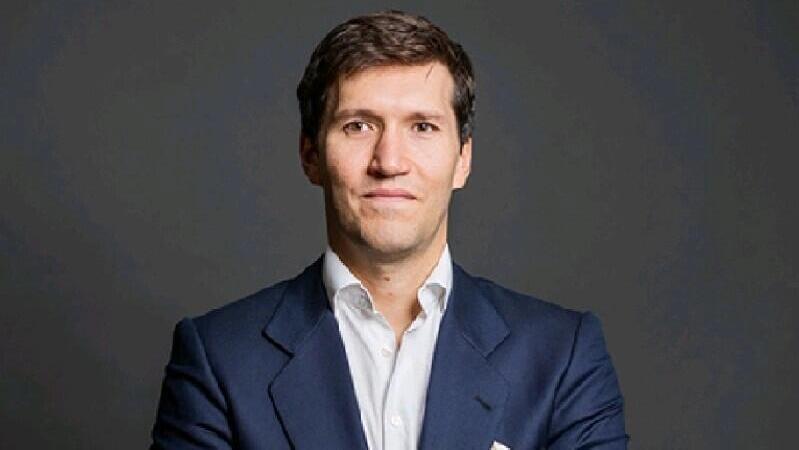
Gonzalo Martínez de Azagra, founder and GP, Cardumen Capital
(Photo: Cardumen Capital)
Martínez de Azagra notes that while global LPs have seen Israel as an “innovation engine” for a decade, 2026 adds a second layer: “execution under constraint as a repeatable advantage.” Further, he argues that while "Israel has always been a deep tech country – what’s changed is the venture mindset around it." As more founders choose these domains and the venture ecosystem matures to fund high-CAPEX bets, Martínez de Azagra believes Israel is "increasingly positioned to lead not just in software, but in the infrastructure that powers the AI era."
You can read the entire interview below:
Fund ID
Name of Fund: Cardumen Capital
Total Assets Under Management (AUM): ~$320M
Partners/Managers: Gil Gidron (chairman), Gonzalo Martínez De Azagra
(founder and GP), Igor De La Sota (founder and GP)
Notable Portfolio Companies (Active): Ivix, Nagish, SecondNature, Brandlight
The Liquidity Leap: After a period defined by cash preservation, will 2026 see the reopening of the IPO window for Israeli tech, or will M&A remain the sole viable liquidity event?
We expect a dual-track environment to take shape. M&A will remain the dominant liquidity path for Israeli startups. This trend will be driven by global strategics accelerating acquisitions to secure AI, cyber, and infrastructure capabilities earlier in the lifecycle – often well before companies reach significant ARR.
Public markets may reopen selectively, but only for a limited set of Israeli companies with clear public-market readiness, likely after a few high-profile IPOs in the US expected for the second quarter.
The real leap in 2026 is not volume, but quality of liquidity. Liquidity will become more engineered – through structured exits, secondaries, and PE-style transactions with outcomes increasingly aligned to business fundamentals rather than headline growth alone.
The Global Leap: How is the 'Israeli Tech' asset class being rebranded to global LPs in 2026? Are we shifting the narrative from 'Innovation' to 'Extreme Resilience'?
Global LPs have seen Israel as an “innovation engine” for at least a decade. What 2026 adds is a second layer: execution under constraint as a repeatable advantage. Resilience is not a slogan; it’s a signal that teams can keep building, selling, and shipping through noise and still hit milestones.
So, the narrative isn’t “Innovation to Extreme Resilience.” It’s: Innovation plus Extreme Resilience equals Higher LP Conviction.
The Deep Tech Leap: With the rising focus on hardware-heavy sectors (Defense, Climate, Quantum), is the Israeli VC model adapted to fund high-CAPEX ventures?
Israel has always been a deep tech country – what’s changed is the venture mindset around it.
The challenge is not technical talent or ambition; those have existed for decades across semiconductors, defense, and advanced systems. The shift we are seeing today is structural: larger rounds, deeper syndication, stronger strategic partnerships, and greater patience for long development cycles.
High-CAPEX ventures are fundable in Israel for high profile founders, when supported by the right architecture: milestone-driven de-risking, capital stacking beyond pure VC, and early alignment with real markets. The VCs that will succeed in this cycle are those who evolve from capital providers into risk engineers, capable of financing complexity over time and at scale. The 2022 VC downturn has made the market more risk averse toward CAPEX heavy deals and coupled with the above, we expect fewer deals, but larger in size.
The Efficiency Leap: In the era of AI-driven hyper-productivity, is the traditional correlation between 'Headcount Growth' and 'Company Success' permanently broken?
The correlation between headcount growth and success is being refined and not eliminated. AI-native companies can now achieve levels of product velocity and commercial traction that previously required entire functions, allowing small teams to scale impact far earlier than before. As a result, output per employee, not hiring velocity, has become the new benchmark.
That said, sustainable global companies are not built by staying small forever. The winners will remain lean in core product and engineering, while scaling headcount deliberately in go-to-market, reliability, security, and customer-facing functions as the business matures. Efficiency in 2026 is not about fewer people – it’s about conscious and justified growth.
The Next Engine: Cybersecurity has been Israel's primary export engine for a decade. Which domain is best positioned to take the lead by 2030?
Cybersecurity will remain Israel’s most consistent export engine through 2030.
That said, the strongest growth engine alongside cyber is emerging in deep tech, particularly AI infrastructure, defense, and semiconductors. These are longstanding pillars of Israeli innovation, now amplified by global demand for scalable, reliable AI systems and mission-critical technologies. As more founders choose these domains and the venture ecosystem matures to fund high-CAPEX bets, Israel is increasingly positioned to lead not just in software, but in the infrastructure that powers the AI era.
Finally, what are 2-3 startups that, in your opinion, are likely to make a leap forward in 2026?
From Cardumen Capital’s portfolio:
1. Alison – Its Creative Genome Technology helps hundreds of Fortune 500 companies create optimal video creatives at scale.
2. Brandlight – SEO is being replaced by LLM-based GEO, and Fortune 50 companies are already working with Brandlight to achieve optimal positioning in LLMs.
3. Kahoona – As agentic commerce evolves, brands need to understand who is visiting their website and the visitor’s intent in order to deliver hyperpersonalized experiences. LVMH is leading the pack with Kahoona.



