







"Israeli high-tech has become the 'defense' of our economy"
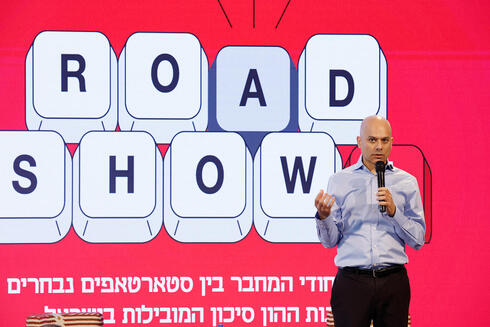
Bank Hapoalim CEO Yadin Antebi was speaking at Calcalist’s RoadShow+ event, held in partnership with Poalim Tech. Adi Hoorvitch Lavi, SVP of Growth and Investments at Poalim Tech, also participated in the discussion.
"Every organization must constantly engage with innovation, and the stories shared by entrepreneurs are truly remarkable. I've spoken with entrepreneurs developing technology that helps financial institutions combat fraud. One example involves integrating data held by mobile carriers with information from banks, making it possible to detect more fraudulent activity," said Yadin Antebi, CEO of Bank Hapoalim, speaking at Calcalist's RoadShow+ event, held today in partnership with Poalim Tech at The George Hotel in Tel Aviv. "This kind of innovation is the essence of Israeli creativity. At the bank, we no longer simply provide banking services to our customers; we also collaborate with them on technology, particularly in cybersecurity and fintech."
"Innovation, however, is not limited to technology," Antebi added, pointing to the bank's initiative to distribute shares to its customers. "This morning, we launched the third round of our 'Gifted Share' program. This is the third time Bank Hapoalim has distributed shares to its customers. This time, we've taken it a step further: we are giving shares not only to our customers but also to their children. Anyone using the Junior app can now receive a share for their child.
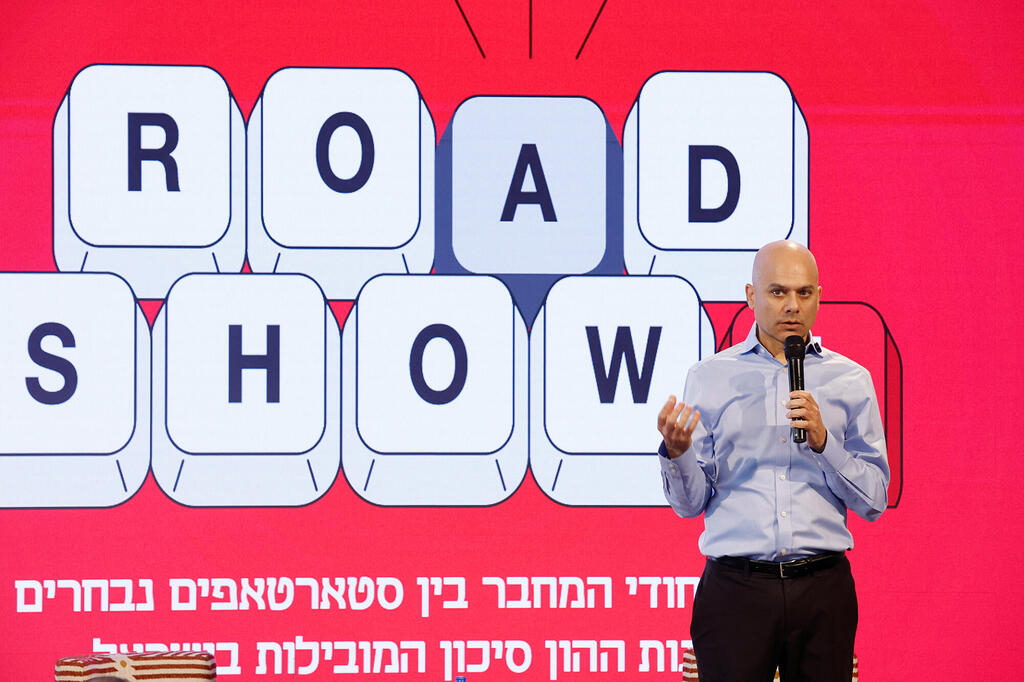
"This is the kind of innovation we must constantly pursue. There is no area in which innovation cannot be cultivated. It encompasses technology and artificial intelligence, as well as new approaches to customer service. The Israeli high-tech sector has become the 'defense' of the Israeli economy, its protective shield."
At the RoadShow+ event, held this morning in Tel Aviv by Calcalist and Poalim Tech, 16 startups selected from a pool of 200 applicants took the stage. Now in its sixth consecutive year, the event is designed for entrepreneurs at the pre-seed through Series A stages, giving them a platform to present their ventures to leading investors. The founders also held focused, one-on-one meetings with investors from prominent Israeli venture capital firms.
This year's cohort included companies operating in artificial intelligence, cybersecurity, energy, defense, fintech, food tech and digital health. Their technologies address a range of challenges, from securing AI agents and preventing financial fraud to detecting equipment malfunctions early and managing investments in commercial real estate.
"Looking at the startups participating in today's event and the investment priorities of the investors attending, it is clear that the entrepreneurial and investment landscape is expanding and becoming more diverse," said Adi Hoorvitch Lavi, SVP of Growth and Investments at Poalim Tech. "In the past, venture capital funds focused primarily on software, while other sectors were largely the domain of specialized funds. Today, alongside traditional cybersecurity and software companies, mainstream funds are also investing in deep tech, semiconductors, robotics, energy and areas related to sovereignty, meaning the degree of autonomy and independence companies can achieve."
2 View gallery
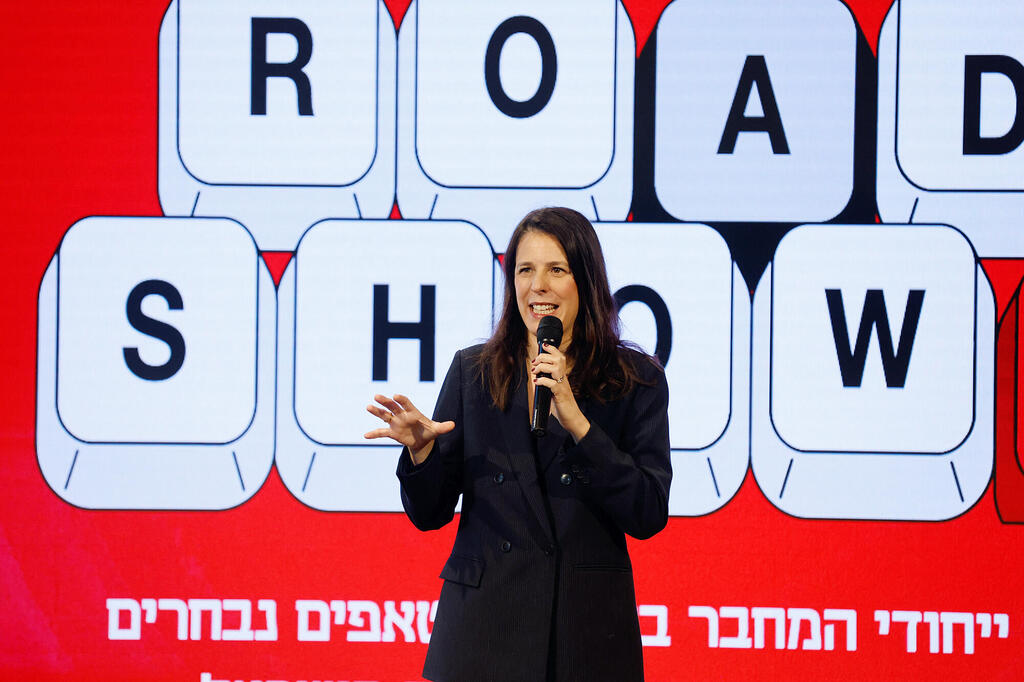
Adi Hoorvitch Lavi, VP of Growth and Investments at Poalim Tech.
(Photo: Nimrod Glickman)
According to Hoorvitch Lavi, two prominent characteristics define this changing landscape. "The first is the emergence of connections that were less common in the past between investors from different sectors. For example, investors from the defense industry and those from the life sciences sector may find themselves backing the same company. The second is the growing prevalence of dual-use technologies. A technology can serve defense needs while also addressing the civilian market, catering to defense organizations and government agencies as well as private-sector customers. This requires companies to adapt their technology to the specific needs of different users and clients."
"Although the boundaries between these sectors are becoming less distinct, it is important to remember that a company developing a missile or a chip follows a very different path from a software company," Hoorvitch Lavi added. "Their requirements in terms of capital, timelines, partners and strategic planning are different. It is therefore essential to understand not only the technology itself but also the specific business path a company must navigate. At the same time, certain factors remain constant for Israeli entrepreneurs."
Hoorvitch Lavi recounted a conversation she had this week with an entrepreneur who had met with a potential investor. The investor asked when the company planned to launch a fundraising round. "Given the complex reality and security uncertainty, the founders believed it might be prudent to raise capital from existing investors now and pursue a larger funding round later. But the investor said he wanted to invest and lead the round. This is a leading investor in the field, and the round is now closing. It involves tens of millions of dollars for an early-stage deep-tech company that has yet to develop a product or generate revenue," she said.
"The environment in which entrepreneurs operate is complex. It is shaped by security uncertainty, a changing market, competition for capital and the dollar exchange rate, which affects everything. Founders must make decisions about fundraising, plan their runway and account for the impact of currency fluctuations. Yet despite these challenges, entrepreneurship in Israel has not come to a halt. Rather, it is becoming more focused," Hoorvitch Lavi said. "That is also one of the goals of today's gathering: to connect entrepreneurs with leading investors, sharpen their pitches and go-to-market strategies, strengthen the ecosystem and help build companies that become leaders in their respective fields."
The startups selected to participate in the event were Arbell Energy, Asadra, Cantaloupe AI, Cygnal, Livcoin, Ghostlayer, guaRdF, Koladin, Mikagu, Neodawn, Nerlos, PlexAI, SaolaAI, Tktide, Ark Security and xFUSION.



