









QuamCore raises $26 million Series A to break quantum’s scalability wall
Israeli startup claims blueprint for million-qubit machine in single cryostat, challenging Google and IBM.
QuamCore, an Israeli deep-tech startup working to overcome one of quantum computing’s most intractable challenges - scaling - has raised a $26 million Series A to accelerate the development of what it calls the first practical roadmap to a million-qubit quantum processor. The round brings the company’s total funding to $35 million and includes a $4 million non-dilutive grant from the Israel Innovation Authority.
The Series A was led by Sentinel Global, with participation from Arkin Capital and returning backers Viola Ventures, Earth & Beyond Ventures, Surround Ventures, Rhodium, and qbeat.

At the heart of QuamCore’s pitch is a claim that it has developed a fully designed and simulated architecture capable of scaling superconducting quantum systems to 1 million qubits, inside a single cryostat. That would be a leap far beyond today’s industry leaders, such as Google and IBM, which top out at around 5,000 qubits per cryogenic module.
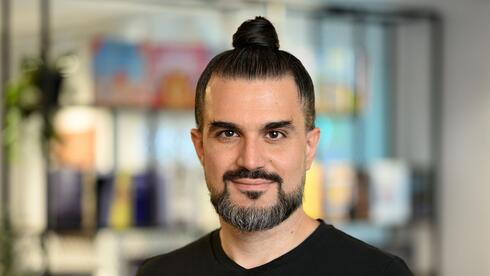
“From day one, we focused on the minimum viable system to unlock real-world quantum advantage, and that number is 1 million qubits,” said Alon Cohen, CEO of QuamCore. “We chose to radically rethink the architecture of the most mature and performant platform: superconducting qubits.”
Rather than pursuing a wholly new qubit technology, QuamCore’s approach hinges on redesigning the architecture surrounding superconducting qubits, which are currently considered the most advanced and commercially viable option. Its core innovation lies in embedding superconducting digital control logic directly within the cryostat, the ultra-cold environment required for qubit operation. This eliminates the heavy cabling that typically connects processors to external controllers, drastically reducing thermal load and making large-scale operation more feasible.
Critically, the system incorporates built-in error correction, an essential component for building fault-tolerant quantum computers. While qubit fidelity and coherence times have improved, the industry has largely stalled at the scaling stage, with quantum systems becoming exponentially more complex as qubit counts grow.
With the new funding, the company plans to move from architectural simulation to fabrication of its first-generation processors, establish a dedicated quantum lab, and grow its operations.
QuamCore’s leadership team brings together deep expertise in quantum physics, superconducting systems, and large-scale semiconductor development.
CEO Alon Cohen, co-founder of the EyeC Radar Group at Mobileye (Intel), served as the chief architect and head of the EyeC Radar algorithm group, shaping it into a core technology for autonomous vehicle perception.
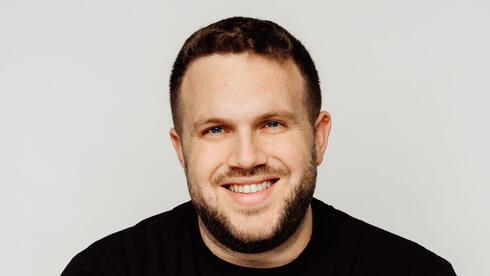
CTO Prof. Shay Hacohen-Gourgy, a leading expert in superconducting quantum computing, has spent over 15 years pioneering experimental research in quantum information and solid-state physics. A professor at the Technion – Israel Institute of Technology, his groundbreaking work in superconducting circuits and quantum measurement has been published in top-tier journals, including Nature.
Chief scientist Prof. Serge Rosenblum, a leading researcher at the Weizmann Institute of Science, brings over 15 years of experience across various quantum technologies, with multiple breakthrough papers published in top-tier journals, including Science.
Prof. Hacohen-Gourgy and Prof. Rosenblum conducted their postdoctoral research at UC Berkeley and Yale before returning to Israel seven years ago. They built Israel’s leading superconducting quantum laboratories at the Weizmann Institute and the Technion, respectively. Senior Advisor Prof. Eby G. Friedman, a world-renowned expert in superconducting digital circuits from the University of Rochester, has contributed to over 600 publications and patents, with his work laying the foundation for advances in high-performance digital superconducting logic.



