









International VC Survey 2026
“When the AI landscape shifts, Israeli teams reorient faster”
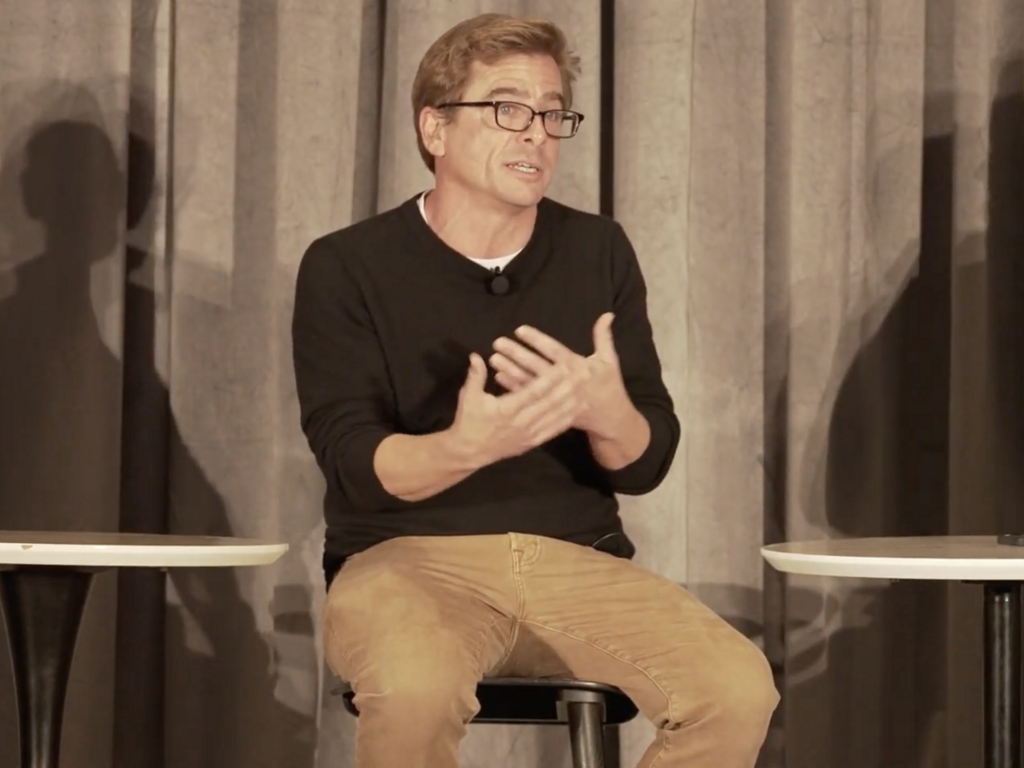
Eliot Durbin, General Partner at Boldstart Ventures, joined CTech for its 2026 International VC Survey.
“Speed vs. operational discipline is a false dichotomy. The best Israeli founders today combine both. They have to, because their customers are CISOs and engineering leaders who demand predictability,” said Eliot Durbin, General Partner at Boldstart Ventures.
“Where the Israeli archetype still has a real edge is cycle time on insight. When a new attack vector emerges or the AI landscape shifts, these teams reorient faster. They're comfortable making decisions with incomplete information. In a market where the security implications of agentic AI are evolving month to month, that speed-to-insight is an enormous advantage, as long as it's married to disciplined execution underneath.”
CTech reached out to Boldstart Ventures to explore the evolving "remote" VC-founder relationship and the specific strategic markers that attract global giants to the Israeli market in 2026.
You can read the entire interview below.
ID CARD
Fund Name: Boldstart Ventures
Total Assets Under Management: $1.1B
Partners/Managers: Ed Sim (Founder & General Partner), Eliot Durbin (General Partner), Ellen Chisa (Partner)
Notable Portfolio Companies (Active): Snyk, BigID, Keycard.ai, Tessl.io, Surf.ai, Reco.ai, GeneralistAI, Topos Bio
Notable Exits: Protect AI (acquired by Palo Alto Networks for $700M), Kustomer (acquired by Meta for $1B), Tres.finance (acquired by Fireblocks for $130M)
As we move through Q1 2026, are you seeing early signs of the IPO window reopening for Israeli tech, or does M&A remain the more realistic exit path in the near term? What indicators are you watching most closely?
As an inception-stage investor, the majority of my time is spent with teams building around problems two to three years in the future, so the IPO window isn't something I'm tracking day-to-day.
That said, the IPO window is fundamentally about growth. If you have it, you can take that route. But the reality is that the majority of companies, especially in security, choose M&A because the premium is higher. The large platform companies need to fill gaps in their security and AI infrastructure stacks, and they're willing to pay for it. Israel remains the deepest talent pool for that kind of acquisition, and strategists know it.
So, I'm less focused on when the window opens and more focused on whether the acquirer appetite stays this strong, and right now, it's very strong.
Post-market correction, which performance metric is actually driving conviction in Israeli companies right now? Are investors prioritizing something specific to the current cycle?
Everyone asks about net retention. What actually gets me leaning forward is speed of expansion within an account. The Israeli security companies I'm watching are landing with a tight wedge, often around securing AI agents or non-human identities, and expanding fast because the customer keeps discovering more surface area to protect. Going from a $30K pilot to $300K in under six months because the problem is that urgent? That's the market pulling you in. That's the signal.
With AI shifting from copilots toward more autonomous systems, where do you see Israeli startups establishing a defensible edge today?
The biggest opportunity for Israeli startups in AI isn't building AI. It's securing it. The shift from copilots to autonomous agents is creating the largest expansion of the enterprise attack surface since cloud migration. Every agent needs identity management, access controls, and behavioral monitoring. The entire security stack has to be rethought for non-human actors.
Israeli founders have been building for adversarial environments their whole careers, from Unit 8200 through decades of cybersecurity innovation. They're not adding "AI security" as a feature. They're rearchitecting security primitives for a world where most actors on your network aren't human. No ecosystem is better positioned for that.
Two of our most recent inception bets are Israeli and prove the point. One is rebuilding network security from the ground up for an agentic world, where east-west traffic is no longer human-driven and lateral movement happens at machine speed. The other is pioneering a brand new category we think of as AI data center security, where the physical and logical infrastructure running frontier models becomes its own adversarial surface. Both teams are veteran Israeli security operators. Neither is adapting an old playbook. They're writing new ones.
How are you currently pricing geopolitical and operational risk when evaluating Israeli companies?
We don't apply a blanket "Israel discount." That's lazy. Most Israeli companies are operationally distributed: GTM in the U.S. or Europe, international customer bases, partially distributed engineering. The operational impact of geopolitical events has been far more contained than the headlines suggest.
What I actually evaluate is founder temperament under pressure. The teams that kept shipping and closing through genuine adversity over the past two years are de-risked in ways their valuations don't reflect yet. I often arrive at the opposite conclusion from the market. The risk-adjusted opportunity is better than the perceived risk implies.
For foreign investors specifically, what has been the most persistent friction point when deploying capital into Israel recently? Is it regulatory clarity, talent mobility, capital structure, or something else?
It's not regulatory. Israel's legal frameworks are mature. Delaware flips are standard. The real friction is relationship density. The ecosystem is incredibly tight-knit. The best early-stage deals are won through deep relationships with founders and the military/intelligence alumni networks, not fly-in-fly-out meeting tours. The second issue is understanding how Israeli teams build their U.S. presence. That GTM transition is where foreign investors most often misjudge execution risk.
Boldstart has been investing in Israel since we started in 2010. My partner Ed has been backing Israeli founders since 1999. Over 17 portfolio companies, from BigID and Snyk at inception through Reco.ai, Surf.ai, and many more, including our two newest stealth bets. The relationship density compounds. Founders refer us to their favorite founders. Every new inception round we lead is downstream of the last one.
Looking at deal flow today, where do you see the largest disconnect between perceived risk and actual opportunity in the Israeli market?
Security for AI infrastructure. The market broadly understands cybersecurity matters but hasn't priced in the magnitude of what agentic AI is creating. Thousands of autonomous agents per enterprise, each with permissions, data access, and decision-making capabilities. The tooling barely exists yet.
Israeli companies building here get lumped into "cybersecurity" as if it's a mature category. It's not. This is a new category forming in real time. Add the geopolitical valuation discount on top and you have Israeli teams with better technology and sharper traction than Bay Area peers, at meaningfully lower prices. That gap is where the best returns of this cycle will come from.
It's why our two most recent inception checks in Israel are both in stealth, both in security, and both in categories that didn't exist 18 months ago. Agentic network security and AI data center security. We're not waiting for the market to catch up to the thesis, we're funding the teams defining it.



