










The ‘Uber for traffic’? NoTraffic secures $90 million Series C after rapid US expansion
The Israeli company targets real-time control of urban intersections as congestion worsens.
NoTraffic, which develops an AI-powered mobility platform for traffic management, has raised $90 million in a Series C round led by PSG Equity, with participation from M&G Investments, Grove Ventures, LifeX, Next Gear Ventures, and Meitav Investment House. The round brings the company’s total funding to $165 million since its founding.
The company’s technology turns intersections into software-defined digital infrastructure, replacing traditional traffic light systems based on fixed schedules with real-time, adaptive management.
Referring to the funding round, CEO and co-founder Tal Kreisler said the entire raise is primary capital, with no debt or secondary transactions. “This round marks a step-change for us after establishing ourselves as a leading player in the market,” he said. “There is no ‘Uber’ of traffic management today, we see an opportunity to build a company at that scale.”
According to Kreisler, the company is already generating tens of millions of dollars in revenue and has achieved rapid growth. “One in ten cities in the U.S. is already a customer, and we reached that milestone in less than three years, including some of the largest cities,” he said. “This is the fastest growth rate in the sector, and the funding will help us accelerate further.”
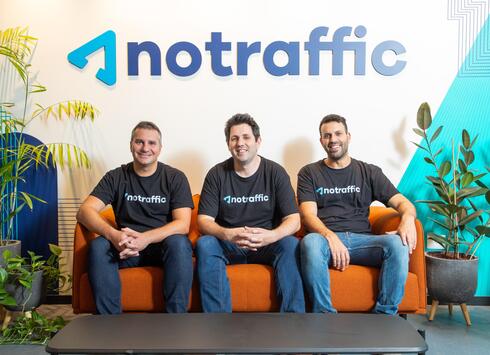
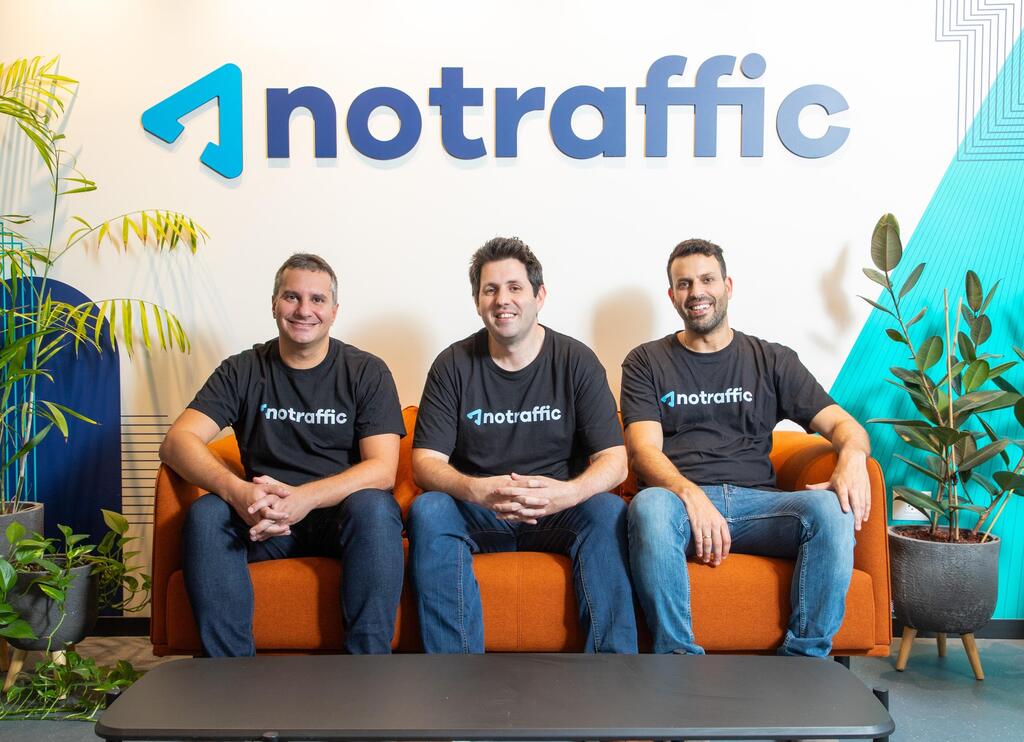
Founded in 2017 by Kreisler, Uriel Katz, and Or Sela, NoTraffic employs 180 people, around 100 of them in Israel. The company operates across more than 40 U.S. states and in Canada, with deployments in hundreds of cities, including major metropolitan areas such as Houston, Phoenix, and Oklahoma City. Its systems have been tested and approved by leading U.S. transportation departments.
“Our business is primarily in the U.S., so commercially we are not affected by events in Israel,” Kreizler said. “The previous funding round enabled us to enter the market, and since then we’ve doubled our activity every year in both usage and customer numbers.”
The company expects to reach more than 10% of the U.S. and Canadian market, equivalent to 400-500 transportation departments, within the next quarter. Its platform functions as an operating system for traffic management, allowing cities to address their own challenges, particularly labor shortages and increasing complexity in urban mobility.
“In about 90% of the cities we work with, the main issue is a lack of manpower,” Kreisler said. “There’s also the growing challenge of managing more vehicles, scooters, and pedestrians within the same space. Most cities want to reduce congestion, and we are seeing reductions of up to 70%.”
Despite Israel’s own traffic challenges, NoTraffic does not yet operate locally. Kreisler cited regulatory barriers and market centralization. “In the U.S., we can close a deal within a day, demonstrate the system and begin installation immediately. Each city operates independently,” he said. “In Israel, the process is far more centralized and complex, even for municipal traffic systems.”
He added that in many cities, traffic systems still require manual inspection, with personnel physically checking signals. “The ability to manage everything remotely and centrally creates significant value,” he said.
Artificial intelligence is also reshaping the company internally and externally. “Externally, the way humans interact with systems is changing, and our products must evolve accordingly,” Kreisler said. “Internally, AI helps us make faster, data-driven decisions and improves development speed.”
He added that while competitors are attempting to replicate NoTraffic’s integrated hardware-software approach, doing so remains challenging. “It’s not easy to duplicate what we’ve built,” he said.
Cities adopting the platform report measurable improvements. “Phoenix is a fast-growing city, and our transportation infrastructure must keep pace. By deploying NoTraffic’s AI-driven platform, we’ve delivered measurable improvements, improving signal timing, shortening commute delays, and cutting pedestrian wait times,” said Mayor Kate Gallego of the City of Phoenix. “The result is more efficient intersections, less congestion, and a more sustainable future for our residents."



