









Legal grey area surrounds Michael Eisenberg’s growing influence near Netanyahu
The businessman, who joined Netanyahu’s entourage in his meeting with Donald Trump, serves under interim restrictions pending conflict-of-interest agreement.
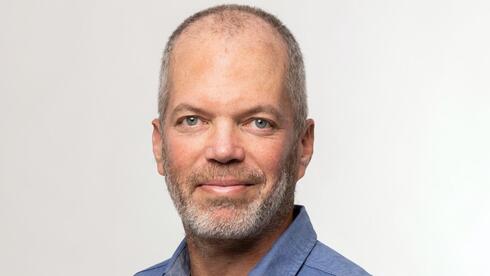
After the resignation of the Minister of Strategic Affairs Ron Dermer, one of the people closest to Prime Minister Benjamin Netanyahu, businessman Michael Eisenberg has emerged as a key figure in the Prime Minister’s inner circle. Eisenberg, who serves as Netanyahu’s special envoy and his representative on matters related to the Civil-Military Coordination Center in Kiryat Gat, led by the U.S. military, and the implementation of the ceasefire agreement in the Gaza Strip, joined the Prime Minister’s entourage during his current state visit to the United States, including a meeting with President Donald Trump at his Mar-a-Lago estate in Florida.
However, Ynet has learned that Eisenberg’s official appointment has not yet been formally completed. Despite this, he is currently serving in his role without a finalized conflict-of-interest arrangement addressing his extensive private business activities. The Prime Minister’s Office’s legal counsel granted Eisenberg specific approval to accompany Netanyahu on the U.S. visit, subject to interim restrictions designed to prevent conflicts of interest until his employment is formally settled and a comprehensive arrangement is finalized.
Under the legal counsel’s guidance, the Prime Minister authorized Eisenberg to stay at a hotel at the state’s expense in order to remain close to Netanyahu during the visit. Eisenberg was also instructed to avoid participating in meetings related to his private business interests, barred from engaging in private matters during the trip, and required to attend meetings and conferences only in the presence of the Prime Minister or a civil servant. He was explicitly prohibited from holding meetings independently.
Eisenberg is a prominent businessman and the founder and manager of venture capital fund Aleph that invests in numerous companies. Once his appointment is formally completed, a full conflict-of-interest arrangement is expected to be put in place to regulate the separation between his private business interests and his public responsibilities. Particular attention is expected to be paid to his potential involvement in the reconstruction of the Gaza Strip and the substantial resources likely to be allocated to that effort.
As previously reported by The New York Times, Eisenberg was part of a group of businessmen and former military officials who developed the concept of distributing humanitarian aid through designated aid centers operated by private security companies. This initiative later evolved into the U.S.-backed Gaza Humanitarian Foundation (GHF), which ran aid distribution centers in the Strip in coordination with the Israel Defense Forces. The mechanism was later discontinued as part of President Trump’s 20-point plan to end the war and drew criticism from IDF Chief of Staff Lt. Gen. Eyal Zamir.
A comparable situation arose in 2010, when attorney Yitzhak Molcho served as Netanyahu’s special envoy on political issues, including relations with the U.S. administration and negotiations with the Palestinians. Molcho was required to sign a detailed and extensive conflict-of-interest agreement to prevent overlap between his public duties and private legal work.
In practice, Molcho served in the role for ten months before his conflict-of-interest arrangement was finalized. In 2017, questions surrounding Molcho’s potential conflicts of interest were examined during the investigation into the submarine affair, though authorities ultimately decided not to prosecute him. In Eisenberg’s case, government sources told Ynet that the conflict-of-interest arrangement is expected to be finalized within a few weeks.
The Prime Minister’s Office said in response: “Mr. Michael Eisenberg is acting at our invitation with the aim of assisting the State of Israel in upholding and implementing its principles in the Gaza Strip. His experience and contribution to advancing these important issues are worthy of appreciation.
“Mr. Eisenberg does not have an interim arrangement authorizing his participation in the Prime Minister’s flight to the United States. However, legal counsel clarified to him that the approval to join the current trip, which was granted under special circumstances, does not constitute authorization to engage him on an ongoing basis, nor does it indicate that the issue of potential conflicts of interest in any future engagement, should such engagement be approved, has been resolved. Work on these matters will continue until they are fully addressed,” the Prime Minister’s Office said.
“It was further clarified that Mr. Eisenberg bears responsibility for avoiding any situation that could give rise to a conflict of interest between his personal or business affairs and his public role. It was also emphasized that Mr. Eisenberg may participate in meetings only when a civil servant or the Prime Minister is present.
“In accordance with Section 2.10.4, which addresses ‘Flights and services related to official travel abroad,’ individuals who are not civil servants may, under certain conditions, be included in official travel arrangements. In this case, however, the Ministry was not asked to review Mr. Eisenberg’s inclusion on the Wing of Zion aircraft, as he traveled on commercial flights at his own expense. The request related solely to his participation in meetings with American counterparts and the financing of his accommodation.”



