










Israeli startup raises $6.2 million to turn social media video into intelligence
As crises unfold online, Senai aims to decode the world’s fastest-moving evidence.
When violence erupts or a covert influence campaign takes hold, the first evidence is increasingly not an official report or an intercepted message, but a shaky video uploaded from a mobile phone. Social platforms now carry a constant stream of real-time footage, yet for governments and security agencies the material is almost impossible to track at speed. By the time analysts identify a dangerous clip, it may already have spread across borders and shaped public perception.
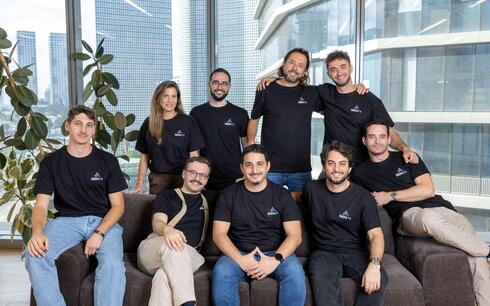
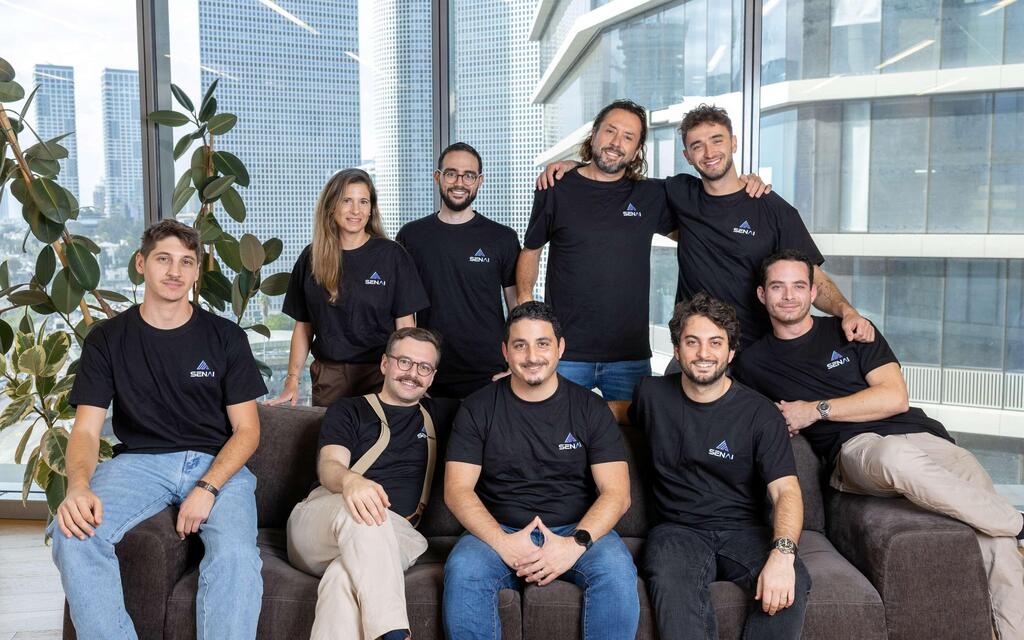
Senai, a young technology company founded less than a year ago, argues that this flood of unstructured video has created an entirely new intelligence problem, and a new discipline to solve it. The firm announced this week that it has raised $6.2 million in Seed funding led by 10D Ventures, with participation from FS Ventures, 1948 Ventures, and several strategic investors including Jonathan Kolber. The money will be used to accelerate product development and expand deployments with intelligence and law-enforcement agencies.
The company describes its focus as Online Video Intelligence, or OVINT, a term it coined to frame video as a primary source of security information rather than a secondary by-product. Senai’s platform uses multimodal artificial intelligence, combining computer vision, audio analysis, language processing and geospatial inference, to turn scattered clips into structured, location-specific intelligence. The goal is to provide authorities with a live operational picture of events as they unfold, rather than a retrospective investigation.
The need, executives say, stems from a widening gap between the speed of social media and the pace of traditional intelligence work. Even where platforms employ moderation systems, uploads move faster than human review. High-risk material can circulate for hours before being flagged, while manipulated or AI-generated videos complicate efforts to distinguish fact from fabrication. For governments, the result is a paradox: video has become a dominant signal of crises and influence operations, yet remains one of the hardest formats to analyze at scale.
Senai has spent much of the past year testing its technology in live environments with government partners in Europe, Asia and the Middle East. In one case described by the company, a European authority used the system during a major outbreak of violence in a capital city. By monitoring open-source video alone, officials were able to map key actors and shifting dynamics in real time and to preserve evidence before clips were removed from the web.
Related articles:
- Tomorrow.io raises $175 million at over $1 billion valuation to build AI-driven weather satellite network
- Cyber startup Orion raises $32 million Series A backed by IBM for AI-driven data-leak prevention
- After $400M cyber exit, ex-IntSights CEO raises $11M to build AI app for personalized sports highlights
In another deployment, Senai examined what it said was a coordinated online campaign linked to suspected Russian influence activity. The platform identified networks of accounts pushing manipulated and AI-generated footage, helping analysts trace how narratives were being amplified across platforms.
Although the public sector remains the primary market, Senai said its “dual-use” architecture has begun to attract corporate clients, citing a recently closed deal with a U.S. enterprise customer and plans to expand that offering next year.
The company is led by former intelligence professionals and recently appointed Michel Berdah as chief revenue officer and partner to oversee commercial growth. CEO David Allouche-Levinsky said video had become “the primary signal shaping narratives, influence, and security outcomes,” arguing that agencies need tools that allow them to intervene before false stories harden into accepted truth.



