






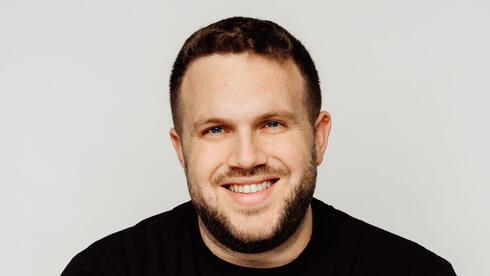




“We're too slow in the adoption of AI technologies in healthcare”
Sheba Impact CEO Avner Halperin explains why AI is becoming central to telehealth, from triage and intake to expanding access to care while keeping clinicians in the loop.
“There is no way that we can care for the aging population by continuing to bring so many people to hospitals,” said Avner Halperin, CEO of Sheba Impact, the commercialization arm of Sheba Medical Center.
In advance of the upcoming Biomed 2026 conference in Tel Aviv, he spoke with CTech about the current state of telehealth, and how AI is taking an increasingly larger role in the sector.
“Overall, long term, there is no question that telehealth is a critical part of the solution; and AI is a tool that really allows us to propagate and push technology into the home in a much, much faster and more advanced way than we've done until now.”
He went on to note that telehealth is steadily gaining attention as a way to solve the problem of healthcare availability. “When you look at the trend on telehealth, it's not a consistent growth - it actually tends to peak around crisis events, then go back down, then go back up - but overall, it's on an upward trajectory.”
As a sign of that upward trend, several new telehealth advancements focusing on AI were announced earlier this month: medtech startup Mentaily received approval from Israel’s Ministry of Health for an AI-based psychiatric triage system built around an interactive avatar; and remote healthcare company TytoCare secured FDA De Novo classification for an AI-powered tool that analyzes eardrum images, establishing a new regulatory category in the process.

Halperin also points to a broader shift toward what he describes as “conversational technologies,” where AI systems interact with patients before a clinician is involved. Companies like Hippocratic AI, he notes, are already using AI to contact patients ahead of appointments, gather information, and resolve routine questions, making the eventual interaction with a physician more efficient.
These kinds of advancement, Halperin explains, are of critical importance in the current healthcare landscape.
“We're living in a world where getting a high-quality medical expert in direct contact with a patient is the most challenging and most rate-limiting factor in the quality of care that all our systems provide.”
“AI enables medical systems to say, okay, which patients really need care immediately tomorrow, which can potentially wait a little longer. And for those that need the care, instead of an hour and a half of intake with a mental health expert or with a psychiatrist, the AI does 90% of the work and the psychiatrist does 10 minutes instead of 90 minutes. So you see the AI both providing the prioritization and saving time of the clinician.”
Halperin notes that, of course, attempting to deeply integrate AI into a field that regularly makes life-and-death decisions is something that needs to be done carefully, and with guardrails in place.
“There is no question that for the foreseeable future, all of us will want to see a physician or a clinical expert make the final decision on any major medical intervention or any major medical issue. But I also think there is no question that in most cases, the combination of a human and AI will be much better than each one on their own.”
“My argument is that we're underusing AI. And that's because we are much more sensitive to mistakes that are made by AI than mistakes made by humans.”
As an example of this, he refers to recent statistics surrounding autonomous driving incidents: “Autonomous driving cars are at least seven times safer than human drivers. If we changed all our cars today to autonomous vehicles, the statistics show that we would see mortality go down by about 85%. And yet, when one autonomous vehicle runs over one person someplace and unfortunately that person dies, that's huge news and everybody stops using or reduces the use of autonomous vehicles.”
“I think the same thing is happening today in healthcare. We're too slow in the adoption of AI technologies. We should actually be demanding that wherever possible, AI does anywhere between 10% to 90% of the work and the doctors do the rest.”
Looking ahead, Halperin believes that AI-enabled telehealth will revolutionize the accessibility of high-quality medical care around the world.
“It's not only that we're giving better care in Manhattan or Tel Aviv, but we're giving better care in distant locations and to populations that don't usually have access to high quality care. The amazing idea that anyone on his or her smartphone can at least get a high-quality initial diagnosis, no matter where they are, is incredible,” he says.
“The ability to close the gaps in care [quality] between New York and Africa, for example - I think that's what we're going to be talking about this year, but hopefully next year and the following years, we'll actually be able to show improved outcomes based on these AI capabilities.”



