









Opinion
If AI doesn’t save resources, it won’t survive in healthcare
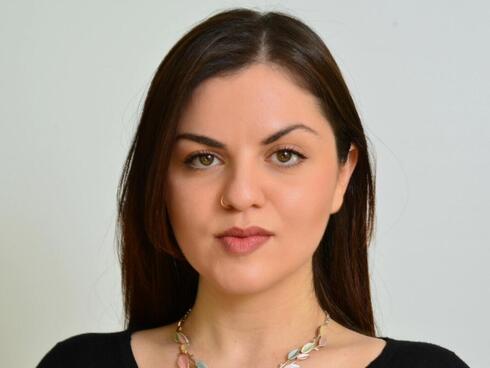
"Bubble or not - the healthcare world, already heavily influenced by technological advancement, is on the cusp of unimaginable transformation," writes Rachel Sarafraz, Innovation Director at Sheba Beyond Virtual Hospital.
As healthcare executives debate whether AI is a bubble and AI-based tech companies enjoy almost twice as much funding as their non-AI counterparts, the digital health community is trying to navigate the explosion of AI-powered products. In Israel alone, there are more than 600 AI-based health startups. The potential is tremendous. But while AI can be harnessed for a plethora of benefits to patients and healthcare providers, it’s no surprise that the quickest adoption abroad has been of AI scribe technology.
These technologies use ambient listening to process physician-patient consultations and generate within seconds automatic clinical summaries. It’s changing the game. Physicians spend an estimated 90 minutes on clinical documentation daily, and administrative burden is a leading cause of burnout. It is no wonder that leading players like Epic and Kaiser Permanente identified AI scribe technology as top priority. Although adoption in Israel has stalled due to the immaturity of Hebrew-language scribes, you can bet that hospitals and HMOs are already piloting solutions.

The reality is that the most attractive AI products to healthcare payers and providers will be the ones that save resources and optimize. A recent MIT publication is making waves for reporting on a 95% failure rate of AI deployment in enterprises. The public healthcare system is operating with far fewer resources than these enterprises, and perhaps more skepticism. This doesn’t mean that products that offer only clinical or patient experience benefits won’t be adopted. Life-saving clinical solutions are worth the cost even without an obvious economic return on investment. But the products that can make a case for sustainability will have an easier time making it through the chain of organizational decision-makers.
In my time in government and now at a leading hospital, I’ve reviewed hundreds of startups for funding or partnerships. I remember the buzz of predictive analytics when to successfully secure funding all a startup needed was a data scientist, a good question and a promising source of data. There was the phase of, if you can dream it, it can be a mobile app. There were promises of virtual reality, of remote patient monitoring. What stuck from all of these? The products that could be sustained financially because they enable other healthcare services (for example, Datos or Tyto), or they optimize them (Aidoc, Feel Better), or they replace them entirely (Pulsenmore, GynTools).
I can count on my hand the number of startups I’ve met over the years that had any kind of useful data on economic ROI, and I don't need all five fingers to do so. Healthcare startups, take heed. You don't want to end up in the infamous quagmire of having a mature product but insufficient evidence, thereby doomed to pilot limbo. Collect your ROI metrics early in the game. If you’re already investing the resources to study the clinical efficacy of your product, you should be evaluating its economic gains as well. You should also be insisting that organizational decision-makers weigh in on the research protocol. Generally, research protocols to validate the benefits of health technologies are written by a clinical lead. Make sure that the procurement people are in the room too. Ask them, if I had the clinical evidence necessary, would you be a paying customer today? What would convince you to buy?
The FDA has already approved over 1,000 AI-based health technologies. Bubble or not - the healthcare world, already heavily influenced by technological advancement, is on the cusp of unimaginable transformation. Even so, in a system constrained by budgets and burnout, one thing is certain. “Nice-to-have” is not a sustainable business model.
Rachel Sarafraz is the Innovation Director at Sheba Beyond Virtual Hospital of the Sheba Medical Center.



