










BiblioTech
CTech’s Book Review: Satya Nadella’s reflection on Microsoft’s transformation
Alex Frenkel, Co-Founder and CEO of Kai.ai, shares insights after reading “Hit Refresh” by Satya Nadella.
Alex Frenkel, Co-Founder and CEO of Kai.ai, a company that produces an AI-based conversational companion designed to improve mental well-being. He has joined CTech to share a review of “Hit Refresh: The Quest to Rediscover Microsoft’s Soul and Imagine a Better Future for Everyone” by Satya Nadella.
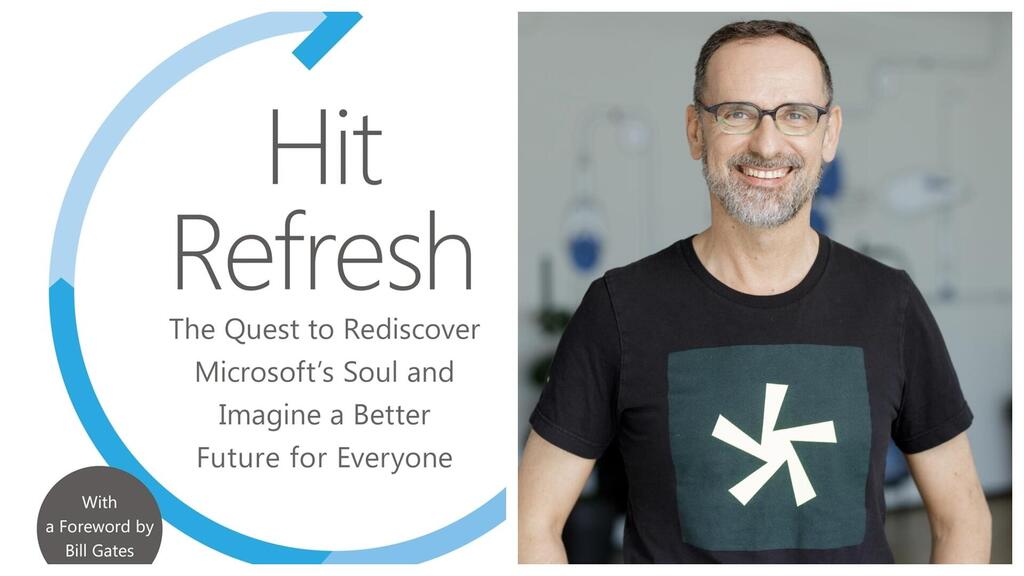
Title: Hit Refresh: The Quest to Rediscover Microsoft’s Soul and Imagine a Better Future for Everyone
Author: Satya Nadella
Format: Audiobook
Where: Commute
Summary:
Hit Refresh by Satya Nadella is a thoughtful reflection on Microsoft’s cultural and strategic transformation following his appointment as CEO. Nadella blends his personal journey from India to the United States with the profound organizational shifts he initiated at Microsoft. The book examines the company’s transformation from a rigid, competitive environment into a more open, empathetic, and growth-oriented culture. It outlines how Microsoft redefined its identity through cloud innovation, collaboration, and a renewed sense of purpose.
Nadella elevates empathy as a core leadership principle, demonstrating how emotional intelligence can transform even the largest global organizations. The book also discusses emerging technologies, including artificial intelligence, mixed reality, and quantum computing, presenting a clear vision of how human centered leadership can unlock innovation and help organizations thrive in the digital era.
Important Themes:
One of the central themes in Hit Refresh is the connection between leadership and emotional intelligence. Nadella emphasizes how empathy and curiosity can transform not only leaders but entire organizations. His belief that emotional awareness is essential for innovation frames the cultural shift that reshaped Microsoft from an internally competition-driven environment into one grounded in collaboration and trust.
Another major theme is organizational reinvention. The book describes how Microsoft transitioned toward cloud-oriented thinking, adopting a growth mindset and breaking long standing assumptions about its identity. Nadella examines how leaders must constantly “refresh” themselves and their teams, creating space for continuous learning and reinvention.
Technology as a force for positive impact is another essential theme. Nadella discusses AI, mixed reality, and quantum computing not as abstract technologies but as tools that carry deep ethical and societal implications. He stresses the responsibility of tech companies to ensure that innovation serves humanity.
A further theme is inclusivity. Nadella’s reflections on his personal life, including raising a child with disabilities, highlight how diversity and inclusion shape better decision-making, stronger teams, and more resilient companies.
Overall, the book presents a compelling argument that the most successful organizations are those that align technological progress with human values, empathy, and emotional well-being.
What I’ve Learned:
Hit Refresh resonated deeply with me because it bridges two worlds that I have spent my career moving between: the therapeutic, emotion-centered work I came from and the AI-driven organizational transformation I focus on today.
Nadella’s emphasis on empathy as a strategic leadership capability reflects principles I have long believed in from my time working with people in emotionally vulnerable moments. The book demonstrates that emotional intelligence is not a “soft” complement to leadership but a core driver of trust, collaboration, and long-term performance.
I connected strongly with Nadella’s view that leaders must create environments where people feel seen, supported, and safe enough to grow. This aligns with the challenges I see daily in organizations: employees dealing with stress, uncertainty, interpersonal friction, and the emotional weight of fast paced work cultures. The book reinforced my understanding that meaningful change begins with human connection, and only then can technology amplify our strengths.
The chapters on AI were also particularly relevant. Nadella frames AI as a tool that can augment human potential rather than replace it. Ultimately, the book helped clarify how my background in therapeutic work and my current commitment to AI can coexist. It strengthened my belief that technology can be designed to elevate emotional wellbeing.
Critiques
While Hit Refresh offers valuable insights, some sections focus heavily on Microsoft’s internal history, which may feel less relevant to readers seeking practical frameworks rather than corporate storytelling. Additionally, the book touches on advanced technologies such as quantum computing without exploring them in depth, leaving technically inclined readers wanting more. Nonetheless, the blend of personal narrative and organizational strategy creates a compelling and accessible perspective on leadership in the digital age.
Who Should Read This Book:
This book is ideal for leaders, founders, HR professionals, and anyone responsible for shaping organizational culture in the technology sector. Readers who are navigating digital transformation or building global teams will find meaningful guidance in Nadella’s approach to empathy driven leadership. The book is particularly relevant for those working in Learning and Development, as it highlights how emotional intelligence and human centered thinking can unlock innovation and improve collaboration. Anyone interested in understanding how large organizations can reinvent themselves through a combination of cultural change and technological advancement will gain significant value from Hit Refresh.



