










VC Survey 2026
“A reckoning is coming. We are currently sitting in a public market bubble that inevitably spills into the private markets”
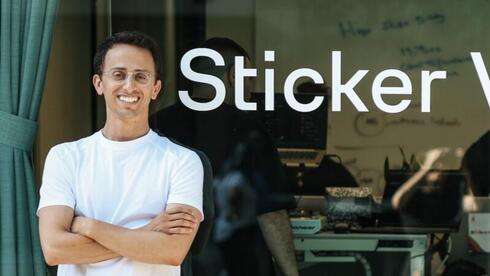
Guy Yamen, Managing Partner at TPY Capital, joined CTech for its 2026 VC Survey.
“A reckoning is coming. We are currently sitting in a public market bubble that inevitably spills into the private markets, but this is not an AI bubble. It is a margins bubble. Spending one dollar to generate twenty cents of revenue is not sustainable, no matter how impressive the top-line curve looks,” said Guy Yamen, Managing Partner at TPY Capital, when asked what will be the single most critical metric to drive premium valuations in 2026.
“The defining metric of 2026 will be margins, specifically durable unit economics that prove growth is worth its cost. The question investors will ask is no longer just ‘Can you get to $100M in ARR?’ but also ‘At what cost, and does this growth have a future?’,” he added.

“As markets tighten, application-layer AI companies that scaled through aggressive, uneconomic expansion will be hit first. The winners will be the more conservative competitors, those that protected margins early and built businesses that can actually compound into functioning, profitable companies.”
Following the turbulence of recent years and the stabilization of 2025, the Israeli tech ecosystem is entering a new era: The Next Leap. Yamen joined CTech to share insights for its VC Survey 2026.
You can read the entire interview below.
Fund ID
Fund Name: TPY Capital
Total Assets Under Management: $135M
Partners/Managers: Guy Yamen, Dekel Persi
Notable Portfolio Companies: Qedma, Dot Compliance, UniPaaS, H2Pro, Regatta, Kodem, Xtend, Kooply, Tabnine, AI21
Notable Exits: Seebo (Acquired by Augury), Signals Analytics (Acquired by Kenshoo), ReturnGo (acquired by Global-e)
The Agentic Leap: As we transition from 'Copilots' to autonomous 'Agents,' which specific vertical will be the first to fully trust AI with independent decision-making?
Agentic AI will be adopted first where tolerance for error is highest.
Highly regulated domains like finance, legal, and healthcare will be the slowest to grant real autonomy, simply because the downside risk is existential. Client-facing workflows will also lag, since they touch the most sensitive asset of any business, its customers.
The earliest full trust will emerge under the hood. Internal, non-user-facing systems where mistakes are reversible and measurable. Code production is already there, with widespread adoption and accelerating trust.
Other strong candidates include cloud spend optimization, infrastructure orchestration, internal IT operations, data pipeline management, security posture optimization, and DevOps automation. These are areas where humans already act as supervisors, not operators, which makes the leap to agents a natural next step.
The Sovereign Leap: Have the geopolitical lessons of recent years pushed Israeli startups to build independent, 'sovereign' tech stacks to reduce reliance on global platforms?
Full “technological sovereignty” is economically irrational for startups. They simply do not have the resources. That said, if Israel wants to be resilient to geopolitical pressure, it must control strategic layers of the AI stack, and even more critically, the next stack, quantum computing.
Quantum is not just a technological race, it is a geopolitical one. Leadership here creates leverage. If Israel owns critical components of these stacks, it becomes significantly harder to restrict access through sanctions, boycotts, or political pressure. The goal is not independence from the world, but indispensability within it.
The Efficiency Leap: In the era of AI-driven hyper-productivity, is the traditional correlation between 'Headcount Growth' and 'Company Success' permanently broken?
Short answer: yes.
We’ve recently argued this on our podcast- AIdeation - and the numbers are beginning to catch up. 2026 will likely mark the first sustained decline in headcount across the largest enterprises. Not a collapse in global employment, but a clear signal that AI-driven productivity gains are now large enough to change organizational math. AI no longer augments at the margins, it shifts the entire productivity curve.
We are already seeing a historic break between job openings and equity performance, a correlation that held for decades. White-collar layoffs in 2025 were not cyclical, they were a preview.
With roughly 3.5 billion people in the global workforce today, population growth implies hundreds of millions of additional jobs in the coming decade. Our view is that this assumption no longer holds. Recent research shows that AI can already replace over 11 percent of US jobs, and the implications touch every person on the planet. The only real question is how individuals and organizations remain relevant when AI becomes not just a tool, but a colleague.
The Contrarian Leap: What is one sector or trend currently ignored by the herd that you believe represents the most undervalued opportunity for the coming year?
The real hardware layer of the AI stack. After ChatGPT launched, attention shifted to GPU scarcity and NVIDIA’s stock exploded. More recently, memory shortages pushed suppliers like SK Hynix, Micron, and Samsung into the spotlight. But the stack does not stop there.
Running AI at real scale requires breakthrough cooling systems, efficient energy delivery to data centers, and above all, massive amounts of reliable power. Energy, cooling, and infrastructure are the next bottlenecks, and they are far from solved.
Whoever cracks one of these constraints before it fully breaks will gain a durable and asymmetric competitive advantage.
Finally, name 2-3 startups that, in your opinion, are likely to make a leap forward this year.
UniPaaS (portfolio) - UniPaas sits on a durable wedge, embedded payments for vertical SaaS, where payments become a retention plus monetization lever, not a feature. Their recent push to position payments infrastructure for AI-native SaaS (including their MCP announcement) is a smart way to ride the agentic shift without needing to “be the agent,” they become the rails the agents use.
Regatta (portfolio) - Regatta is “the database for AI,” with a sharp focus on AI agents and MCP-driven workloads. The timing is strong, as AI adoption is expected to dramatically increase the number of database interactions over the next few years, potentially doubling as agents become persistent, always-on actors. Regatta’s value proposition is tightly scoped around this shift, enabling complex distributed data access, agent-friendly query patterns, and a simplified data architecture that removes operational friction.
Qedma (portfolio) - Quantum is moving from “science project” to “who can run bigger useful circuits sooner,” and error suppression and mitigation is one of the fastest ways to unlock more value from existing hardware. Qedma’s recent Series A with strategic participation (including IBM) positions it well for a breakout year as quantum roadmaps keep colliding with real-world noise constraints.



