










“This war could end without regime change, with Iran declaring that it has defeated Israel and the United States”
Dr. Nicole Grajewski, a leading international expert on Iran, highlights key dynamics in the early days of the war: the “nuclear talks” as a possible smokescreen, the surprise attacks on Gulf states that could reshape the Middle East, and Russia’s cautious stance, one unlikely to lead to a third world war.
Dr. Nicole Grajewski is an expert on Russia and Iran. She is a lecturer at the Center for International Relations Studies at Sciences Po in Paris, a visiting scholar in the Nuclear Policy Program at the Carnegie Endowment for International Peace, and a fellow in the Managing the Atom project at the Belfer Center for Science and International Affairs at Harvard University. Grajewski's research focuses on the nuclear and military policies of Russia and Iran and their bilateral relations, and is based, among other things, on interviews with elite members in both countries. Her findings have so far been published in her book, Russia and Iran: A Partnership for Resistance, which will be published in June by Oxford University Press (where she also completed her doctorate). Grajewski frequently lectures and is interviewed on these topics in various forums and leading media outlets, including The New York Times, The New Yorker, and The Washington Post. She speaks English, Russian, French, and Persian.
As someone who specializes in the Iranian nuclear issue, are we currently in a war over nuclear weapons?
"The nuclear justification for the current war is pretty weak. Iran is a threat in various ways, of course. It is not a victim, and much of what is happening right now is the result of its actions and mistakes. But the Iranian nuclear program was not an immediate threat, and it is not an immediate threat.
"And if you look at the targets right now, as of Monday afternoon, the nuclear facilities have not been attacked. And that is ostensibly the main justification, or at least the initial one, for the war. So why not attack nuclear facilities when both the United States and Israel have air superiority over most of Iran?
"Enriched uranium, which is underground, is harder to reach, but the facilities they would want to eliminate can certainly be bombed. The thing is, this is simply not a war over the nuclear program."
If it's not about the nuclear issue, why were there negotiations with Iran about the nuclear issue?
"Maybe I'm being cynical because I've been researching these issues for a long time, but the talks were just a way to stall for time."
So what is this war about?
"I think the preparations for war began following the protests in Iran and the promises that U.S. President Donald Trump made to the protesters. At the time, Israel and the Gulf states didn't have enough defenses, interceptors, or supplies to defend themselves if Iran responded, but since then we've seen a gradual build-up of American forces.
"At the same time, there's the issue of ballistic missiles, and there's also the personal aspect, Trump simply doesn't like the regime. Perhaps after successfully removing Nicolás Maduro from the leadership of Venezuela, he assumed it would be easier to do it in Iran."
And did anyone who went to war have any idea where it would go?
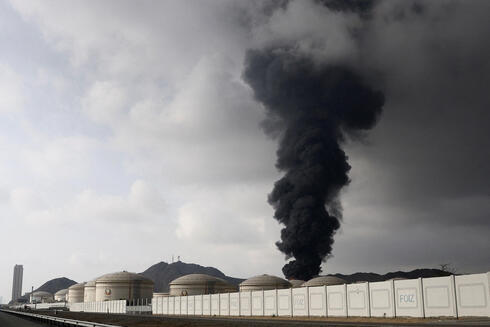
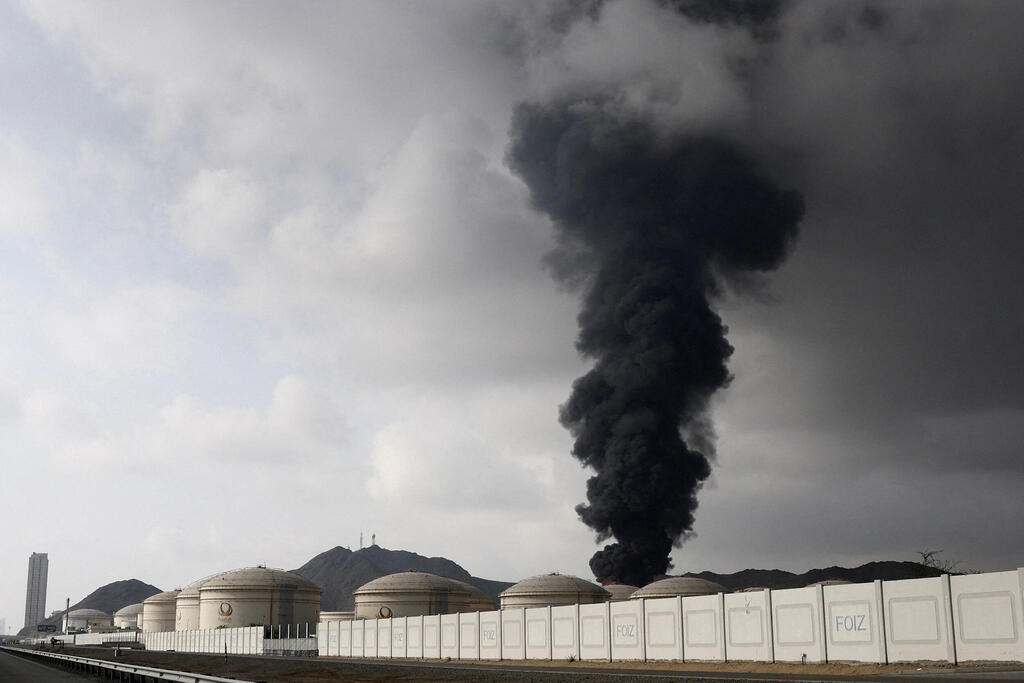
"I don't think the United States understood how far this could escalate. If you had told me we would see bombings in key locations in Dubai, I would have been very surprised."
And how do the Iranians view the war?
"They are very pleased. They are focusing on the destruction they have caused and on their missiles penetrating the defense systems, for them, it is a huge morale boost.
"I follow the Telegram channels of the Revolutionary Guards, and they do not sound sad or worried there, in the previous war they were. They are not even mourning the Supreme Leader; they are more in the 'look, we hit Dubai' category.
"This war could end without regime change, with Iran declaring that it has defeated Israel and the United States."
How do you explain this change in Iranian rhetoric between the June war and the current war?
"They know they are being hit hard, and they want to keep morale up. Ali Khamenei's death reinforces the narrative that 'the United States and Israel have always wanted to destroy us, and look what they are doing.'"

And how does Russia fit into this? Isn’t Iran part of a larger game that Russia is actually running?
"No, I don’t think so. The entire Middle East revolves around the hostile relationship between Iran and Israel. People are giving the Russians too much importance right now.
"Iran’s relationship with Russia was built from the start around shared threat perceptions, shared enemies, and shared domestic concerns about regime instability. But it’s not a relationship that would drive Russian forces into Iran.
"It has never been a partnership like the United States and Israel or the NATO allies. It’s a flexible partnership, focused more on what it’s against than what it’s for. And it sometimes works even ad hoc, like during the protests in December, when the Russians stepped in and helped shut down the internet.
"But it’s not a relationship where Russia is standing by Iran militarily. Both countries have real limitations when it comes to producing defense systems, and Russia doesn’t currently have the capacity to provide Iran with such systems. Russia is busy in Ukraine."
Russia received missiles and drones from Iran for the war in Ukraine. Maybe the United States is interested in attacking Iran in order to damage these supplies as well?
"There is no evidence that Russia used the missiles that Iran provided, partly because Iran did not provide the launchers. Iran itself has a serious problem with launchers at the moment.
"And the drones from Iran have also been adapted to Russian needs, and there is a question as to how much the Russians actually need them today. So I don't think the war in Iran will have much of an impact on Russia in this regard."
And will it affect the Russians in a different way? Do they care about it at all?
"In one sense, the war helps Russia, oil prices have skyrocketed, and it will become a much more important player in that market. But I suspect the Russians are also very worried.
"They are showing themselves to be bad partners, after Maduro, after Assad. And the war complicates some aspects of Russian policy, because Russia has partnerships not only with Iran but also with many Gulf countries. It also has interesting relations with Israel. Those relations have deteriorated since October 7, but they are still important.
"So this puts Russia in a strange position."
In this strange position, can Russia take the place of a mediator?
"It could have been a mediator and become a critical player in this war if it had acted more responsibly after October 7, if it had not damaged relations with the Israelis so much or eroded their trust.
"In fact, it could have been an important mediator in the conflicts with Iran since the night of the first attack, the UAV attack. But today it is perceived as too close to Iran and can no longer serve as a neutral mediator.
"Perhaps it could act behind the scenes with the Gulf states."
So we can't count on the Russians to perhaps restrain the Iranians at a critical moment and prevent a wider war?
"Maybe they will press Iran to stop hitting population centers, especially if Israel turns to Russia and asks them to do so."
What does Russia's attitude toward the war look like?
"Very cautious. When the Russians are angry about something, especially if it concerns their interests or if they want to exploit it, they are very vocal. Now their statements are cautious.
"Maybe this indicates close coordination with Iran, but it could also indicate that they do not want to present Iran as part of their broader narrative.
"The Russians have a long-term strategy; it’s just not yet clear what it is. As someone who has been studying Russian-Iranian relations for years, I can say that they are strangely quiet.
"And on the other hand, the Iranians are not criticizing the Russians at the moment, and that is also strange, because the Iranians usually like to criticize the Russians."
If we expand our view further east, how does China fit into all of this?
"In questions of energy security. The economic costs of the attacks in the Gulf put China in a difficult position, and they may make it more dependent on oil exports from Russia.
"Iran is a major oil supplier to China, and if it attacks Saudi Aramco, that will also have an impact. So China may try to intervene and mediate. It has already mediated in the past between Iran and Saudi Arabia" (in 2023, to restore diplomatic relations between the countries after a seven-year break).
Would you include China in this 'axis' with Russia and Iran?
"No. But North Korea is."
Is there even any talk of an axis? Are we at the beginning of World War III? You say that Russia has been reluctant to enter the fray.
"I don't think it will be World War III. The Trump administration has been very inconsistent about the goals and scope of this war, and it could be over in days or weeks.
"But this war will change the Middle East. It won’t look the same the next day, and it’s unclear how Iran will operate in a region where it has bombed almost all of its neighbors.
"In any case, the future doesn't look bright. This war is a real tragedy. The human cost is terrible, and the reconstruction costs will be enormous. I'm not optimistic right now."



