










Iranian missile damage outpaces reconstruction as Israel’s rebuilding efforts advance slowly
While a new confrontation with Iran unfolds, nine months after the last war many damaged buildings remain unrepaired and residents displaced.
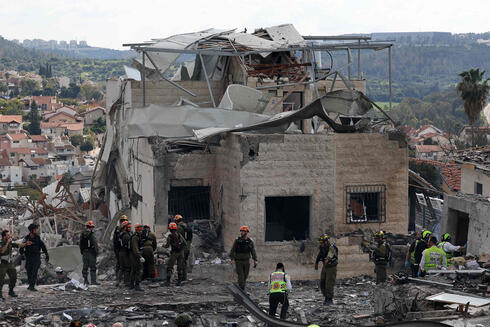
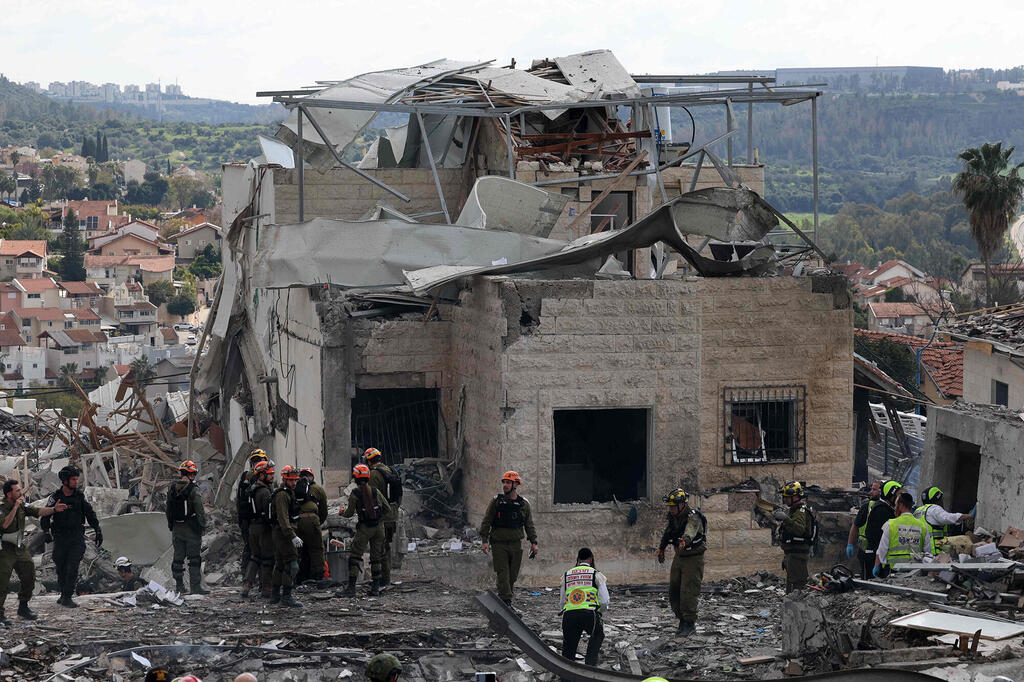
The “Roaring Lion” war began on Saturday, and on the same day Israel suffered its first severe blow in Tel Aviv, followed by another devastating strike on Sunday in Beit Shemesh. Residents were killed in both attacks, and dozens of homes joined the growing list of buildings requiring either extensive reconstruction or demolition and rebuilding.
About nine months have passed since the outbreak of the “Rising Lion” war, and as is evident on the ground, the areas that sustained heavy damage remain far from recovery. The state’s response has been slow, bureaucratic, and ineffective, prolonging the suffering of affected residents.
Construction and large-scale rehabilitation are lengthy processes. For that reason, Israel should have prepared in advance to address complex reconstruction scenarios in which hundreds of aging residential buildings are damaged, much as it has prepared contingency plans for earthquakes. Instead, little was done. For years, no comprehensive plan was put in place for such a scenario.
Even after the government recognized the scale of the problem and began advancing a legislative solution within the framework of urban renewal, the “Law for the Rehabilitation of War Damage through Urban Renewal,” progress has been sluggish. The bill passed its first reading in the Ministerial Committee for Legislative Affairs at the end of December 2025, but has stalled since then.
Once enacted, the law is intended to provide a structured solution for older residential complexes that were severely damaged and are no longer viable in their current form. Rather than patchwork rehabilitation, these areas could be rebuilt through comprehensive urban renewal projects, an approach that may also be more efficient and cost-effective for the state.
The proposed legislation would create a designated fast-track planning process, eliminating the need for approval from district planning committees and significantly shortening timelines compared to standard procedures. It would also introduce a “buyout” mechanism, allowing apartment owners to choose between participating in an urban renewal project or selling their rights to a developer leading the reconstruction.
Even under the most optimistic scenario, officials estimate that if the law is passed soon, it will still take four to five years before the first residents in the hardest-hit areas, including Bat Yam, central Tel Aviv, Ramat Gan, and Bnei Brak, see tangible progress. Under more pessimistic projections, rehabilitation efforts in some cities could stretch over a decade.
The cities most urgently requiring comprehensive solutions include Bat Yam, Bnei Brak, Tel Aviv, and Ramat Gan. In Bat Yam, for example, an entire street (Ben Yosef Street) remains sealed off and largely abandoned, awaiting a state-backed reconstruction plan. In Bnei Brak, the municipality faces budgetary strain and has struggled to address damaged residential buildings that remain unrepaired. In Tel Aviv, authorities are still grappling with how to rebuild structures damaged on Brodetsky and Frenkel Streets.



