










Weapons as strategy: Israel’s defense industry steps into a larger global role
Germany’s rearmament, Turkey’s ambitions, and Iran’s missiles are driving unprecedented arms deals.
1. Israel’s defense export figures for 2025 will not be published until mid-2026, but defense sources estimate that volumes will be at least similar to those of 2024, when Israeli arms companies set an all-time record with exports of approximately $14.8 billion.
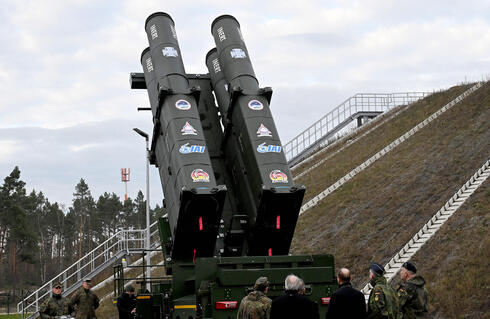
The latest major defense deal was signed last Thursday, worth $3.1 billion, under which Israel Aerospace Industries (IAI) will supply the German Air Force with Arrow 3 missile systems. This marks the second Arrow missile deal with Germany in two years; the first, valued at about $3.5 billion, was the largest export contract in the history of Israel’s defense industries.
Alongside Arrow missiles, Germany has significantly expanded its procurement from Israeli suppliers. Last year, it purchased advanced Heron TP drones from IAI for $1.2 billion; Spike anti-tank missiles from Rafael for approximately $2 billion; and defense systems for transport aircraft from Elbit Systems for about $260 million.
2 View gallery
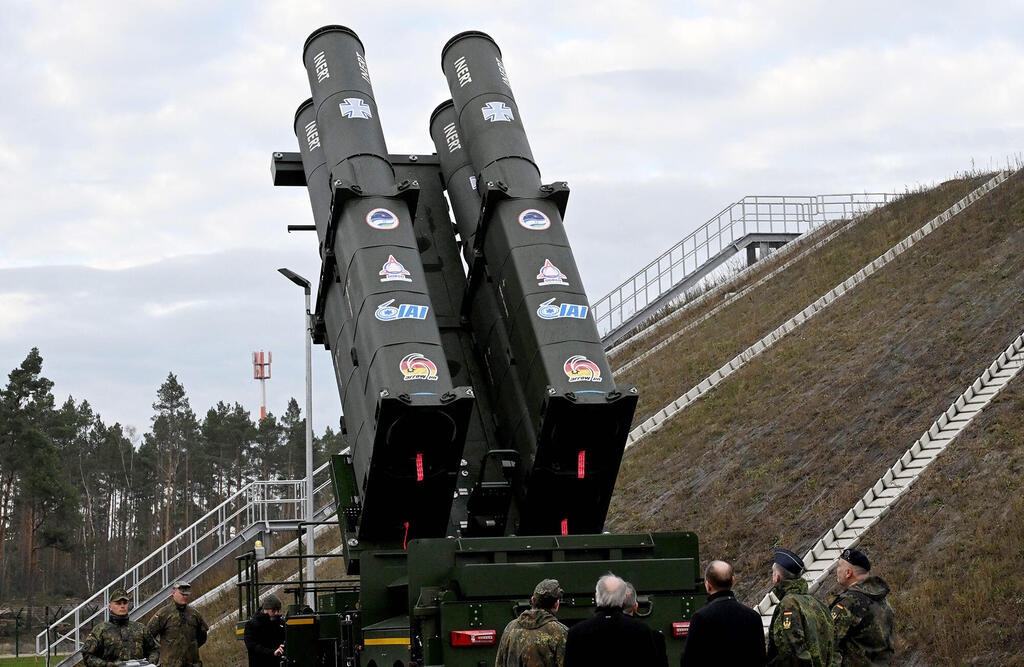
Arrow missile battery deployed in the Berlin area, Germany
(Photo: Ralf Hirschberger/ AFP)
About a month ago, Elbit signed a larger deal with a “foreign country,” details of which were revealed last week by Calcalist under strict information-security restrictions. The contract, valued at roughly $2.3 billion, centers on a technological system. The French intelligence publication Intelligence Online reported that the country involved was the United Arab Emirates, with which Israel signed a peace agreement five years ago.
Earlier, Elbit signed another significant arms deal to upgrade the Serbian army with advanced drones, precision rockets, and command-and-control systems for more than $1.6 billion. In recent weeks, progress has also been made on a rocket deal with Greece worth more than $750 million. In parallel, Israel and Greece are advancing toward a major agreement estimated at $3.5 billion, under which Rafael and IAI would establish a multi-layered air-defense system based on the SPYDER, David’s Sling, and Barak MX systems.
Israeli weapons retained their appeal in global arms markets even during the past year, despite widespread protests and political pressure linked to the IDF’s operations in Gaza. Israeli defense firms faced boycotts, exclusion from international defense exhibitions, and demonstrations outside their overseas offices. With the cessation of fighting in Gaza, demand has rebounded, including from countries that had publicly condemned Israel.
Germany itself, having purchased Israeli weapons worth about $10 billion over the past two years, imposed an arms embargo last summer in an effort to pressure Israel to end the war in Gaza. Industry sources say the operational performance demonstrated by Israeli systems in Lebanon and during the 12-day conflict with Iran has since strengthened their appeal among countries modernizing their armed forces.
Additional deals include the sale of IWI machine guns, controlled by Samy Katsav, to India for about $250 million; loitering munitions, primarily the HERO-120 produced by UVision and controlled by Aaron Frenkel, to the United States for roughly $1 billion; and IAI’s Barak MX air-defense systems to Thailand for $107 million. While modest compared with larger contracts, the Thai deal is seen by IAI as an important foothold in a growing market.
The expansion of defense exports is taking place against the backdrop of broad regulatory easing, including relaxed oversight rules, an expanded list of approved export destinations, and a growing number of government-to-government transactions promoted by Israel’s Ministry of Defense. In return for this openness, defense companies are expected to reinvest revenues in expanding production capacity and securing sensitive facilities, investments the state has struggled to finance. This approach reflects the ministry’s long-standing goal of turning defense exports into a structural budgetary pillar.
2. Protecting and fortifying weapons factories has become an urgent priority following Iranian missile and drone attacks on Israel in April and October 2024, and even more so during the 12-day war in June, in which Iran launched more than 500 ballistic missiles.
One key lesson drawn by the defense establishment is that critical defense-industry infrastructure is highly vulnerable to missile and drone attacks. Addressing this exposure will require heavy investment in protecting sensitive sites and relocating parts of production underground. Funding these programs has proven difficult amid rising wartime expenditures.
As a result, a significant portion of the revenue IAI will receive from its latest Arrow deal with Germany is expected to finance large-scale infrastructure projects costing hundreds of millions of dollars. These projects will expand missile production capacity while improving protection for manufacturing facilities.
Defense officials stressed over the weekend that missile production for Germany will not come at the expense of delivery schedules to the IDF. The new infrastructure will also support long-term needs and enable accelerated production of future Arrow systems. IAI is nearing completion of Arrow 4, designed as a complementary layer to Arrow 3, and is already planning Arrow 5 to address emerging threats.
Earlier this month, Germany deployed its first operational Arrow 3 battery at an air force base near Berlin. The new agreement will allow the deployment of a second battery, significantly enhancing Germany’s preparedness against Russian missile threats and potentially extending protection to other European countries.
Industry estimates suggest Germany may seek additional Arrow systems, including Arrow 4 and possibly Arrow 5 once developed. Such deals would also benefit the government-owned Tomer company, which manufactures Arrow engines and has doubled both production capacity and staffing over the past two years.
The Arrow's performance over the past two years speaks for itself and has become its main marketing and sales driver. However, every export deal for the Arrow system requires prior approval from the U.S. government, which has poured billions of dollars into Israel over the past two decades to finance the establishment of its multi-layered air defense system based on the Arrow, David's Sling and Iron Dome missiles. In the coming days, Rafael's innovative defense system, Iron Beam, will be added to it, which is supposed to intercept rockets and UAVs using a high-power laser and at almost zero cost. The U.S. approval for the two Arrow export deals was given, in part, due to pressure from the German government on the White House. Any future deal with any other country surrounding the Arrow missiles will require separate approval procedures with the U.S. government, and it may or may not approve it.
A key advantage of the Arrow system is cost. An Arrow 3 interceptor is estimated to cost about $2 million, compared with $12-15 million for an interceptor used in the U.S.-made THAAD system. Industry observers doubt whether American manufacturers can close this gap, raising the possibility that political considerations could influence future approval decisions.
3. Germany’s defense deals with Israel have exceeded $10 billion over the past two years, despite Berlin’s temporary arms embargo imposed last summer following Israel’s decision to expand operations in Gaza.
The restrictions raised concern within the IDF, given Germany’s role as Israel’s second-largest arms supplier after the United States, providing engines for Merkava tanks and armored vehicles, as well as submarines and naval vessels.
Chancellor Friedrich Merz recently lifted the embargo ahead of a visit to Israel two weeks ago. Even during the embargo period, German officials continued talks with Israeli defense firms and the Ministry of Defense, clarifying that the restrictions applied only to German exports to Israel, not to Israeli exports to Germany.
With a defense budget exceeding $100 billion last year, Germany is undergoing rapid rearmament in response to Russia’s invasion of Ukraine. By 2026, its defense spending is expected to rise by an additional $10 billion, advancing its ambition to become a leading military power in Europe.
Israeli defense officials view Germany’s rearmament drive as a strategic opportunity to deepen political and security ties. Despite its history, Germany is now regarded in Israel as a key ally in Europe and a counterweight to anti-Israel initiatives led by countries such as France and Spain.
2 View gallery
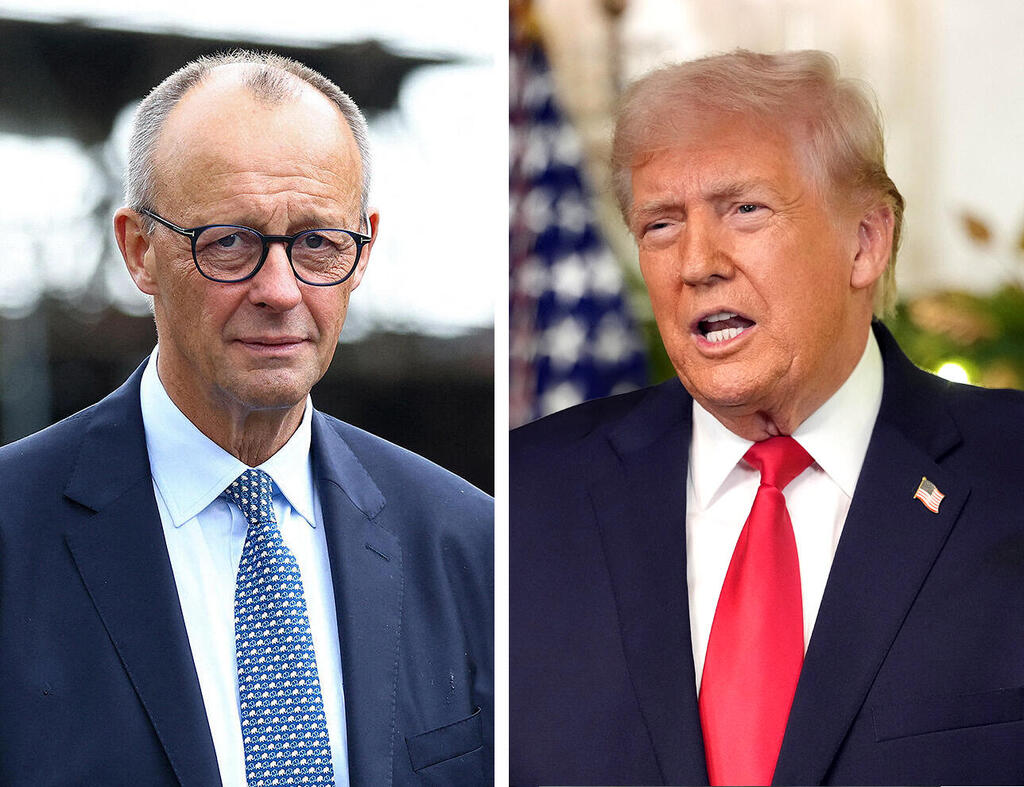
German Chancellor Friedrich Merz, US President Donald Trump
(Photos: Doug Mills/Pool via Reuter/Thilo Schmuelgen)
4. The October 7 war shifted regional power dynamics, with Israel seeking to leverage its military advantages amid ongoing instability. Turkey is rapidly expanding its military capabilities, aiming to fill the vacuum created by the collapse of the Assad regime in Syria.
Ankara’s ambitions are viewed in Israel as a threat to security interests, including freedom of movement in key air corridors. Despite President Recep Tayyip Erdoğan’s harsh rhetoric against Israel and the suspension of bilateral trade, Turkey has sought closer ties with former U.S. President Donald Trump, hoping to secure strategic gains such as renewed access to F-35 fighter jets, sales halted in 2019 after Turkey acquired Russian air-defense systems.
Israel has responded by tightening political and security cooperation with Greece and Cyprus, both of which have longstanding disputes with Turkey. Cyprus has already received IAI’s Barak MX air-defense system, while Greece is set to acquire Elbit’s PULS rocket systems under a $750 million deal.
A broader $3.5 billion agreement under discussion would see IAI and Rafael supply Greece with a multi-layered air-defense system based on Barak MX, David’s Sling, and SPYDER. If finalized, Greece would become the second country after Finland to acquire David’s Sling.
In recent weeks, Deputy Chief of the National Security Council (NSC) Gil Reich and the Prime Minister's Military Secretary and designated head of the Mossad, Major General Roman Gofman, met in Greece with their counterparts to tighten security and political coordination between the countries. Last week, Air Force Commander Major General Tomer Bar traveled to Cyprus to coordinate cooperation between the air forces. At the beginning of the week, Netanyahu is scheduled to hold a tripartite meeting in Jerusalem with Greek Prime Minister Kyriakos Mitsotakis and Cypriot President Nikos Christodoulides.
The agenda will include the arms deal, as well as the establishment of a joint military force of the three countries that would balance and restrain Turkey's moves in the Mediterranean and Syria. Such a move should provide Israel with a stable multidimensional strategic depth that it may need in dark days. Such a trilateral force vis-à-vis Turkey would have to be serious to be a deterrent, and Israeli weapons could strengthen it.
And it's not just Israeli weapons. The tightening relationship between the three countries and Turkey also involves interests worth tens of billions of dollars in the energy sector, such as the development of projects to produce natural gas from the depths of the Mediterranean Sea to be supplied to the European Union countries and joint security of infrastructure that will be built. Meanwhile, even before the planned meeting with the Greek Prime Minister and the President of Cyprus, Netanyahu and Energy Minister Eli Cohen reported the approval of the gas agreement with Egypt worth NIS 112 billion for a period of 18 years. Israel sees it as a pillar that strengthens its regional alliances with Greece and Cyprus, as well as with Egypt itself.
5. Elbit Systems' huge deal from about a month ago with a "foreign country" is one that is supposed to inject much-needed money into the security system that is at its center. This is the largest deal in Elbit's history, worth about $2.3 billion, and was brokered and completed with the involvement of the Ministry of Defense. The French intelligence website Intelligence Online reported that the country involved in the deal is the United Arab Emirates. The deliberate obscurity surrounding the deal stems, among other things, from a warning from the country with which it was signed that if its details were revealed, it would be canceled in a way that would supposedly harm the security of the State of Israel. The Ministry of Defense and Elbit refuse to answer the many questions on the subject.
Under the guise of secrecy, they are avoiding providing explanations and answers. The report on the French website, against the backdrop of the Calcalist exposure, places the defense establishment in an embarrassing situation that raises questions. Only in recent weeks, officers in the IDF and Air Force warned that supplying F-35 aircraft to Saudi Arabia would jeopardize their military advantage in the region, and now Israel is bringing such a situation on itself. "A delusion and a dangerous adventure," said a senior defense official familiar with the details of the deal in a conversation with Calcalist. According to him, "the defense establishment is trying to fulfill its commitment to the absolute secrecy of the engagement, and in the name of that secrecy, its senior officials are trying to escape the need to provide explanations for it."
Questions remain over why such a sensitive system was sold to the UAE, or to any country at all, at a time when Israeli defense companies are generating record revenues. It is also unclear how Israel is ensuring long-term control and security of the technology involved.



