










Germany signs second $3.1 billion Arrow missile deal with Israel
New agreement expands Berlin’s ballistic missile defenses as European security concerns deepen.
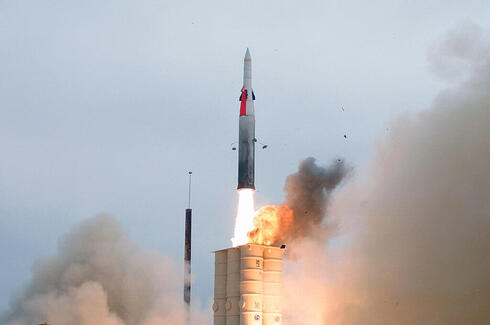
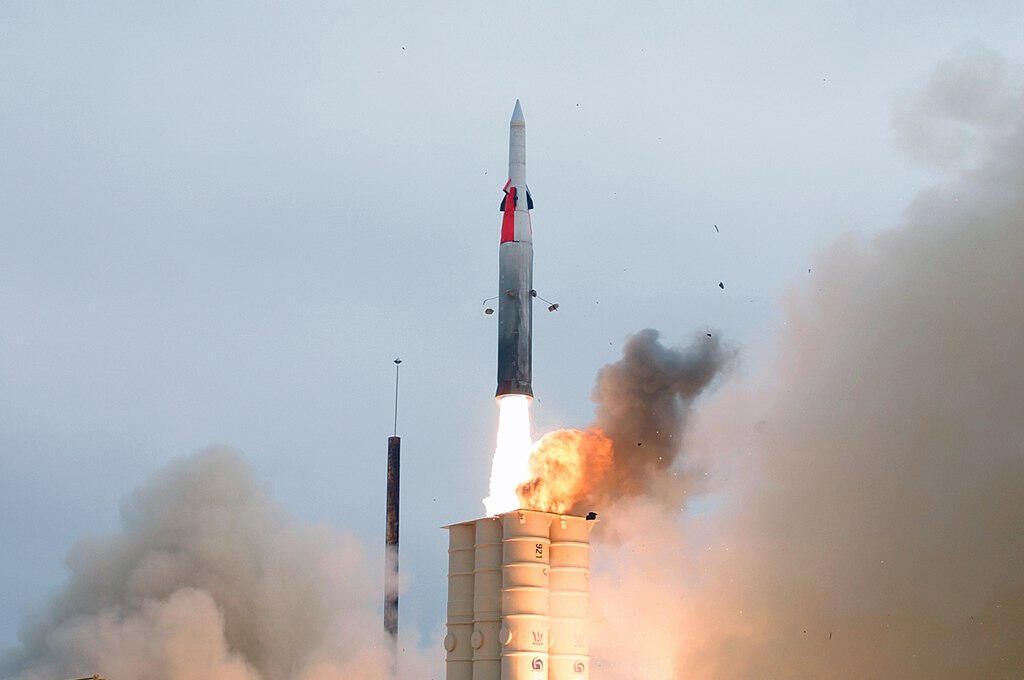
Germany is expanding its procurement of Israel Aerospace Industries’ Arrow 3 missile defense system and has finalized a second supply agreement worth $3.1 billion, Calcalist has learned. Germany is the first and only country to which Israel exports the Arrow missile system. The initial deal, signed two years ago, was valued at approximately $3.5 billion and remains the largest defense export agreement in Israel’s history. The new agreement became official on Wednesday following its approval by the Bundestag.
The latest deal has taken shape in recent months, following the first operational deployment of an Arrow battery supplied under the original contract. The additional procurement will enable the German Air Force to deploy a second Arrow battery, significantly expanding its ballistic missile defense capabilities. The accelerated stockpiling reflects growing security concerns in Europe amid Russia’s ongoing war in Ukraine, now approaching its fourth year, and heightened tensions driven by the policies of Russian President Vladimir Putin.
Negotiations over the deal lasted more than a year and continued while Israel was engaged in fighting in Gaza. During this period, Israel faced intense international criticism, including protests and arms embargoes imposed by several countries. Germany itself joined international pressure efforts last summer, when Chancellor Friedrich Merz announced a temporary arms embargo on Israel. That embargo was lifted only last month, shortly before Merz’s visit to Israel approximately a week and a half ago.
Germany is Israel’s second-largest defense supplier after the United States, accounting for roughly 30% of Israel’s imported defense equipment, compared with 69% from the U.S. German exports to Israel include submarines and naval vessels, as well as engines and key components for the IDF’s Merkava tanks and armored personnel carriers, which are manufactured domestically.
As with the first Arrow deal, the new agreement is structured as a government-to-government (G2G) transaction between Israel’s Ministry of Defense and Germany’s Ministry of Defense, with IAI serving as the prime contractor. Such deals significantly reduce bureaucratic hurdles, with both governments guaranteeing execution and compliance with contractual terms.
The Arrow batteries recently deployed near Berlin are designed to protect Germany, and potentially other European countries, from long-range ballistic missile threats, particularly in a potential conflict scenario involving Russia. Additional missiles and radar systems to be acquired in the coming years are expected to further enhance Germany’s ability to respond to complex and evolving threats.
Germany’s defense procurement from Israel has expanded sharply over the past year, reaching unprecedented levels. Two months ago, Germany signed a deal worth approximately $2 billion with EuroSpike, a European subsidiary of Rafael, to supply Spike anti-tank missiles. Shortly before that, it selected Rafael’s Lightning 5 targeting and reconnaissance system for its Typhoon fighter jets in a deal exceeding $350 million.
In July, the German Air Force selected Elbit Systems to provide defensive systems for its new A400M transport aircraft fleet in a deal valued at roughly $260 million. In September, reports indicated that Germany also plans to acquire advanced Heron TP drones from IAI in a transaction estimated at $1.2 billion.
The Arrow 3 interceptor at the center of the new agreement is designed to neutralize long-range ballistic missiles outside the atmosphere. The system played a central role in Israel’s air defense against missile attacks from Iran and Yemen following October 7, and even more so during the 12-day conflict earlier this year, when more than 500 ballistic missiles were launched toward Israel.
Serial production of Arrow 3 missiles for Germany is currently underway at IAI facilities, alongside increased manufacturing for the IDF due to ongoing operational demands. Following the new agreement, IAI and the Ministry of Defense plan to expand production infrastructure, which will also support the future serial production of Arrow 4, a next-generation interceptor currently in advanced stages of development. During the war, the Ministry of Defense placed at least two emergency orders with IAI totaling several billion shekels to ensure continued missile supplies for Israel’s air defense systems.
Six months after the conflict with Iran, Israeli and Western security assessments indicate that Tehran is accelerating its ballistic missile production in preparation for potential future confrontations. About a week and a half ago, the IDF briefed the Knesset Foreign Affairs and Security Committee on Iran’s renewed armament efforts, including the rapid restoration of missile production facilities damaged in Israeli airstrikes in June.
According to security sources, Iran is investing heavily in expanding its missile arsenal and improving accuracy and strike capabilities, drawing lessons from the 12-day war and two rounds of direct confrontation with Israel in April and October 2024.
Commenting on the Bundestag’s approval of the deal, IAI CEO Boaz Levy said the agreement represents a significant vote of confidence by Germany in the Arrow system, which was delivered within roughly two years of the original contract.
“The close security cooperation between Israel and Germany is based on shared values and forms the foundation for developing additional advanced solutions to evolving threats,” Levy said. “This strategic partnership will provide Europe with some of the most advanced air defense capabilities in the world.”
Defense Ministry Director General Amir Baram added that the deal reflects Israel’s expanding defense exports. “It strengthens Israel’s position as a global defense power, accelerates weapons production for the IDF, and injects billions of shekels into the defense industries,” he said.



