








"It's incredible what you can accomplish using AI, but achieving market penetration remains a difficult challenge"
Tal Slobodkin, Managing Partner at StageOne Ventures, was speaking during a panel discussion held as part of Calcalist’s RoadShow+ event, held in partnership with Poalim Tech. Other participants included Hila Zigman, General Partner at Cyberstarts, and Avi Eyal, Co-Founder and Managing Partner at Entrée Capital.
In the past, launching a startup required assembling a team, renting an office and raising a significant amount of capital. Today, an entrepreneur with a solid idea and a few AI tools can develop a functional product almost entirely on their own, sometimes without raising a single shekel. This raises an important question, particularly for early-stage investors: how is their role evolving in a world where entrepreneurs can make such substantial progress almost single-handedly?
These and other questions were at the center of a panel focused on early-stage companies. What did 2026 look like from the perspective of investors in this space? Which sectors are opening up new investment opportunities? And how have the elections and the situation in Israel affected global perceptions of the country's high-tech sector?
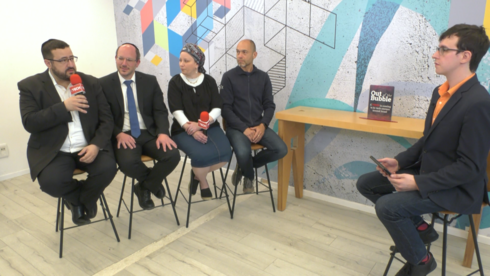
The panel, held as part of Calcalist's "RoadShow+" event in partnership with Poalim Tech, featured Tal Slobodkin, Managing Partner at StageOne Ventures; Hila Zigman, General Partner at Cyberstarts; and Avi Eyal, Founding and Managing Partner at Entrée Capital.
1 View gallery

Roadshow panel (from right) Hagai Gilboa, Hila Zigman, Tal Slobodkin, Avi Eyal.
(Photo: Nimrod Glickman)
How would you summarize 2026?
Slobodkin: "There are two camps: the 'haves' and the 'have-nots.' Some companies have succeeded, while others are struggling. Funding rounds and valuations always vary, but the gap this year has been significant."
What opportunities are out there?
Zigman: "We see about 150 companies a year. Two years ago, it was all about AI. Today, we're seeing a massive surge in 'agents,' and that's going to be the next wave of companies."
Foreign funds are entering the market at an early stage. Is that a good thing?
Eyal: "An 'investor bubble' is fine, but the real question is whether these investors will stick around. Historically, they tend to disappear, leaving Israeli funds to shoulder the burden. That's why it's crucial to support Israeli funds. It's tied to the very fate of the country."
How is AI changing what you look for, and what impact is it having on investments?
Slobodkin: "AI is fueling the growth of the cybersecurity sector at an unprecedented pace. I'm seeing a rate of growth that allows companies to turn dreams into reality and achieve extraordinary things very quickly. These two markets are mutually reinforcing. At the same time, companies need fewer employees. Our fundamental approach to identifying companies remains unchanged, as we ultimately invest in people. However, the way we mentor and nurture teams has changed entirely."
Are companies emerging without any initial investment?
Slobodkin: "Last year, we launched a 'Stage Zero' program for founders working out of their garages. It's incredible what they can accomplish using AI. The criteria for evaluating teams are evolving because reaching the product stage has become easier. However, achieving market penetration remains a difficult challenge."
Zigman: "The dynamics of scaling, both operationally and in sales, have changed. Many teams are achieving results very quickly because many of the previous constraints have been lifted. Our employees are effectively becoming 'agents' [AI-driven autonomous operators], and we expect to see more teams like this in the coming year."
How are investors responding to the elections and the boycotts?
Eyal: "Responses vary across different sectors. The approach to defense tech differs from that to pure-play AI companies. Reactions are diverse, and we are facing an increasingly difficult challenge. We need a determined and effective government to stabilize the market, reassure the global community and allow entrepreneurs to get on with their work."
As 2027 approaches, what is the outlook for fundraising and valuations, and what will be the next big trend?
Zigman: "Cyber has gone through many waves, and now it's cyber's turn again. New companies are emerging and showing aggressive growth. I think it's going to be interesting."
Slobodkin: "The infrastructure market features some incredible companies building everything from quantum computing technologies to new types of chips."
Eyal: "Deep tech is a sector that will continue to grow. In software, competition has become very tough. In my opinion, we are in a bubble, but strong companies will still be able to raise capital. The era of massive funding rounds will likely taper off. The landscape will shift, but solid companies will continue to move forward."



