










IL Tech in NY
“Innovation remains the foundation, but it's the resilience that's earning Israeli tech a premium”
Eden Global Partners joined CTech as part of its IL Tech in NY series in collaboration with Israeli Mapped in NY.
“In the past, going public was practically the only viable way to tap into deep pools of capital (and attention). Today, that’s no longer true for the most part,” says Aviram Kalev, Managing Director at Eden Global Partners.
After nearly two decades at Morgan Stanley, Eden founder David Dwek identified a market transition, explains Kalev: “Companies choosing to stay private longer, outgrowing the timelines that traditional funding models were designed for, while family offices and other long-dated patient capital sources were steadily expanding, representing a growing but underutilized pool of capital.”
Eden Global Partners joined CTech as part of its IL Tech in NY series in collaboration with Israeli Mapped in NY, a project spotlighting New York-based VC and private investment firms, and their perspectives on the Israeli tech ecosystem. Operating since 2021, Eden is a growth-oriented private fund with a focus on businesses across the Technology, Aerospace and Defense, Industrial Innovation, Fintech, and Healthcare sectors.
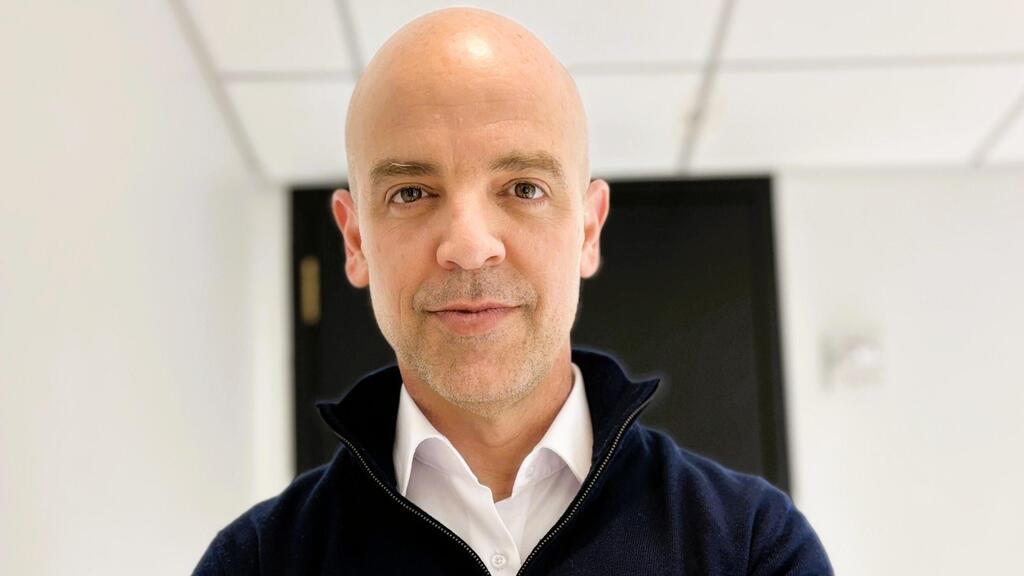
“Eden was created to connect these two sides: ambitious, industry-defining companies that need time to scale to their full potential, and strong capital partners prepared to give them that time,” adds Kalev.
You can read the entire interview below.
Fund ID
Name and type of VC: Eden Global Partners – Late stage investment and advisory firm focused on long term patient capital solutions
Main sectors of investment: Growth businesses with a focus on Technology, Aerospace and Defense, Industrial Innovation, Fintech, and Healthcare
Names of managing partners: David Dwek (CEO), Laurence Goldberg (President)
Year of founding/start of NY operations: 2021
Notable portfolio companies: ZocDoc, SpaceX, Openly, UBQ, BlueVoyant, Dataminr
General background on the VC, its managers, founders and partners:
Eden is a late-stage investment and advisory firm providing growth-stage companies with long-term capital and strategic support. Based in New York City, the team brings decades of experience as investors and operators across some of the world's leading institutions. Through trusted relationships cultivated over many years with the world's most patient capital partners, Eden delivers specialized solutions that help companies scale, compete, and grow.
Aviram Kalev is a Managing Director at Eden Global Partners, where he leads the firm's Israeli-related activities alongside broader investment and advisory work across key sectors. With more than two decades of experience spanning investment banking and principal investing, both in Israel and globally, he has built a deep track record connecting Israeli innovation with global capital markets, bringing a distinctive perspective that combines extensive ecosystem knowledge with the institutional rigor and relationships needed to execute complex, large-scale transactions.
The VC Vision:
Eden Global Partners was founded in 2021 by David Dwek after nearly two decades at Morgan Stanley, where he led the Private Capital Group. What he identified was a market in transition – companies choosing to stay private longer, outgrowing the timelines that traditional funding models were designed for, while family offices and other long-dated patient capital sources were steadily expanding, representing a growing but underutilized pool of capital.
Eden was created to connect these two sides: ambitious, industry-defining companies that need time to scale to their full potential, and strong capital partners prepared to give them that time.
Following the turbulence of recent years and the stabilization of 2025, the Israeli ecosystem is entering a new era: The Evolutionary Leap. For the "Israel Tech in NY 2026 project” CTech is challenging top investors to identify the critical leaps ahead – financial, technological, and mental – as we create a roadmap for a matured innovation hub, ready to redefine its impact on the global stage.
After a period defined by cash preservation, will 2026 see the reopening of the IPO window for Israeli tech, or will M&A remain the sole viable liquidity event?
The IPO market is already open, but it’s very selective and not equally accessible to everyone. With anticipated mega-IPOs like SpaceX, OpenAI, Anthropic and others set to dominate the spotlight, a lot of investor attention (and capital) will naturally flow toward those giants. That kind of concentration makes it harder for smaller and mid-sized companies to get noticed.
At the same time, the playbook has changed. In the past, going public was practically the only viable way to tap into deep pools of capital (and attention). Today, that’s no longer true for the most part.
Large private funding rounds have become standard, and strong private companies have no shortage of funding options and public visibility without stepping into the public markets. Given our nature as a long term capital solutions provider, we at Eden work closely with companies on this exact calculus – timing, readiness, and selecting the right funding and liquidity path. It’s one of the most consequential choices founders make, and it deserves more than a one-size-fits-all answer.
For Israeli tech companies, the takeaway is clear: category-leading businesses with real scale, mature and durable KPIs, and solid governance can potentially go public in this environment. But for many others – especially those who may face a challenge in standing out in a year dominated by trillion-dollar narratives – M&A will continue to be a major and attractive path.
Moving past the market correction, what is the single most critical metric (e.g. EBITDA, NRR, Rule of 40) that will drive premium valuations in 2026?
Given our focus on late-stage companies, we naturally look for a different set of signals and readiness markers than earlier-stage investors. In our view, there is no single magic metric, especially in a market that has become far more nuanced.
As investor interest expands into areas that weren't traditionally in the spotlight – industrial innovation, deep tech, defense – many of these companies involve hardware, manufacturing, and long development cycles. A single SaaS-style indicator simply doesn't capture the full picture. A robotics company, a materials startup, and a cybersecurity platform shouldn't be evaluated through the same lens. In these sectors, investors weigh a broader mix of metrics and the right balance between them.
The companies that command premium valuations in 2026 won't just have strong numbers, they'll have a clear, credible narrative that connects those numbers to durable competitive advantage. Metrics open the door. The story is what moves the valuation.
How is the 'Israeli Tech' asset class being effectively rebranded to global LPs in 2026? Are we shifting the narrative from 'Innovation' to 'Extreme Resilience'?
Israel is naturally included in our work, but we don’t position it as a standalone theme in our conversations with investors. In our experience, global investors still see Israel as a key source of breakthrough technology, but what really stands out in 2026 is the ecosystem’s ability to execute and scale under pressure, at an unprecedented pace. That resilience has become a differentiator, not a disclaimer.
The narrative isn’t shifting from innovation to resilience, but is expanding to include both, and the way global investors view Israeli tech in 2026 is less about replacing one narrative with another and more about broadening the story.
Innovation remains the foundation, but it's the resilience that's earning Israeli tech a premium in today's investor conversations.
As we transition from 'Copilots' to autonomous 'Agents,' which specific vertical will be the first to fully trust AI with independent decision-making and execution?
The first real end-to-end autonomy could potentially emerge in areas such as customer support and outbound sales. These are largely high-volume, rules-based workflows where interacting with AI is already becoming normal, and the downside risk to the end-user experience is relatively low.
Other industries like legal, compliance, and finance will probably not move directly to full independence but rather follow a hybrid model in the near term, where AI agents will handle the initial heavy lifting, with humans providing final oversight. These workflows are structured enough for agents to automate a significant portion of the process, while still benefiting from human judgment at the end.
In defense-related technologies – an area where Eden is deeply focused and where Israel has long held meaningful expertise – AI adoption is likely to follow a similar trajectory to other sectors, but with naturally tighter oversight. There is already real progress in AI-enabled autonomous capabilities across a wide range of defense applications, including frontline systems. In the near term, these technologies will continue to keep a human in the loop, with human involvement gradually narrowing to the judgment calls and approvals that genuinely require human discretion.
The opportunity isn’t about replacing decision-makers. It’s about delivering information in a faster, clearer, and more structured way so human operators can focus on the true dilemmas. AI’s role is to equip them with stronger tools, faster analysis, and higher-quality inputs, ultimately improving both the speed and the quality of critical decisions.
With the rising focus on hardware-heavy sectors (Defense, Climate, Quantum), is the Israeli VC model adapted to fund high-CAPEX ventures, or will the ecosystem remain focused on capital-efficient software solutions?
Israel’s VC ecosystem is already expanding well beyond pure software, and global capital is readily available – many Israeli rounds are now led by U.S. investors who understand CAPEX-heavy models. The bottleneck isn’t funding; it’s operational readiness. The real question isn’t so much whether founders can raise capital or build the technology, it’s whether they can scale fast enough. In hardware-driven sectors, speed of scaling often matters more than speed of development.
To stay competitive, Israeli startups need to treat manufacturing as a strategic capability from day one, not something to solve after product-market fit. That means thinking about manufacturing, supply chain, and deployment much earlier in the journey. The companies that win will be the ones that build these capabilities early, not as an afterthought.
As Israeli founders in New York shift from 'Survival Mode' to 'Sustainable Scale,' is the famed Israeli agility and improvisational DNA still a competitive advantage, or does 2026 demand a radical shift towards disciplined, American-style corporate governance to win a check from a NYC based VC?
The famed Israeli DNA is a genuine advantage – it’s what enables founders to move fast, solve problems creatively, build fearlessly, and adapt continuously. Today’s generation is even more globally attuned and better prepared than ever before, and that ongoing evolution is a defining strength.
The key to breaking into the U.S. market is finding the right blend of the Israeli edge – speed, resilience, creativity – and the operational discipline and governance standards expected in the U.S.
Agility alone isn’t enough. This isn’t a cultural shift; it’s a natural stage in scaling a global company, and more Israeli founders are mastering that balance with impressive results.
Investors aren’t asking Israeli founders to trade their edge for a playbook, they’re expecting them to build the right structure around what already makes them formidable.



