










Analysis
How Israeli high-tech is powering the shekel’s sharp rise
Nasdaq gains, AI profits and reinvested dividends are driving record currency strength.
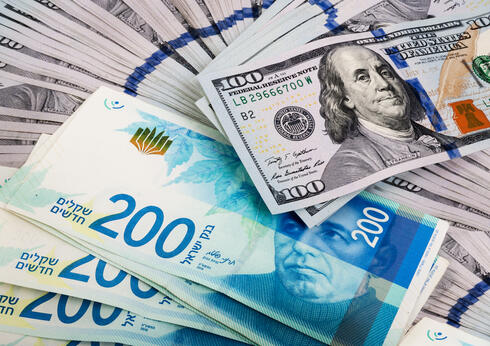
Eight months ago, while Israel was in the midst of a major war, the dollar was trading at around 3.8 shekels. Today, it is trading below 3.2 shekels, a sharp appreciation of more than 16% since last April. The consistent strengthening began in mid-June, when the dollar was trading around 3.6 shekels. By August it had fallen to 3.4, and in early October the 3.2 level appeared for the first time.
It is important to clarify: this is not only a story of a strengthening shekel, but also of a weakening dollar. The U.S. Dollar Index (DXY) has declined by 0.5% over the past five days, 2.3% over the past month, and roughly 10% over the past year. In other words, the dollar’s weakness is evident across one of the most widely accepted benchmarks, which measures the U.S. currency against a basket of major global currencies.
This trend reflects the essence of the U.S. president’s macroeconomic policy and a central election promise. A weaker dollar is intended to encourage exports and reduce the United States’ enormous trade deficit, which reached approximately $920 billion last year, mainly with China and Mexico. While a weaker dollar supports exports and discourages imports, it is worth remembering that the U.S. runs a large deficit in goods but a substantial surplus in services.
1. Distinct Israeli factors
Beyond global trends, Israel has its own powerful drivers. First and foremost is the sharp decline in Israel’s risk premium, as measured by credit default swaps (CDS) on Israeli government bonds. As early as mid-year, when pressure began to build to end the war, CDS levels started falling from above 100 points, compared with around 40 points on the eve of the Netanyahu-Smotrich government’s formation.
Over the past several months, CDS spreads have plunged, falling by more than 36% in the second half of the year to around 78-80 points. Three months ago, the decline still stood at roughly 13%.
Even after the war ended and the hostages returned, Israel’s five-year CDS continued to fall. Over the past month alone, they declined by more than 5.2% to around 66 points, levels last seen a few days after the government launched the first steps of the judicial overhaul in early 2023. In effect, the markets have largely erased the geopolitical risk premium that characterized the years of intense conflict.
The shekel’s strength is also reflected in the currency basket (the nominal effective exchange rate), which measures the shekel against the currencies of Israel’s main trading partners, including the dollar, euro, pound, and yen. This index has strengthened by about 14% from its low in April 2025 and has continued to move higher in recent days.
Add to this the Nasdaq, the most important index for Israeli high-tech, which continues to surprise, rising more than 18% over the past six months and nearly 4% in the past week alone.
The Nasdaq is the pulse of Israeli high-tech. Nearly every move there is rapidly reflected in the local market. Most Israeli companies operating in the U.S. raise capital there, are valued there, and are ultimately sold there. When the Nasdaq rises, valuations increase, funding conditions improve, and Israeli institutional investors receive a tailwind that boosts demand for the shekel.
2. Interest rates and capital flows
Another key factor is the interest rate differential between Israel and the U.S., which currently favors the shekel. The Bank of Israel’s policy rate stands at 4.25%, following a cautious approach and a single cut in the current cycle. In contrast, the Federal Reserve has cut rates several times, bringing them to around 3.5%-3.75%.
Capital naturally flows toward higher yields. As a result, investment flows are tilting toward Tel Aviv rather than New York, further supporting the shekel.
What does not appear to have a meaningful impact, despite frequent claims to the contrary, is the gas export deal with Egypt. According to JPMorgan, the agreement is expected to add roughly $500 million in exports over the coming years, but will not materially affect Israel’s external accounts. The deal represents only about 0.3% of total exports of goods and services, or roughly 0.1% of GDP.
Even over the next decade, JPMorgan estimates the contribution could reach just 0.4% of GDP annually. “Even then, the numbers look quite modest,” the bank wrote. In short: slightly more exports and slightly more foreign currency, but not a development capable of moving the economy or the exchange rate in a meaningful way.
3. The long-term driver: foreign currency flows
The gas debate nonetheless highlights a crucial point. According to economic theory, exchange rates are ultimately determined by the inflow and outflow of foreign currency. An economy that consistently brings in dollars, primarily through exports, will tend to see its currency appreciate. Foreign currency behaves much like any other commodity: when supply is abundant, its price falls; when it is scarce, its price rises.
To track these dynamics, economists focus on the current account of the balance of payments, which summarizes all current transactions between Israel and the rest of the world. This includes trade in goods and services, interest and dividend payments, and unilateral transfers such as grants and donations. A surplus indicates that more foreign currency is entering the economy than leaving it; a deficit indicates the opposite.
4. A surprising reversal
According to data from the Central Bureau of Statistics, Israel recorded a significant current account surplus for 13 consecutive years, roughly 52 quarters. However, in the third quarter of 2025, this trend reversed, with the economy posting a current account deficit of $1.1 billion.
The trade balance remains supportive: exports of services continue to surge, rising from around $8 billion per quarter to $10 billion over the past year, driven largely by high-tech. The goods balance, while deteriorating, still reflects higher exports than imports, which should, in principle, support appreciation.
The key shift lies in the income account. The primary income deficit jumped sharply to $3.7 billion, the highest level in a decade, and was almost entirely responsible for the swing into deficit. This account captures interest payments, dividends, and investment income. A deficit means more money flowed out than in.
The reason lies in foreign investment in Israeli companies, particularly in high-tech and AI. In the third quarter, Israeli companies paid an additional $10 billion to foreign investors, not due to distress, but because of sharply higher profitability. The more profitable the companies, the larger the dividend payments.
5. Why the shekel strengthened anyway
So how did the shekel appreciate alongside a widening current account deficit? The answer is surprisingly positive. Many of those foreign investors chose to reinvest their profits in Israel rather than repatriate them. In practice, the foreign-currency outflow was largely neutralized.
Those reinvestments appear in the financial account, not the current account, and the numbers are striking. Foreign direct investment reached about $4.8 billion in the first quarter of the year, rose to $5.6 billion in the second, and jumped to more than $8 billion in the third quarter of 2025, one of the highest levels ever recorded.
The celebration continues, and the shekel is part of it. What could end it, however, is an AI shock, renewed political or geopolitical turmoil, or a downturn in high-tech. When markets rise and the currency strengthens, the illusion of resilience can take hold, and complacency becomes the greatest risk.



