










Bezeq Chairman: “The strategy works even without a controlling interest. The stock will double in the coming years”
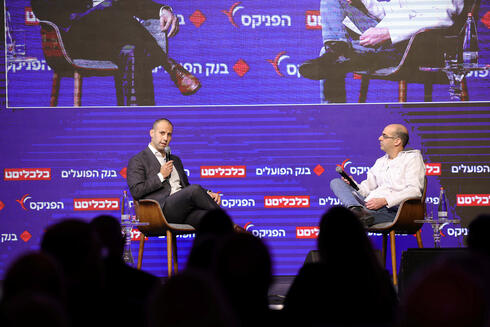
Tomer Raved spoke with Haggai Schreiber, Chief Investment Officer at Phoenix, at Calcalist’s Forecasts Conference, held in collaboration with Phoenix and Bank Hapoalim. Raved said: “Mergers in the communications market are necessary. The companies are not strong enough to fund the next wave of investment required for fifth- and sixth-generation networks.” Schreiber added: “The foreign funds that acquired Phoenix made it clear that shareholders must come first.”
“Beyond the discourse on normalization in the Middle East, Israel occupies an incredibly important geographic position. Most of the communications cables that currently run from Asia to Europe pass through Egypt, without sufficient backup. This route is exposed to the Houthis and to accidents that occur in the waters of the Red Sea. Given this reality, quite a few major global companies have been searching for alternatives, and here is the scoop, including Amazon. In the coming years, we will see tremendous development in communications routes between India and Saudi Arabia, through Israel, and from there to Europe. This will involve dozens of terabytes of data. This is a critical event for all industries, technology, AI, and smart industries.”
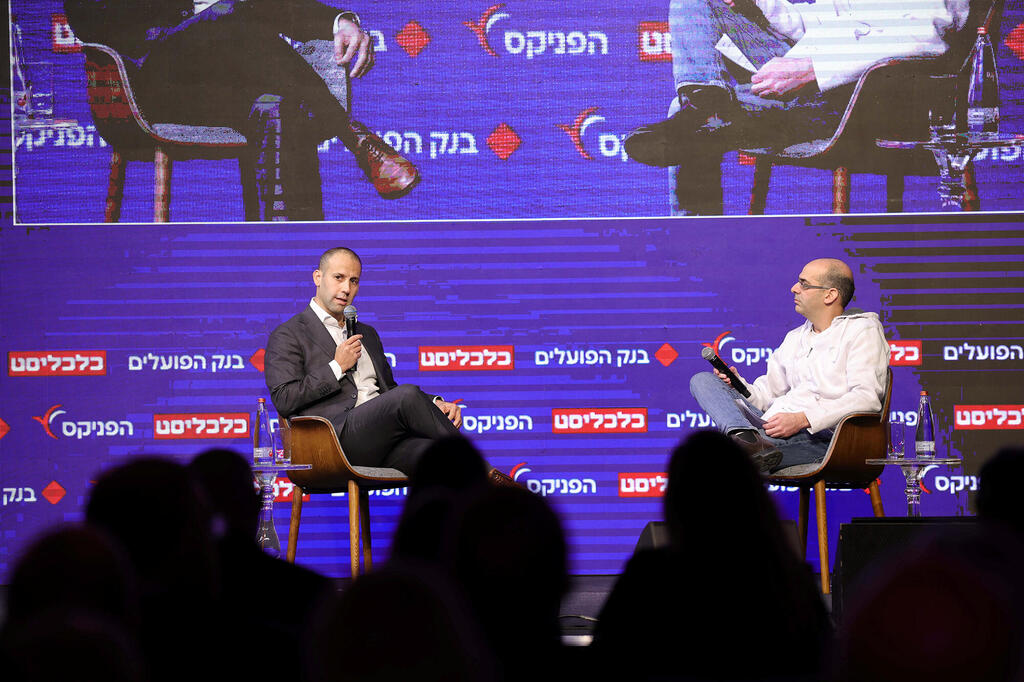
This is how Tomer Raved, chairman of Bezeq, explained the strategic backdrop to the company’s announcement of a reported deal worth tens of millions of shekels with an international media organization. Raved made the remarks at Calcalist’s Forecasts Conference, held in collaboration with Phoenix and Bank Hapoalim, during a one-on-one conversation with Haggai Schreiber, chief investment officer of Phoenix.
Schreiber: In practice, you have almost completed the deployment of optical fiber to upgrade Israel’s communications infrastructure. From here on, will the revenues generated at the end of this process be returned to shareholders, or used for new investments?
Raved: “Israel used to rank 80th in the world in internet browsing speed. Today, Israel is among the top ten globally. We will continue to invest in fiber and in cellular. There will be significant investments alongside consolidation and acquisitions. We will return capital to shareholders and attract investors. The fiber infrastructure is strong enough to serve Israeli citizens for the next twenty years.”
Schreiber: Pelephone, Bezeq’s subsidiary, is seeking to acquire HOT at a valuation of 2.1 billion shekels. But the capital market doubts Bezeq’s ability to complete the deal, due to regulation and other barriers. Is consolidation in the communications market essential, or is this primarily a regulatory challenge for management?
Raved: “The future of smart transportation requires a transition to fifth- and sixth-generation networks. In Europe, regulators have understood that mergers between communications companies actually strengthen the market. Individual companies are no longer strong enough on their own to finance the next wave of investments in 5G and 6G.”
Schreiber: Bezeq operates fixed-line internet and telephony, cellular, satellite television (YES), and an internet service provider (Bezeq International). Structural separation has therefore been a significant issue, dividing these activities. In recent years, the Ministry of Communications has allowed Bezeq to gradually dismantle that separation, a move that will also be discussed at Bezeq’s next shareholders’ meeting. I understand why, as a shareholder, I would want the separation lifted, but will consumers also benefit?
Raved: “Ultimately, consumers pay for bundles, and bundles are cheaper than buying services separately. There is competition in the communications market, and that benefits consumers. It has taken a decade for the structural separation to thaw. I hope we will hear news about further reductions in the coming weeks.”
Schreiber: Phoenix and Bezeq have both become companies without a controlling shareholder, Phoenix a year and a half ago, and Bezeq only recently. What advantages do you see in this structure? What are the challenges? And no less important: until recently you represented the controlling owner. Ownership has changed, so why do you remain chairman?
Raved: “The entry of foreign funds raises standards in Israeli public companies. As management, we want to implement a strategy that works, whether or not there is a controlling shareholder. These funds force you to think about all shareholders. The strategy is clear and it works: the stock has tripled over the past five years, and it will double again in the coming years.”
Schreiber: So there is no room for investor groups to band together and attempt to take control of Bezeq?
Raved: “These attempts do not affect the company. In the end, the real test for the board and management is increasing profitability.”
Schreiber: “At Phoenix, five years ago the foreign funds that acquired the company made it clear that shareholders come first. Since then, every discussion at Phoenix begins with one question: ‘Is this good for shareholders?’ - whether it’s an acquisition or an investment. For you, the journey is just beginning. I hope Bezeq will become another example of positive conduct without a controlling shareholder, because in Israel this model is still not well established. There are companies with controlling shareholders that are run well, and others without controlling shareholders that are run poorly, and vice versa. The best way to protect an organization is to do what’s right for shareholders. That increases share value and makes hostile takeovers harder. That’s what I tell anyone who comes to me and says, ‘Do what Avi Gabay did at Bezeq.’”
(Gabbay led a group of investors that acquired control of Partner Communications from China’s Hutchison in November 2021, shortly after resigning as CEO of Cellcom.)



