








Opinion
Israel’s next step in the age of data and prediction
"To maintain its technological advantage, Israel must evolve from a “Startup Nation” to a “Quant Nation”, a society that treats data as a national asset, applies advanced modelling to anticipate risks, and transforms information into resilient, predictive decision-making," writes Igor Tulchinsky, CEO and Founder of WorldQuant.
Over the past two decades, Israel has earned global recognition as the “Startup Nation” – a hub of innovation built on smart capital, smart people, and boundless creativity, paired with a bold approach to risk and opportunity.
Yet the global landscape is shifting. As artificial intelligence reshapes economies and competitive advantage, Israel risks losing its edge, a prospect the nation cannot afford at a time when technological leadership is integral to its national resilience and global standing. Israel ranks fourth worldwide in the number of startups and in the growth of investments in the sector, and it enjoys a leading position in academic publications relative to its size. However, according to a report by the Ministry of Science from last April, the growth rate of skilled human capital has declined in recent years. The country also faces weaknesses in infrastructure and supportive regulation, as well as limited data availability. If this trend continues, Israel could lose its leadership position within just a few years.
To maintain its technological advantage, Israel must evolve from a “Startup Nation” to a “Quant Nation”, a society that treats data as a national asset, applies advanced modelling to anticipate risks, and transforms information into resilient, predictive decision-making. If the past few years have taught us anything, it’s that uncertainty is going nowhere. Nations, industries, and companies will do well to adapt.
Reacting quickly to risks is good but being able to spot trouble coming around the corner and acting early, is even better. Combining the ability to do both well is the very definition of resilience.
Now is the right time to make this leap. We're entering an era where data is abundant. Advances in AI can increase our ability to analyze and derive insights from that data at speed. Meanwhile, increasingly sophisticated algorithms can assist in making prediction cheap and ubiquitous across finance, healthcare, defense and government.
The transformation into a quant nation requires three factors to coalesce. The first is a coordinated data approach. Data is where it all starts and a system that connects streams of data sources forms the basis of comprehensive analysis. Israel's relatively small size helps here. Connect health records with economic data, weather patterns, and security intelligence, and suddenly you can see patterns no single agency could spot.
Shared forecasting tools are second. Instead of every ministry building its own crystal ball, Israel could create common platforms for testing "what if" scenarios that are able to bring together and map out different planes of uncertainty at the same time.
And third, the implementation of national stress tests. Banks test whether they can survive financial storms. Health agencies test for the next pandemic. But Israel could test everything: water systems under drought, roads under attack, hospitals under pandemic. It is better to break the model than break the real thing.
Of course, a successful quantitative approach requires a natural wariness of overconfidence in data and models. Biases and the overemphasis of correlations that aren't causal can create an environment of systemic fragility. One flaw can be repeated and multiplied.
Prediction is becoming infrastructure, and like any infrastructure, it requires engineering standards, safety protocols, and institutional oversight to deliver benefits rather than amplify harms.
I spend a lot of my time in Israel. It is a place that is dear to my heart. I am always impressed by the people I talk to, and by their curiosity, their skill, and their ambition. That’s why I believe that Israel has the technological sophistication, creativity and talent that it would take to lead this transformation. Uncertainty is knocking on the door. Success may depend on trying to understand it, rather than ignore it.
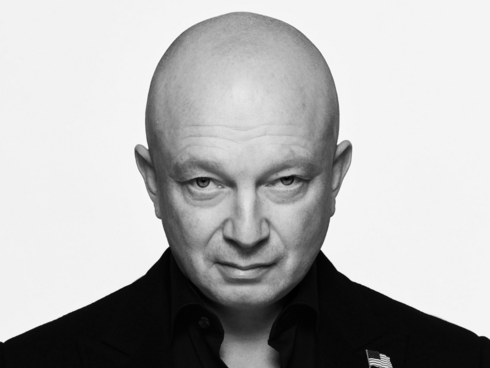
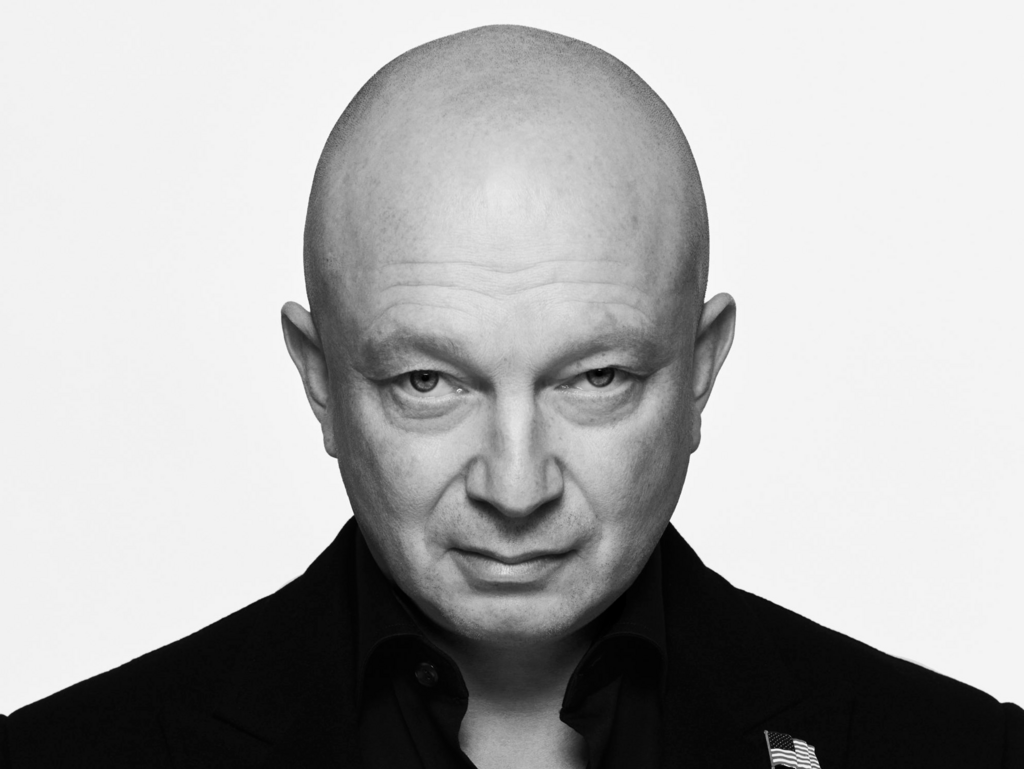
Igor Tulchinsky is the CEO and Founder of WorldQuant.



