










Why the battle for nuclear power is becoming a battle for influence
A reactor can lock a country into decades of fuel, financing, training and technical cooperation, turning nuclear exports into one of the most powerful geopolitical tools in the emerging energy race.
At first glance, a nuclear power plant looks like any other major infrastructure project. A country needs electricity, a foreign company builds a reactor, and the electricity eventually flows into the grid.
But in the nuclear industry, the relationship rarely ends when the plant begins producing electricity. The country that supplies the reactor can remain involved for decades, providing nuclear fuel, training engineers, maintaining control systems, supplying spare parts and, in some cases, managing spent fuel.
That makes the current race to build nuclear reactors about much more than energy. It is also a geopolitical struggle.
1 View gallery
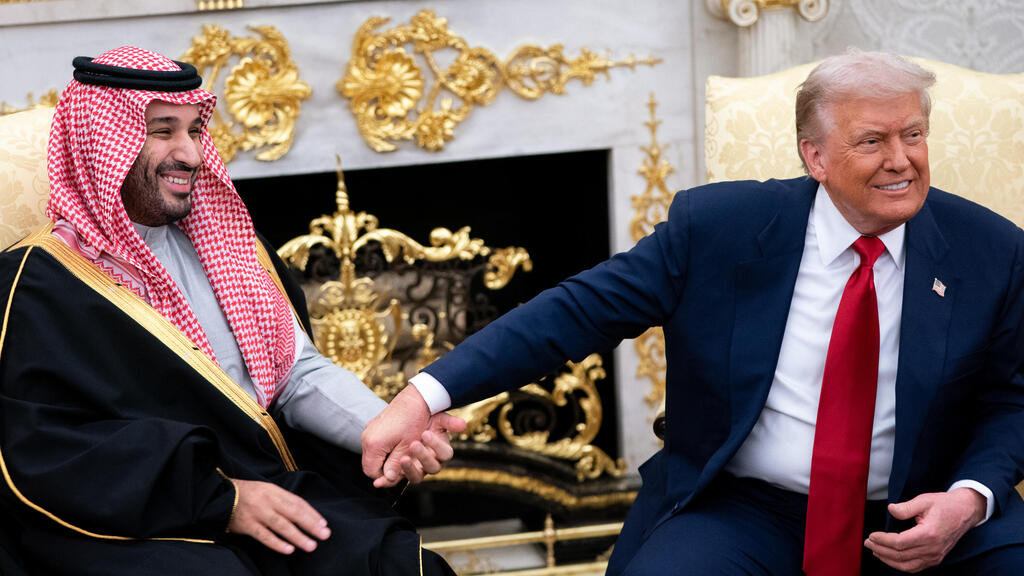
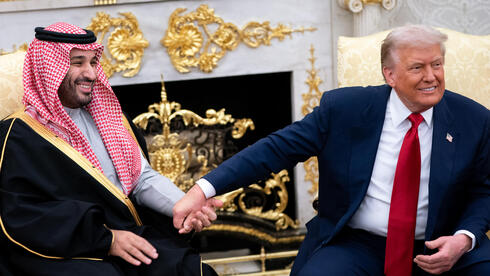
US President Donald Trump and Saudi Crown Prince Mohammed bin Salman in a meeting at the White House, November 2025
(Bloomberg)
There are currently 77 nuclear reactors under construction worldwide, with roughly 120 more in various stages of planning. Much of the growth is concentrated in Asia and in countries seeking to build their first reactors or rapidly expand existing nuclear programs. For the United States, Russia and China, every reactor sold to one of these countries can create a technological, financial and political relationship that may last for generations.
The most recent example is Saudi Arabia. On July 22, Washington and Riyadh signed a civil nuclear cooperation agreement, known as a 123 Agreement, designed to open the Saudi market to U.S. nuclear companies. The U.S. Department of Energy described the agreement as “the foundation for a decades-long, multibillion-dollar partnership,” explicitly highlighting the goal of strengthening the United States' competitive position.
Behind the commercial language lies a strategic decision. If U.S. companies do not supply Saudi Arabia's nuclear technology, potential competitors include Russia, China and South Korea. For Washington, the question is therefore not simply who will build Saudi Arabia's reactors. It is who will help shape the kingdom's nuclear program, and establish a relationship that could last for decades.
A civilian nuclear reactor is not, in itself, a nuclear weapon. The proliferation risk lies primarily in the broader fuel cycle. Uranium enrichment is required to produce fuel for many reactors, but the same basic technology can, with significant additional effort and at much higher enrichment levels, be used to produce weapons-grade material. Reprocessing spent nuclear fuel can also create a pathway to materials with potential military applications.
That means the question in Saudi Arabia is not only whether the kingdom will build nuclear reactors, but what additional capabilities it will acquire along with them.
The 2009 U.S.-UAE nuclear cooperation agreement was considered a gold standard for years because Abu Dhabi explicitly renounced uranium enrichment and spent-fuel reprocessing. The Saudi agreement has prompted debate over whether Riyadh will accept comparable restrictions. For now, there remains a gap between the strategic importance of the agreement and the lack of clarity surrounding some of the practical conditions governing Saudi Arabia's future nuclear program.
In the Middle East, that ambiguity carries particular weight.
Crown Prince Mohammed bin Salman has previously said that Saudi Arabia would seek nuclear weapons if Iran acquired them. Any expansion of the kingdom's nuclear knowledge, infrastructure and technical workforce will therefore be examined not only through the lens of civilian energy, but also through the concept of “latent capability”, the ability of a country to move from a civilian nuclear program toward a military one relatively quickly if it makes a political decision to do so.
This is where Russia enters the picture.
For years, Moscow has used nuclear exports as one of its most important tools of international influence. By the end of 2025, state-owned nuclear giant Rosatom had agreements to build 22 reactors in seven countries and had accumulated the world's largest portfolio of overseas nuclear projects.
The Russian model is particularly visible in Turkey.
At Turkey's first nuclear power plant, Akkuyu, Rosatom is far more than a conventional contractor. The project uses a Build-Own-Operate model, under which the Russian company builds, owns and operates the plant.
That creates a very different form of dependence from the kind created by oil or gas. A country can switch oil suppliers relatively quickly, and even replacing a major industrial supplier can often be done over a period of months or years. Replacing the supplier of a nuclear reactor is far more complicated. It can involve new licensing, changes to fuel arrangements, new service contracts, retraining personnel and years of technical work.
China is approaching the nuclear export market from a different starting point.
It still lags behind Russia in the number of reactors it has successfully exported, but Beijing is rapidly expanding its nuclear technology and industrial base and is increasingly trying to turn that capacity into an export business. Its flagship Hualong One reactor is already operating in Pakistan, with additional units planned.
This is the crucial geopolitical connection: Countries that do not have the billions of dollars required to finance and construct a nuclear plant often buy an entire package, financing, construction, fuel, engineering, training and long-term services.
When that package comes from a Russian or Chinese state-owned company, the line between a commercial transaction and foreign policy becomes increasingly blurred.
The risk is not necessarily that Russia or China could simply shut down a reactor at the push of a button. Nuclear plants are designed to operate under strict safety and regulatory systems, and cutting off a reactor's operation would also damage the supplier's own interests.
The more significant issue is the concentration of knowledge, financing, fuel supplies, maintenance and technical expertise in the hands of a single foreign supplier closely linked to a major power with its own strategic interests.
The deeper that dependence becomes, the greater the economic and political cost of a confrontation with the supplier country.
That is why the Saudi-U.S. nuclear agreement matters for reasons that go far beyond the amount of electricity the future reactors will generate.
Washington is competing not only for the right to sell reactors to Riyadh. It is competing for a much larger role: financing Saudi Arabia's nuclear ambitions, supplying its technology and fuel, training its nuclear workforce and, crucially, helping determine the boundaries of what the kingdom's civilian nuclear program will be allowed to become.
In the emerging nuclear race, the reactor may be the product, but the relationship is the real prize.



